top of page
All Posts


The Adjective and the Noun — What "Libertarian" Means When It Stands Alone, and What Happened When It Became a Party
This three-part feature exists to ask what should happen there, what is likely to happen there, and what either outcome would mean. The first piece cannot begin at the convention. It has to begin at a distance from the convention, with the most basic question: what is being claimed, and by whom, when someone uses the word libertarian?
21 hours ago34 min read

What Are Sanctions — Do They Work, and Who Pays the Price
The covert action toolkit under fire after revelations of extra-constitutional actions during the Church committee hearings and reports of 1975-76, have been expanded to include economic instruments that are viewed as "soft" power, but cause much more widespread damage. The substitution thesis posits that regime change objectives never faded after the revelations, rather the foreign policy establishment just exchanged paramilitary activity with primary and secondary sanctions
21 hours ago2 min read


The Monroe Doctrine Inverted — Venezuela and the Ongoing Interventions
This article examines Venezuela as the present-tense case study, surveys the ongoing operations that receive far less attention, and asks the only question that ultimately matters: what does the choice between republic and empire look like when the empire is not a memory but a current event?
3 days ago37 min read
The Exorbitant Privilege
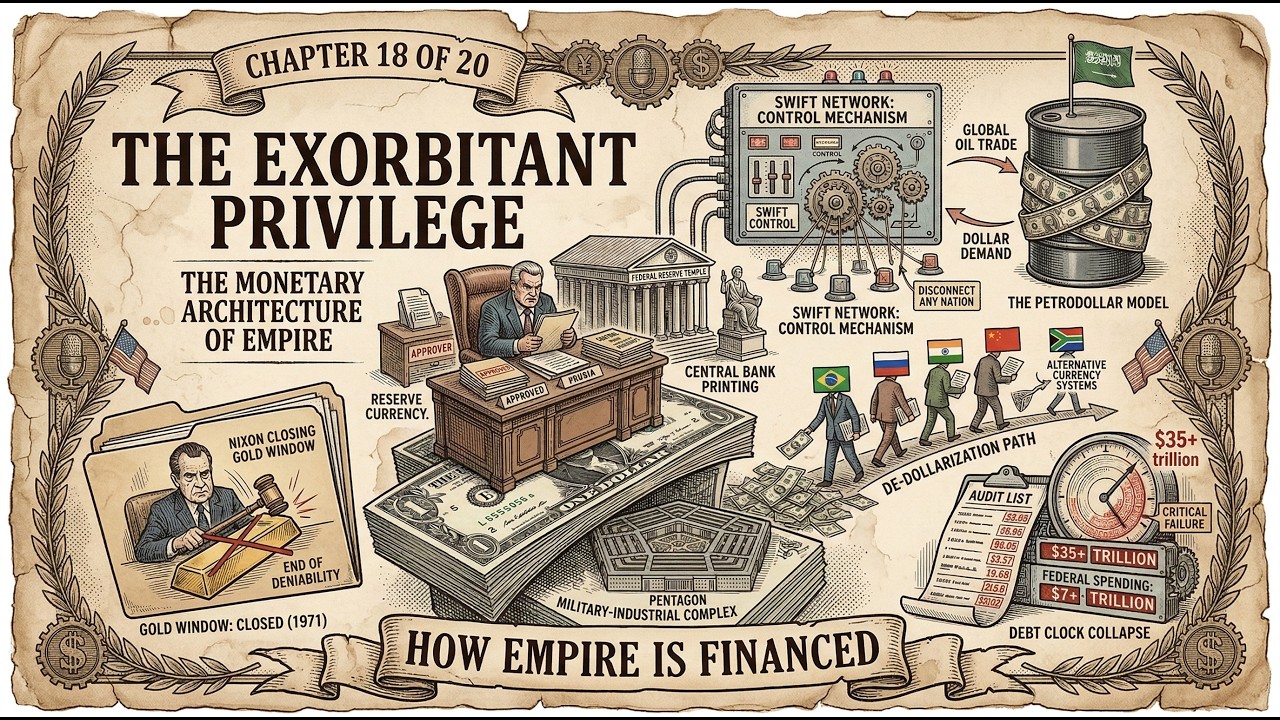
Episode 18 traces the monetary architecture that finances the American empire — from the founders’ gold-and-silver Constitution through the 1910 Jekyll Island meeting that produced the Federal Reserve, the 1933 gold confiscation, the 1971 Nixon Shock, the multi-pillar dollar hegemony system, the 2022 weaponization against Russia, and the April 2026 debt trajectory of thirty-nine trillion dollars and over one trillion in annual interest.
4 days ago1 min read
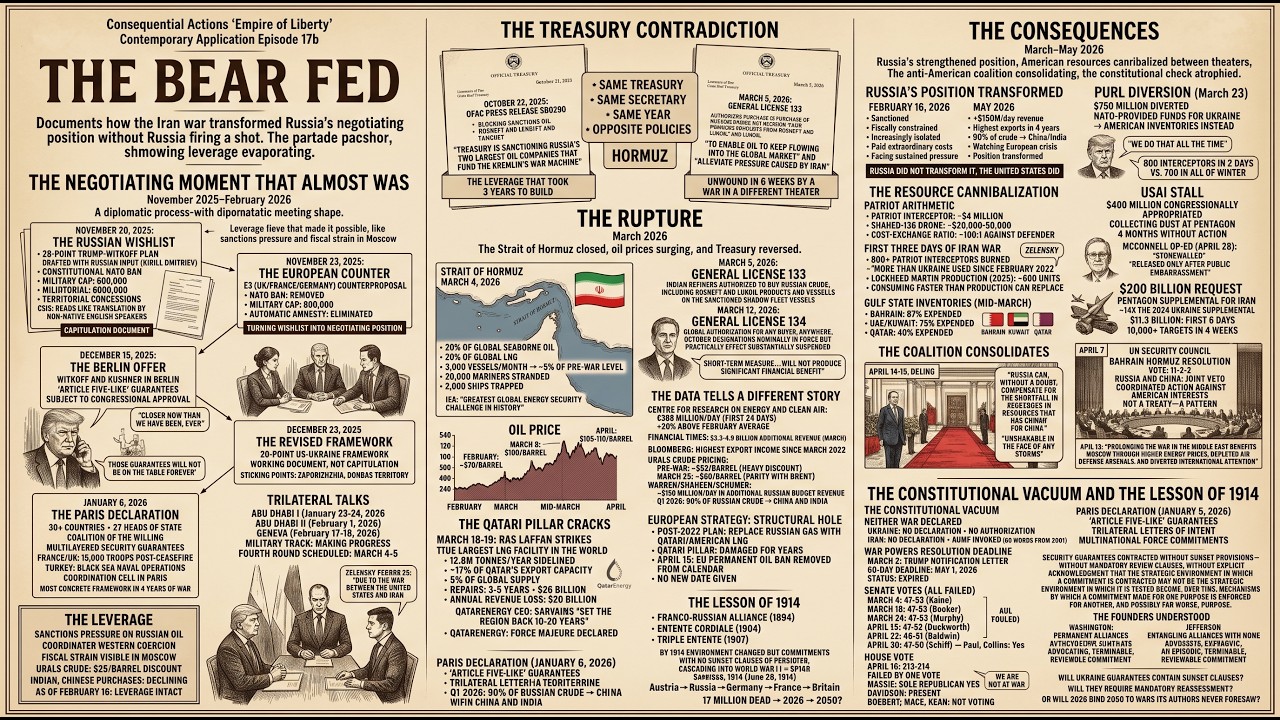
The Bear Fed — How the Iran War Handed Russia the Negotiating Position It Could Not Win on the Battlefield
This contemporary application episode examines the Russo-Ukrainian peace negotiations from the perspective of how the Iran war, launched on February twenty-eighth, 2026, materially altered the negotiating landscape in Russia’s favor.
May 52 min read


“The Exorbitant Privilege” — The Monetary Architecture of Empire
This article examines that architecture of US Debt and Finance. What it is, how it was built, what it enables, and why it is no longer working the way its designers intended. The military empire traced throughout this series could not exist without the monetary system that finances it. Understanding that system is the precondition for understanding both the power the United States has exercised over three generations and the limits it is now beginning to encounter.
May 338 min read
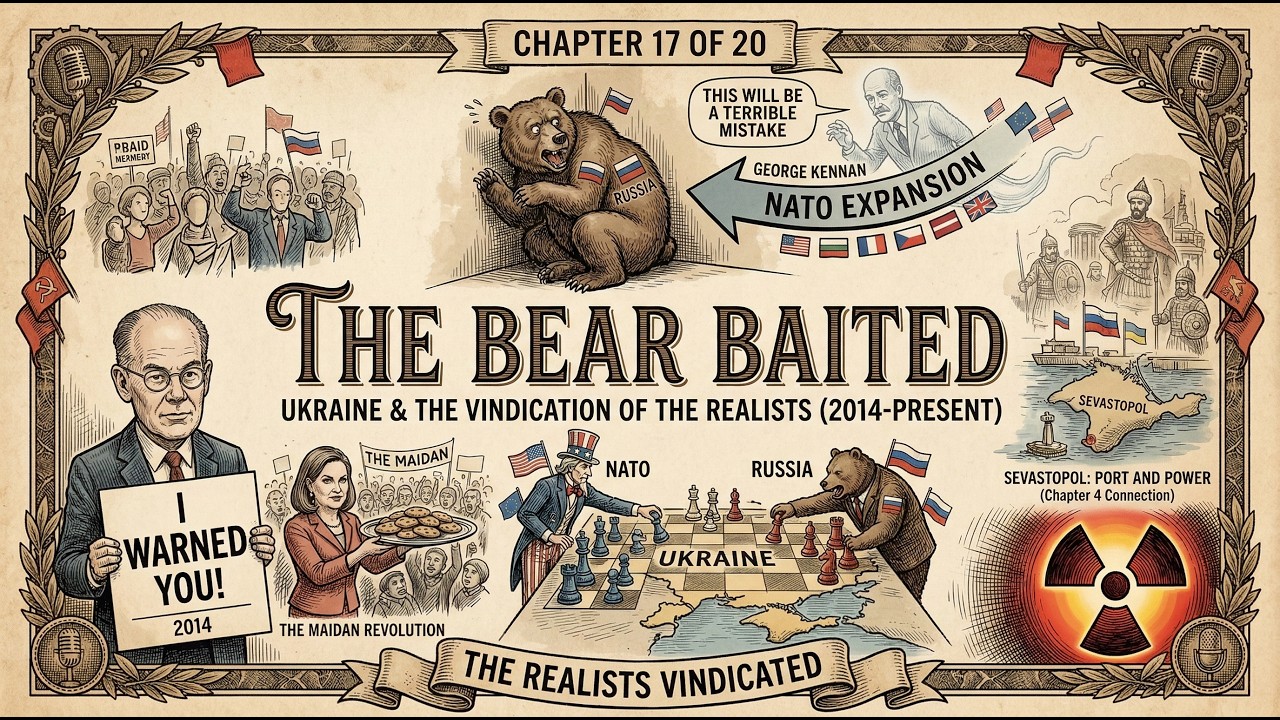
The Bear Baited
Episode 17 examines the Ukraine war as the predictable result of three decades of American policy choices. Following the argument of Article 17, the episode traces NATO expansion from Baker’s 1990 “not one inch eastward” assurance to the present, through the 2014 Maidan events, the Minsk agreements signed in bad faith, the failed December 2021 diplomacy, and the collapse of the Istanbul peace negotiations in April 2022.
May 21 min read

Whose Liberation, Whose Loss? — The Pattern of Intervention’s Aftermath, From Baghdad to Tehran
This contemporary application episode tests the central moral claim of American interventionism — that war can liberate populations — against the historical record of the past quarter century. Walking through Iraq, Libya, Afghanistan, and Syria in narrative form, the episode documents the consistent pattern: ancient Christian communities devastated, women’s lives constrained or destroyed, moderates eliminated, countries economically and physically wrecked.
Apr 281 min read


“The Bear Baited” — Ukraine and the Vindication of the Realists
“Expanding NATO would be the most fateful error of American policy in the entire post-cold-war era. Such a decision may be expected to inflame the nationalistic, anti-Western and militaristic tendencies in Russian opinion; to have an adverse effect on the development of Russian democracy; to restore the atmosphere of the cold war to East-West relations, and to impel Russian foreign policy in directions decidedly not to our liking.”—George F. Kennan, The New York Times, Februa
Apr 2631 min read
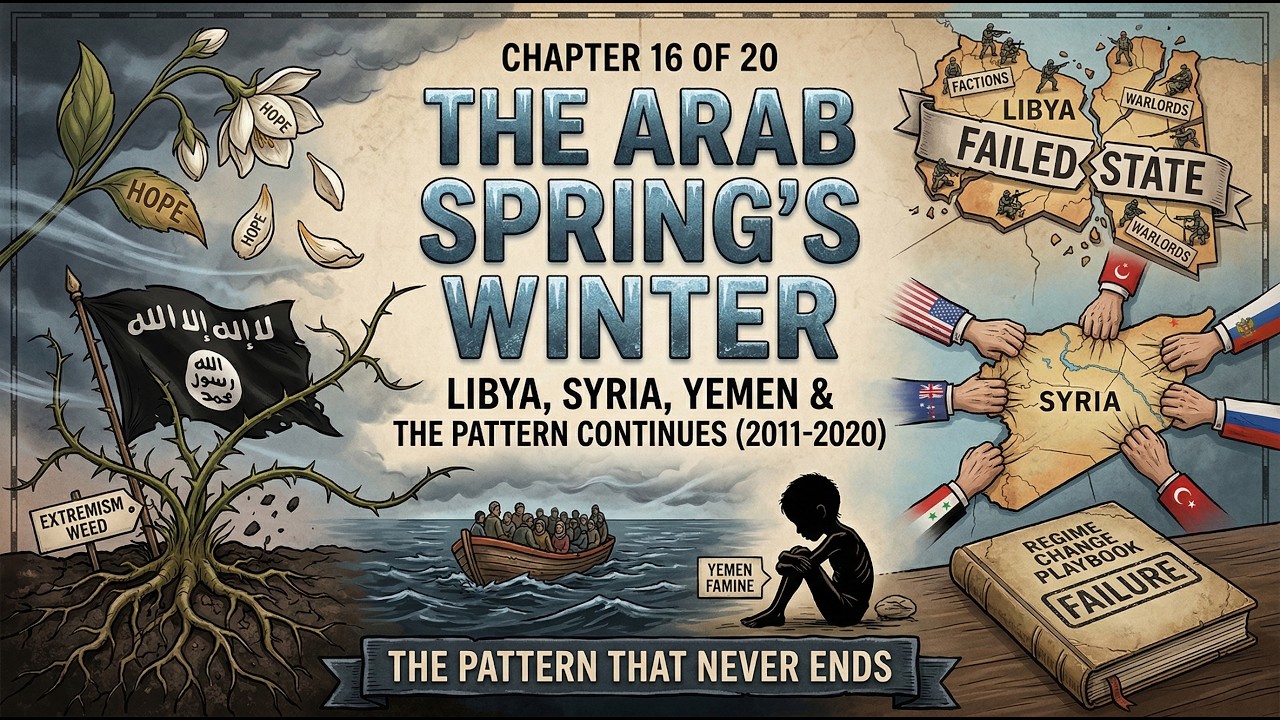
“The Arab Spring’s Winter” — Libya, Syria, Yemen, and the Pattern Continues
Episode 16 examines American intervention in Libya, Syria, and Yemen during and after the Arab Spring—three cases that repeated every error of the Iraq War under a president elected because of his opposition to it. The episode documents the corruption of the Responsibility to Protect doctrine in Libya, the fiction of “moderate rebels” in Syria, American complicity in Yemen’s humanitarian catastrophe, and the role of allied governments in shaping American policy toward their i
Apr 251 min read

The People’s House? — The Engineered Paradox and How Congress Built a Machine Against Accountability
This contemporary application episode rejects the conventional framing of the congressional accountability “paradox” — the fifteen percent approval rating alongside the ninety-seven percent incumbent reelection rate — and argues instead that the gap is the engineered output of a machine that Congress has deliberately built to insulate itself from accountability.
Apr 211 min read


“The Arab Spring’s Winter” — Libya, Syria, Yemen, and the Pattern Continues
This article examines three interventions — Libya, Syria, and Yemen — that together constitute the proof that the pattern identified throughout this series is not a series of mistakes but a structural feature of American foreign policy. The question is no longer whether interventionism fails. It is whether the system that produces it can be changed.
Apr 1922 min read

“The Long War”—Afghanistan Redux and the Iraq Catastrophe
Episode 15 examines the post-9/11 wars as the culmination of the patterns traced throughout this series. The episode documents the AUMF as a blank check for permanent war, the WMD deception that justified the Iraq invasion, de-Baathification and military dissolution as the seeds of catastrophe, the creation of ISIS as a direct consequence of American policy, the Afghanistan Papers’ revelation of systematic deception, and the absolute absence of accountability for the official
Apr 181 min read

The Echo Chamber — Foreign Influence and the Iran War
This contemporary application episode examines reporting on foreign influence in the decisions that led to war with Iran. Drawing on the New York Times investigation by Jonathan Swan and Maggie Haberman, the resignation testimony of former National Counterterrorism Center Director Joe Kent, and the President’s own public statements, the episode applies the founders’ framework — particularly Washington’s Farewell Address warnings about “passionate attachment” to foreign nation
Apr 141 min read


“The Long War” — Afghanistan Redux and the Iraq Catastrophe
On September 11, 2001, 2,977 Americans were murdered by al-Qaeda terrorists operating from Afghanistan. Twenty years later, in August 2021, the last American forces evacuated Kabul as the Taliban—the same Taliban the United States had overthrown in 2001—reclaimed control of the country. The Afghan government America had spent two decades building collapsed in eleven days. Twenty years of progress, two trillion dollars, and thousands of lives were erased in less than a fortnig
Apr 1222 min read

“The Special Relationship and the Israel Lobby”—Foreign Influence on American Policy
This episode examines how foreign governments—particularly Britain, Israel, and Saudi Arabia—influence American foreign policy through lobbying, campaign contributions, think tanks, intelligence sharing, and the revolving door between government and advocacy. The episode applies a consistent analytical standard—cui bono—to all relationships, examining the costs and benefits of each and asking whether American interests are served.
Apr 111 min read

The Petrodollar’s Last Stand—How a War to Save Hegemony May End It
This contemporary application episode connects the “indispensable nation” ideology examined in Episode 13 to its economic foundation—the petrodollar system established in 1974. The self-reinforcing loop between dollar hegemony and American military dominance of the Persian Gulf is now being tested by the Iran war. Five weeks into the conflict, the Strait of Hormuz remains under Iranian control operating as a yuan-denominated toll booth, American aircraft have been shot down d
Apr 71 min read


“The Special Relationship and the Israel Lobby” — Foreign Influence on American Policy
The question is not whether foreign influence exists. It does, and it is as old as the republic. The question is whether these relationships serve American interests. That is the question George Washington asked in 1796. It remains the right question today.
Apr 525 min read

The Indispensable Nation—Post-Cold War Interventionism and the Squandered Peace
This episode examines the 1990s—not as a decade of peace but as a decade of intervention that set the stage for the forever wars. We trace the choice of American hegemony over republican restraint, the Gulf War’s false lessons and devastating sanctions, Somalia’s thirty-three-year ongoing war that most Americans don’t know exists, Yugoslavia’s precedent for humanitarian intervention without UN authorization, NATO expansion despite explicit warnings from every Cold War expert,
Apr 41 min read

Charlie Wilson's Warning—From the Mujahideen to the Kurds to the Failed State
This contemporary application episode connects the Afghan operation of the 1980s to the Iran war of 2026. The same patterns are emerging: arming fragmented proxy groups with competing agendas, the “enemy of my enemy” alliances with forces we do not control, and the absence of any plan for the day after regime collapse. Charlie Wilson’s warning echoes across four decades as analysts, members of Congress, and even the proxy forces themselves ask the question the administration
Mar 311 min read
bottom of page