top of page

Podcast — Empire of Liberty
A series of historical podcasts that expand upon the week's written article from the series.
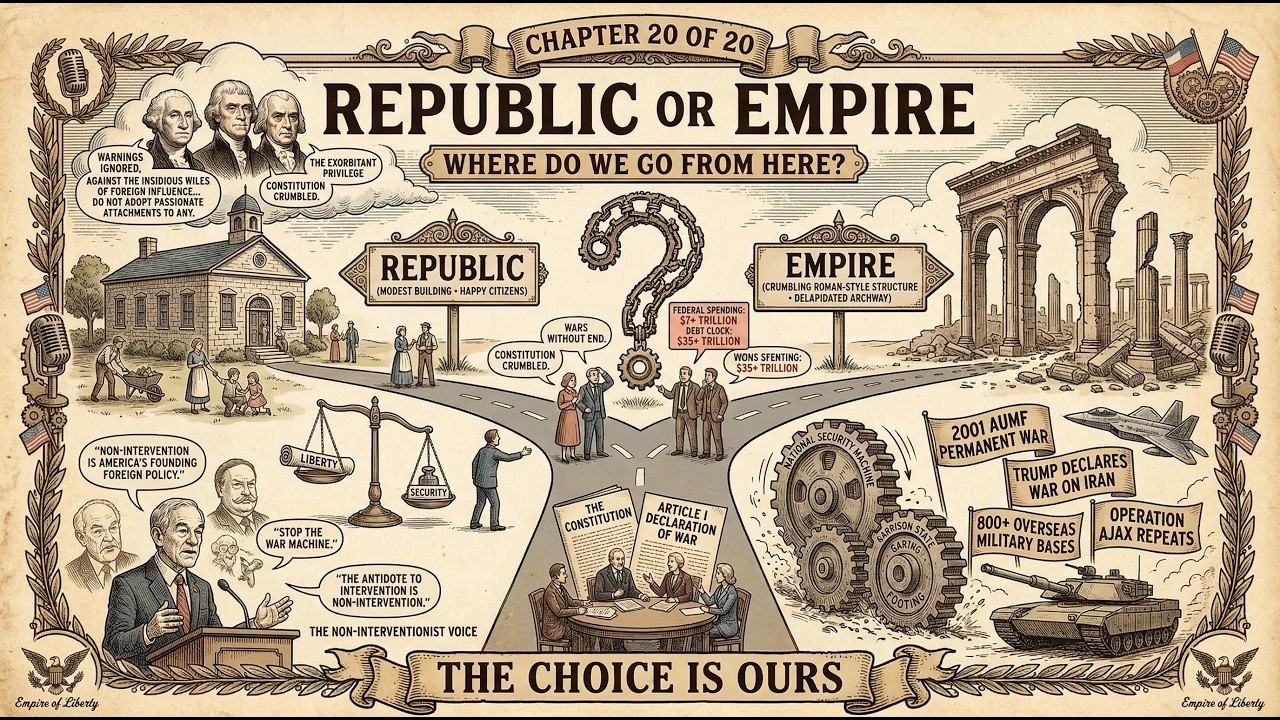
Republic or Empire — Where Do We Go From Here?
The finale of Empire of Liberty stands alone as a summary of the entire series. Opening with the cycle of democracy often attributed to Alexander Tytler, the episode tests that cycle against two centuries of American foreign policy, compresses the nineteen-installment synthesis into nine documented turns, engages the strongest interventionist counterargument in its strongest form, lays out the four pillars of constitutional restoration, and closes on Lord Acton’s insight that
Jun 61 min read
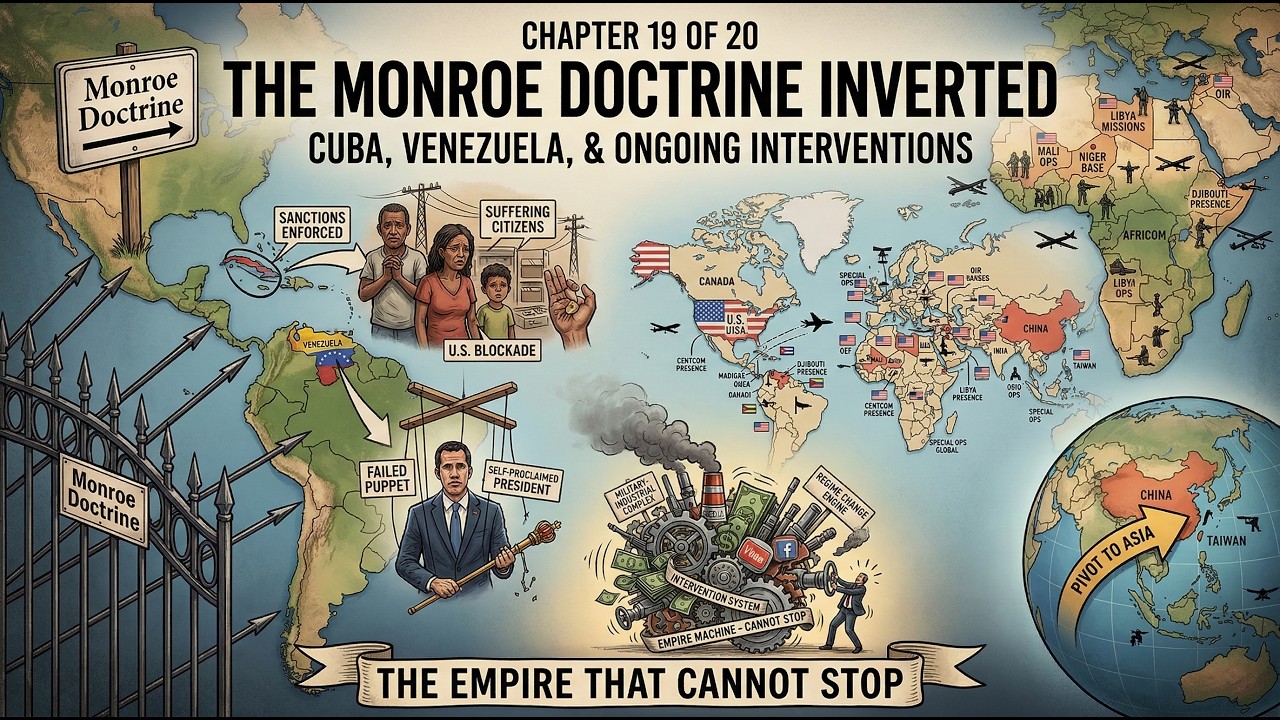
“The Monroe Doctrine Inverted” — Venezuela and the Ongoing Interventions
Episode 19 traces the two-hundred-year arc from James Monroe’s 1823 doctrine — originally a defensive warning to European powers to stay out of the Western Hemisphere — to its contemporary inversion into a claim of American authority to reshape Latin American governments at will.
May 161 min read
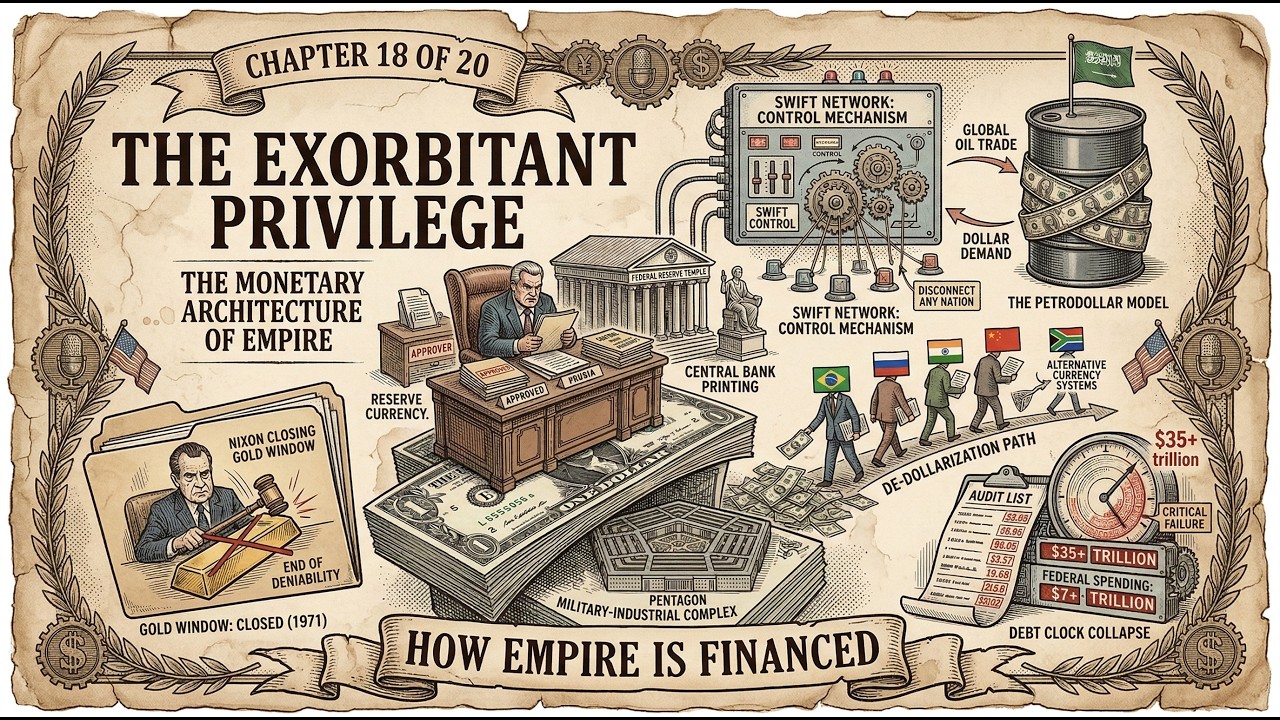
The Exorbitant Privilege
Episode 18 traces the monetary architecture that finances the American empire — from the founders’ gold-and-silver Constitution through the 1910 Jekyll Island meeting that produced the Federal Reserve, the 1933 gold confiscation, the 1971 Nixon Shock, the multi-pillar dollar hegemony system, the 2022 weaponization against Russia, and the April 2026 debt trajectory of thirty-nine trillion dollars and over one trillion in annual interest.
May 91 min read
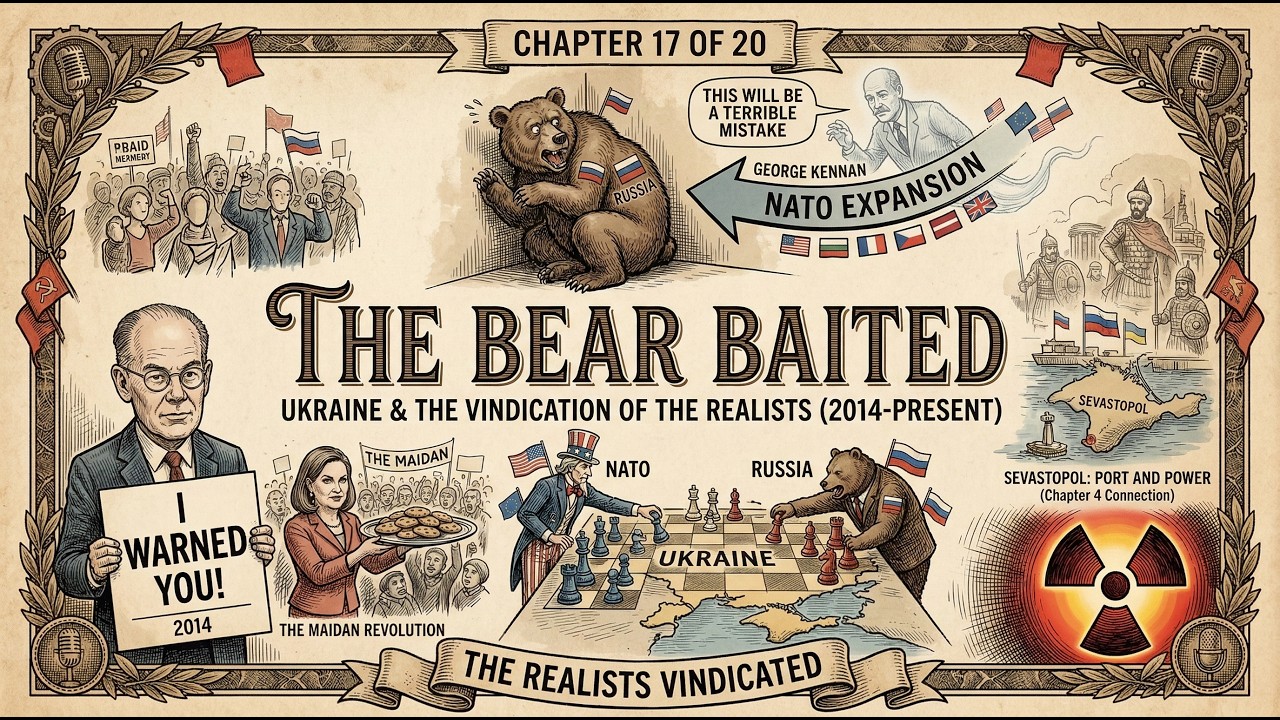
The Bear Baited
Episode 17 examines the Ukraine war as the predictable result of three decades of American policy choices. Following the argument of Article 17, the episode traces NATO expansion from Baker’s 1990 “not one inch eastward” assurance to the present, through the 2014 Maidan events, the Minsk agreements signed in bad faith, the failed December 2021 diplomacy, and the collapse of the Istanbul peace negotiations in April 2022.
May 21 min read
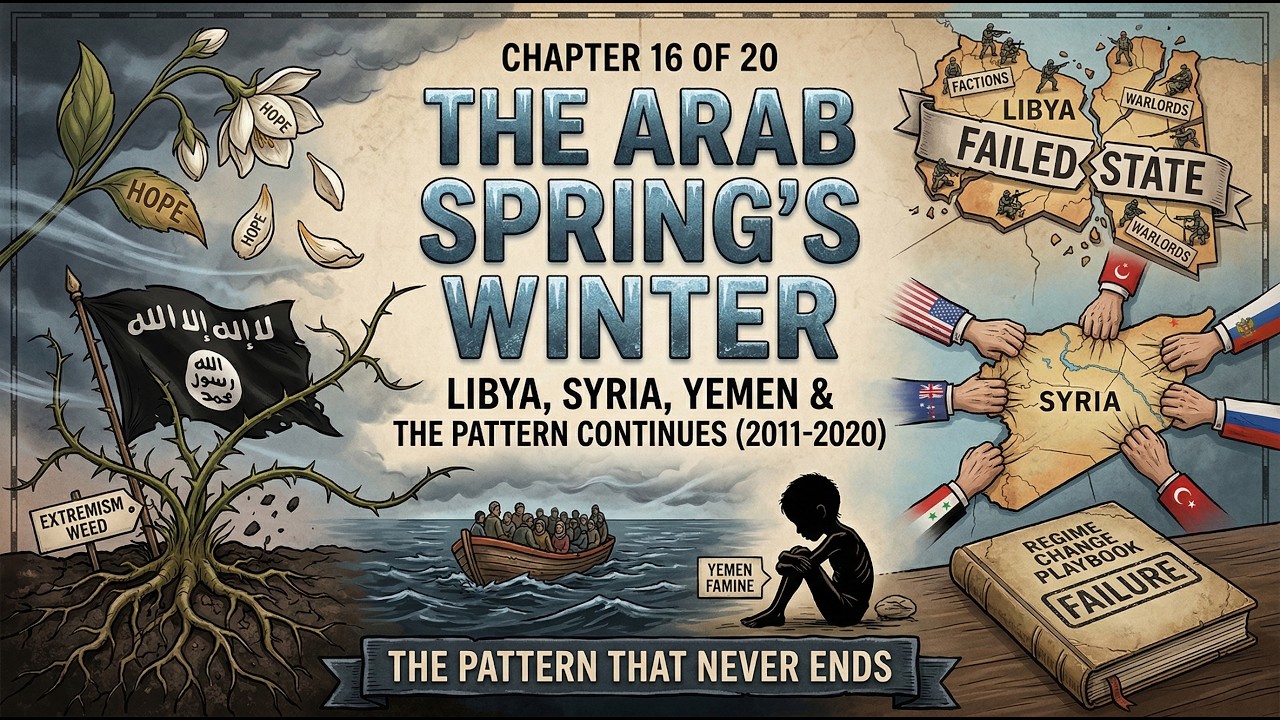
“The Arab Spring’s Winter” — Libya, Syria, Yemen, and the Pattern Continues
Episode 16 examines American intervention in Libya, Syria, and Yemen during and after the Arab Spring—three cases that repeated every error of the Iraq War under a president elected because of his opposition to it. The episode documents the corruption of the Responsibility to Protect doctrine in Libya, the fiction of “moderate rebels” in Syria, American complicity in Yemen’s humanitarian catastrophe, and the role of allied governments in shaping American policy toward their i
Apr 251 min read

“The Long War”—Afghanistan Redux and the Iraq Catastrophe
Episode 15 examines the post-9/11 wars as the culmination of the patterns traced throughout this series. The episode documents the AUMF as a blank check for permanent war, the WMD deception that justified the Iraq invasion, de-Baathification and military dissolution as the seeds of catastrophe, the creation of ISIS as a direct consequence of American policy, the Afghanistan Papers’ revelation of systematic deception, and the absolute absence of accountability for the official
Apr 181 min read

“The Special Relationship and the Israel Lobby”—Foreign Influence on American Policy
This episode examines how foreign governments—particularly Britain, Israel, and Saudi Arabia—influence American foreign policy through lobbying, campaign contributions, think tanks, intelligence sharing, and the revolving door between government and advocacy. The episode applies a consistent analytical standard—cui bono—to all relationships, examining the costs and benefits of each and asking whether American interests are served.
Apr 111 min read

The Indispensable Nation—Post-Cold War Interventionism and the Squandered Peace
This episode examines the 1990s—not as a decade of peace but as a decade of intervention that set the stage for the forever wars. We trace the choice of American hegemony over republican restraint, the Gulf War’s false lessons and devastating sanctions, Somalia’s thirty-three-year ongoing war that most Americans don’t know exists, Yugoslavia’s precedent for humanitarian intervention without UN authorization, NATO expansion despite explicit warnings from every Cold War expert,
Apr 41 min read

Charlie Wilson's Blowback—Afghanistan and the Creation of al-Qaeda
This episode traces the direct line from American covert action in Afghanistan to the September 11 attacks—the paradigm case of blowback. We examine the largest CIA operation since Vietnam: how Charlie Wilson and Gust Avrakotos built a billion-dollar program to arm the mujahideen, how Pakistan directed aid to extremists, how the Arab Afghans including Osama bin Laden built networks that would become al-Qaeda, how American abandonment created the vacuum that the Taliban filled
Mar 281 min read

Graveyard of Empires—Vietnam and the Limits of Power
This episode examines America's most devastating military defeat—the Vietnam War. We trace the conflict from its origins in French colonialism and Ho Chi Minh's ignored appeals to America, through the Gulf of Tonkin deception, the escalation under Johnson, the Tet Offensive that exposed the lies, the domestic upheaval that tore America apart, and the fall of Saigon in 1975. We examine why the war was unlikely to succeed under the chosen strategy, why the government systematic
Mar 211 min read

The Quiet Americans—CIA Operations from Cuba to Chile
This episode surveys thirty years of CIA covert operations—from the recruitment of Nazi war criminals in Operation Paperclip, through the infiltration of American media in Operation Mockingbird, to the overthrow of governments in Cuba, the Congo, Indonesia, and Chile. We examine the documented conflict between President Kennedy and the CIA, the mass casualties in Indonesia’s 1965-66 massacres, and the Church Committee’s brief moment of accountability. Throughout, we trace how
Mar 141 min read

Kermit's Game—Iran 1953 and the Template for Regime Change
This episode begins Part IV of our series—The CIA and Covert Empire—by examining the 1953 coup that overthrew Iran's democratically elected Prime Minister Mohammad Mossadegh. We trace the British oil interests that motivated the coup, the Dulles brothers' WWII background that shaped its methods, the operation itself, and the blowback that produced the 1979 hostage crisis and four decades of U.S.-Iranian hostility. We also examine the cases of Kim Philby and Aldrich Ames to il
Mar 72 min read

The National Security State—World War II's Permanent Legacy
This episode examines the institutional transformation that followed World War II—the construction of permanent agencies, alliances, and war footing that replaced the founders’ constitutional design. We trace the Truman Doctrine’s unlimited commitment, the National Security Act of 1947 that created the CIA and NSC, NATO’s entangling alliance, the Korean War’s constitutional precedent, NSC-68’s blueprint for permanent militarization, and Eisenhower’s warning about the military
Feb 281 min read

America First—The Old Right and the Fight Against Intervention
This episode recovers the lost tradition of principled American non-interventionism that flourished between the world wars. We examine the intellectual foundations developed by thinkers like Albert Jay Nock and Garet Garrett, the political leadership of Senator Robert Taft, and the mass movement of the America First Committee. We trace how this tradition was suppressed after Pearl Harbor and systematically discredited by historians who wrote interventionism into consensus—and
Feb 211 min read

Lines in the Sand—Sykes-Picot, Balfour, and the Creation of the Modern Middle East
This episode traces the destruction of the Ottoman Empire and the creation of the modern Middle East through three documents: the Hussein-McMahon Correspondence, the Sykes-Picot Agreement, and the Balfour Declaration. We examine the key figures who shaped these events—Enver Pasha and the Young Turks, Winston Churchill and the Gallipoli disaster, T.E. Lawrence and the Arab Revolt, the Hussein and Saud families—and explore how promises made and broken a century ago created conf
Feb 141 min read
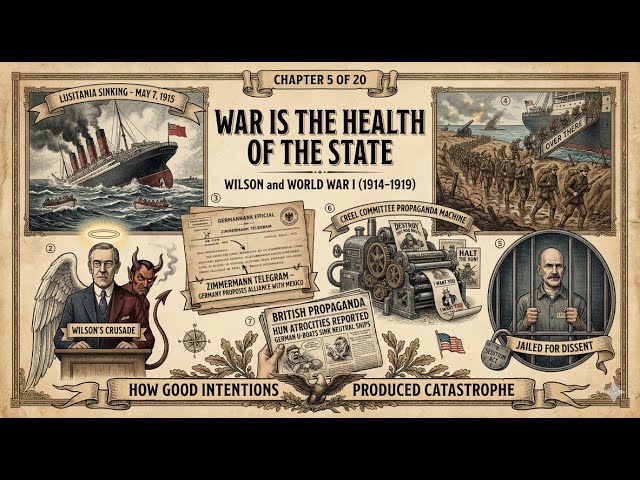
War Is the Health of the State—Wilson and World War I
America’s entry into World War I was not a response to German aggression against the United States but a choice—influenced by British propaganda, financial entanglement, Wilsonian ideology, and the interests of those who would profit from war. This episode traces how neutrality eroded through $2.3 billion in Wall Street loans, how the Lusitania and Zimmermann Telegram provided pretexts for intervention, and how the dissenters who opposed war were silenced and destroyed. We ex
Feb 71 min read

Great Game and the Road to Armageddon—European Imperialism and the System That Produced World War
Before Americans can evaluate whether intervention in World War I was wise, they must understand the system they were being asked to join. This episode examines the European imperial order that produced the Great War: the British Empire at its zenith, the Crimean War and the birth of anti-Russian propaganda, the romantic brutality of the Great Game in Afghanistan, the horrors of the Scramble for Africa, and the alliance system that transformed a Balkan assassination into cont
Jan 311 min read

Serving Commerce—1898 and the Birth of American Empire
1898 was the year America crossed the threshold from continental republic to overseas empire. In ten months, the United States acquired colonies spanning the Caribbean and Pacific, engaged in brutal counterinsurgency against Filipino independence fighters, and abandoned the founders’ foreign policy principles. This episode examines the manufactured justification for war (the Maine explosion, likely an internal accident), the Philippine-American War’s atrocities (reconcentrati
Jan 241 min read

Manifest Destiny—Continental Expansion and the Seeds of Empire
This episode examines American continental expansion—from Jefferson’s peaceful Louisiana Purchase to Polk’s manufactured Mexican-American War to Cleveland’s principled refusal to annex Hawaii. We explore the diversity of Native American nations and the varying (but consistently dispossessive) American policies toward them. We trace how the Mexican-American War established a template for imperial conflict—executive manipulation, manufactured casus belli, congressional acquiesc
Jan 172 min read

Entangling Alliances with None—The Founders' Vision of American Foreign Policy
This episode establishes the baseline of American foreign policy as the founders envisioned it. We examine the lessons of the Revolutionary War and the French Alliance, the classical republican tradition's warnings about standing armies, and the constitutional provisions designed to prevent military adventurism. We explore the foundational texts—Washington's Farewell Address, Jefferson's First Inaugural, and Madison's "Political Observations"—in depth and in the founders' own
Jan 101 min read
bottom of page