The Monroe Doctrine Inverted — Venezuela and the Ongoing Interventions

“I spent thirty-three years and four months in active military service as a member of this country’s most agile military force — the Marine Corps. I served in all commissioned ranks from Second Lieutenant to Major-General. And during that period, I spent most of my time being a high-class muscle-man for Big Business, for Wall Street and for the Bankers. In short, I was a racketeer, a gangster for capitalism.”
— Major General Smedley D. Butler, War Is a Racket, 1935¹
Introduction: The War You Were Not Told About, Until It Happened
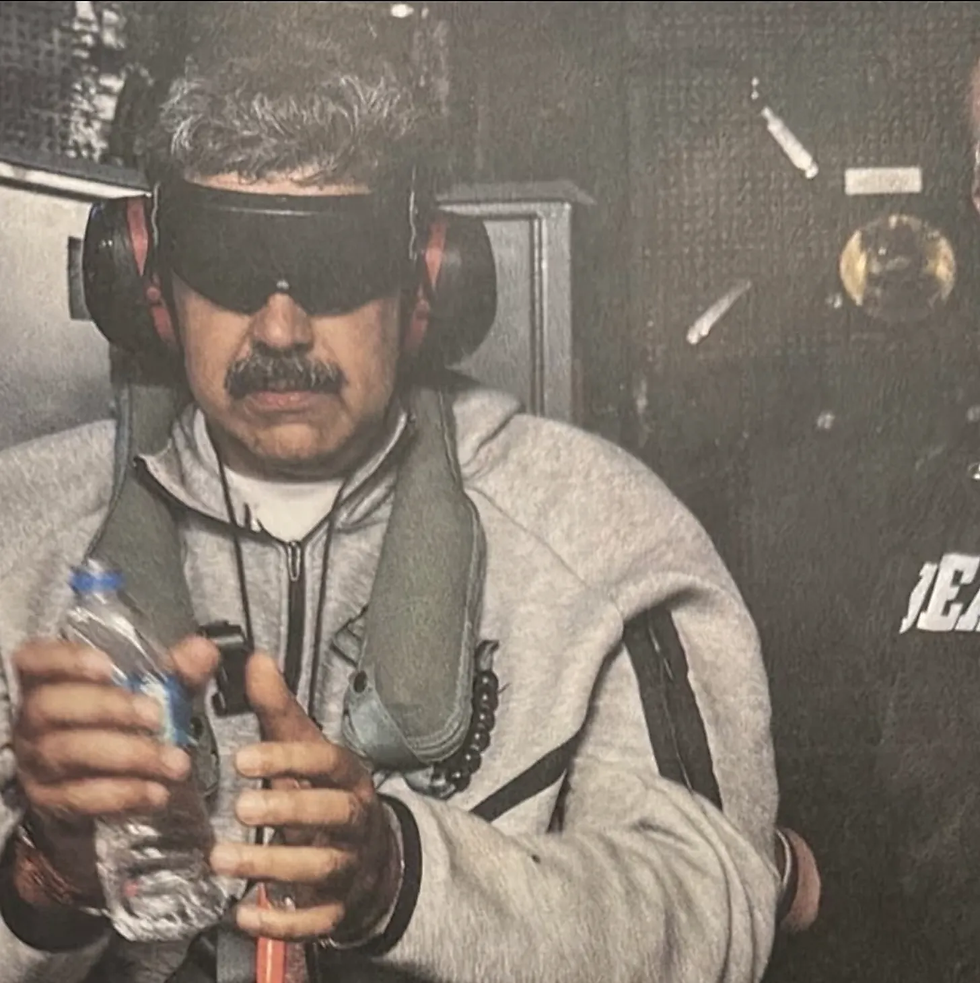
At approximately two in the morning on January 3, 2026, more than two hundred American special operations forces descended on Caracas in an operation the Pentagon called Absolute Resolve.² Explosions ripped through Fuerte Tiuna, Venezuela’s largest military complex. Within hours, the sitting president of a sovereign South American nation, Nicolás Maduro, and his wife, Cilia Flores, had been captured, extracted, and flown to New York to face drug trafficking and weapons charges.³ The Chairman of the Joint Chiefs of Staff confirmed that American forces had been positioned and rehearsing the operation since early December.⁴ The Central Intelligence Agency had been inside the country for months, building what the military calls a “pattern of life” on the Venezuelan president, using a source close to Maduro and a mockup of his safe house to rehearse the raid.⁵
The operation was, by the standards of American intelligence and special operations, an extraordinary technical achievement. No American personnel were killed. The target was captured alive. Within forty-eight hours, the Venezuelan Supreme Court had installed Vice President Delcy Rodríguez as acting president. Within ten days, President Trump had met at the White House with the chief executives of American oil companies to discuss what he described as a hundred-billion-dollar investment in Venezuela’s oil reserves.⁶ By February 11, Secretary of State Marco Rubio was describing to the Senate a formal arrangement with the Rodríguez government — the vice president of the government the United States had just decapitated — under which Venezuelan oil revenue would flow into a blocked account that Washington would control.⁷ By mid-April, Chevron was signing expansion deals in the Orinoco Belt and Shell was preparing its own major agreement.⁸
This was the most significant American military intervention in the Western Hemisphere since the 1989 invasion of Panama.⁹ It was conducted without a congressional declaration of war, without a specific authorization for the use of military force, and against a country with which the United States was not legally at hostilities. When five Republican senators joined every Democrat to advance a war powers resolution on January 8 — the vote was fifty-two to forty-seven — the president declared the measure unconstitutional and said Republicans who supported it should not be reelected.¹⁰ A week later, Senator Josh Hawley reversed his position after receiving assurances from the White House. Senator Todd Young followed. The resolution died, fifty-one to forty-nine.¹¹
The president of the United States told the American people that the United States would “run” Venezuela until a political transition had occurred. He said access to Venezuelan oil had been a major reason for the attack.¹² Two months later, on two separate occasions, Trump suggested that Venezuela might eventually be included as the fifty-first state.¹³
Venezuela, in other words, is not a historical case study. It is not a cautionary tale from an earlier chapter of this series. It is present-tense policy, unfolding as this article is written. And it is the single most vivid demonstration that the patterns traced across nineteen previous installments — patterns of sanctions that crush populations while preserving the targeted regime, of coup attempts that fail, of regime change operations that install instability, of strategic justifications that mask commercial interests, of constitutional war powers circumvented — remain the active operating doctrine of the American foreign policy establishment.
This is the Monroe Doctrine inverted. In 1823, James Monroe’s declaration warned European powers away from the Western Hemisphere. Two centuries later, the doctrine has been transformed into a sweeping claim of American authority to reshape Latin American governments, economies, and borders according to Washington’s preferences. The doctrine that was supposed to prevent intervention has become the justification for intervention.
This article examines Venezuela as the present-tense case study, surveys the ongoing operations that receive far less attention, and asks the only question that ultimately matters: what does the choice between republic and empire look like when the empire is not a memory but a current event?
Venezuela: The Case Study in Real Time
The Bolivarian Century
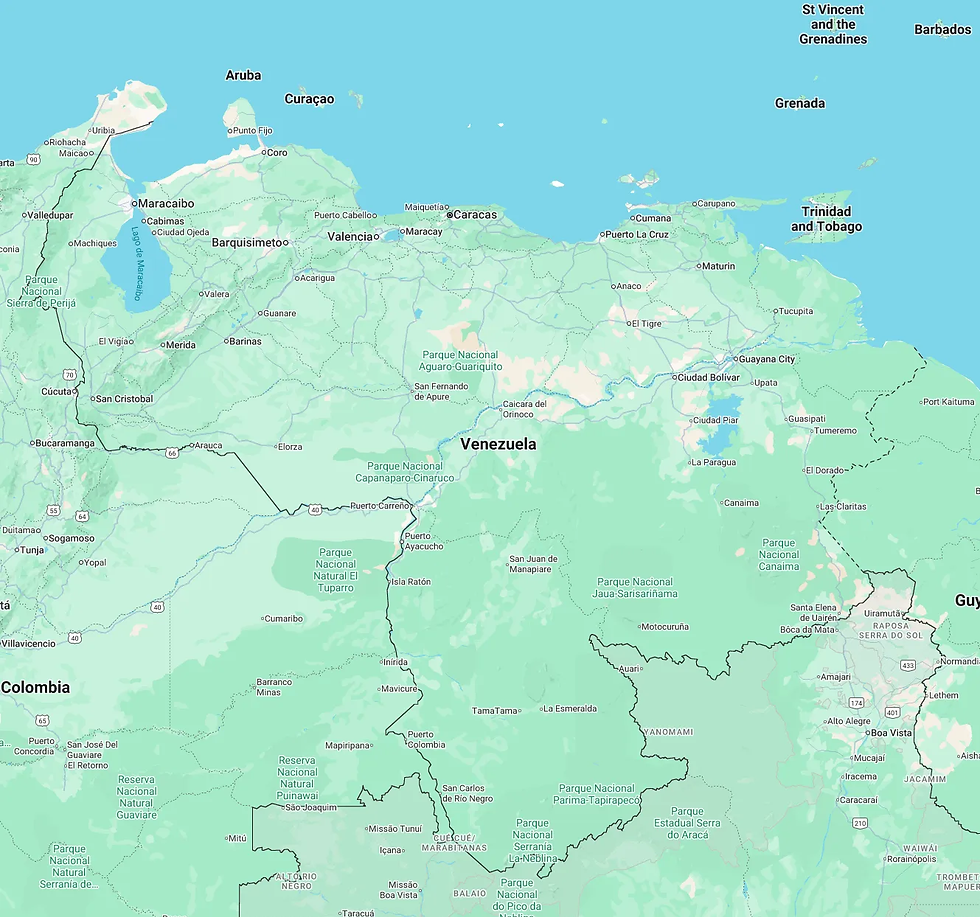
To understand Operation Absolute Resolve, we must understand what came before it — not merely the Guaidó episode of 2019, but the full quarter-century of American policy toward a country that sits atop the largest proven oil reserves in the world.¹⁴
Hugo Chávez won the Venezuelan presidency in December 1998. He was a former paratrooper, a charismatic populist, a self-described democratic socialist who had led a failed coup attempt against the previous government in 1992. He won the 1998 election cleanly, taking more than fifty-six percent of the vote in a contest international observers called free and fair. His “Bolivarian Revolution,” named for the Venezuelan-born liberator Simón Bolívar, directed oil revenues into literacy programs, subsidized food for the poor, public housing, and primary healthcare. He nationalized sectors of the economy. He antagonized Washington by forging commercial and diplomatic relationships with Iran, Russia, and Cuba. He spoke at the United Nations and called George W. Bush “the devil.”¹⁵
In April 2002, Chávez was briefly overthrown in a coup that lasted less than forty-eight hours. The Bush administration’s initial statements accepted the coup as a legitimate popular response; the State Department spokesman refused to call it a coup at all. A New York Times editorial hailed the events as the defense of democracy against “a would-be dictator.” When Chávez was restored to power by loyalist military units and mass protests, the administration’s posture was revealed to have been dangerously premature. Declassified documents later showed that the United States had been in contact with coup plotters for months, that the International Republican Institute had funded opposition groups, and that American naval vessels had been positioned off the Venezuelan coast during the events. The official determination — still disputed by some historians — was that no American direction had occurred. What was not in dispute was that the American posture had been unambiguously hostile.¹⁶
Chávez died of cancer in March 2013. His designated successor, Nicolás Maduro, a former bus driver and foreign minister, narrowly won the subsequent election. He was not the figure Chávez had been. He lacked the charisma, the founding legitimacy, the political instincts. And he inherited a country whose economy had been structured around oil revenues just as those revenues were about to collapse.
The Economic Catastrophe
In June 2014, the global price of Brent crude was approximately one hundred fifteen dollars per barrel. By January 2016, it had fallen to twenty-seven dollars. Venezuela, whose national budget depended on oil at roughly sixty dollars per barrel, was financially ruined in the span of eighteen months.¹⁷
The Maduro government’s response was a textbook demonstration of the pathologies of command economies under stress — price controls that produced shortages, currency controls that produced black markets, debt monetization that produced hyperinflation, rationing schemes that produced corruption, political repression that produced exodus. By 2019, the country that had once been Latin America’s wealthiest was suffering an inflation rate of over one million percent. Hospitals ran out of antibiotics. Infant mortality climbed. Power blackouts lasted days. Grown men lost twenty pounds in a year. Venezuelans called it the Maduro diet.¹⁸
Chavismo, the defenders of Maduro argued, was not the cause. American sanctions were. Chavismo’s critics argued the reverse. The truth, as honest analysis of Venezuela requires, is that both contributed — but the sanctions did not begin in response to the humanitarian catastrophe. They began in 2015, under the Obama administration, with targeted measures against specific officials. They expanded dramatically under the first Trump administration, with comprehensive financial sanctions in August 2017 that cut Venezuela off from international borrowing, followed by oil sanctions in January 2019 that prevented the country from selling its principal export, followed by the seizure of Venezuelan assets abroad including the Citgo refinery network and gold reserves held at the Bank of England.¹⁹
A 2019 study by the Center for Economic and Policy Research, authored by economists Mark Weisbrot and Jeffrey Sachs, estimated that the 2017 financial sanctions alone had caused more than forty thousand Venezuelan deaths.²⁰ Alfred de Zayas, the former United Nations independent expert on the promotion of a democratic international order, estimated in 2018 that sanctions had contributed to more than one hundred thousand deaths. His reports to the UN described the sanctions as violations of international law and, in some respects, crimes against humanity.²¹ These figures have been contested by some economists, and the complex task of separating Chavista mismanagement from sanctions effects is genuinely difficult. But a 2023 literature review found that ninety-four percent of peer-reviewed econometric studies on sanctions identified substantial, statistically significant negative effects on outcomes ranging from per capita income to child mortality.²² The direction of the effect is not in scholarly dispute.
What is also not in dispute is the human exodus. As of the end of 2025, approximately 7.9 million Venezuelans had fled their country — more than twenty-three percent of the population.²³ This is one of the largest displacement crises in the world, exceeding the refugee flows from Syria and Ukraine in absolute terms. An estimated two thousand Venezuelans continued to leave every day through 2025. Colombia absorbed over 2.8 million. The caravans reaching the southern border of the United States in the early 2020s were, in large part, Venezuelan. The sanctions, as analysts from the Center for Economic and Policy Research, the United States Institute of Peace, and even some Biden-administration officials acknowledged, were a principal driver of the migration that American politicians then claimed was an invasion justifying further restriction.²⁴
The Guaidó Interlude
In January 2019, the first Trump administration, in coordination with a cluster of Latin American governments organized under the so-called Lima Group, recognized Juan Guaidó — the thirty-five-year-old president of the Venezuelan National Assembly — as the legitimate interim president of Venezuela. Guaidó was a politician whom most Venezuelans, by any honest polling, had never heard of. He had been elected to the National Assembly with fewer than ninety-eight thousand personal votes, in a party primary that had been boycotted by most of the opposition. The thesis of his claim to the presidency was a constitutional argument concerning the illegitimacy of the 2018 Maduro election, which was plausible. The thesis that this made Guaidó the actual president of the country, rather than simply the speaker of the opposition assembly, was a stretch under Venezuelan constitutional law and a fantasy as a matter of political reality.²⁵
The Maduro government remained in power. The military remained loyal. A failed insurrectionist action at a Caracas airbase in April 2019 — in which Guaidó appeared in a hastily-filmed video flanked by a small number of soldiers — collapsed within hours. A ludicrous mercenary operation in May 2020, funded in part by Americans associated with the Guaidó government and involving former Green Berets landing by boat on the Venezuelan coast, was rolled up almost immediately.²⁶ By 2023, Guaidó had been abandoned even by much of the Venezuelan opposition. The “interim government” was dissolved. Guaidó himself left the country.
The Guaidó episode was a comprehensive strategic failure. The stated objective — the peaceful replacement of the Maduro government — was not achieved. The subsidiary objective — the creation of internal Venezuelan pressure that would force Maduro’s hand — was not achieved. What was achieved was the intensification of sanctions, the acceleration of the humanitarian crisis, and the strengthening of Maduro’s internal political position by allowing him to frame the situation as a nationalist confrontation with American imperialism.
By the end of 2024, after another disputed election in July, Maduro was preparing to begin a third term. International observers, including the Carter Center, had documented serious irregularities. The opposition candidate Edmundo González appeared to have won the vote; Maduro claimed victory. The opposition leader María Corina Machado — who had been barred from running herself — went into hiding inside the country. Guaidó was a memory. The sanctions were still in place. The refugees kept coming. And the Biden administration, focused elsewhere, had largely accepted the status quo.²⁷
The Escalation
The return of Donald Trump in January 2025 did not immediately produce a change in Venezuela policy. Marco Rubio, the new Secretary of State, had questioned the Chevron license during his confirmation hearings. Sanctions were tightened in some respects and loosened in others. The rhetoric escalated. But for much of 2025, the Maduro-Washington relationship resembled the stable hostility of the preceding decade.²⁸
The shift began in the summer of 2025, when the Trump administration designated the so-called Cartel de los Soles — an alleged Venezuelan narco-trafficking network supposedly controlled by Maduro himself — as a Foreign Terrorist Organization. The designation brought with it expanded sanctions authorities and, more consequentially, a legal framework under which the administration could claim that Venezuela-linked drug shipments constituted hostilities by a foreign terrorist organization against the United States.²⁹ The reward for Maduro’s apprehension was raised from fifteen million dollars to fifty million.³⁰
In August 2025, the United States began deploying substantial naval forces to the Caribbean, including the USS Gerald R. Ford carrier strike group escorted by Super Hornets and B-52 bombers.³¹ On September 2, the first of what would become an extended campaign of military strikes began — not against Venezuelan territory, but against small boats in international waters which the administration alleged were carrying narcotics on behalf of Venezuelan-linked cartels. The Department of Defense provided no public evidence. The victims were labeled narcoterrorists. The strikes were publicized by the president himself on social media, often with video of vessels being destroyed by missiles. Survivors were, in some documented cases, killed by second strikes as they clung to wreckage.³²
By March 25, 2026, according to the Congressional Research Service and cross-referenced reporting from the Washington Office on Latin America, at least 163 people had been killed in 47 strikes on 48 vessels across the Caribbean and Eastern Pacific.³³ Governments of neighboring countries protested. Families of the dead — many of them fishermen, according to reporting in The Guardian — insisted the vessels had carried no drugs.³⁴ Intelligence sharing from the Dutch and British governments concerning suspected drug boats was, according to reporting in Volkskrant and CNN, quietly suspended out of concern that it was being used to facilitate extrajudicial killing.³⁵ Interdicted cocaine quantities, according to U.S. Customs and Border Protection data compiled by WOLA, did not decline during the strike campaign. The military operation was not reducing the flow of drugs. It was killing a small number of low-level traffickers and fishermen in international waters and calling it war.³⁶
The American war power was being exercised on a moving frontier. The Department of Justice’s Office of Legal Counsel had produced a classified memorandum, leaked portions of which became public in December 2025, arguing that the president did not need congressional authorization for strikes on boats because such strikes did not constitute war. “The law does not permit the President to order troops into Venezuela without congressional authorization if he knows it will result in a war,” the memo noted, before adding, “As of December 22, 2025, we have not received facts indicating it will.”³⁷ Two weeks later, American troops were in Caracas.
Operation Absolute Resolve
What happened on January 3, 2026 has no clean analogy in modern American history. The 1989 Panama invasion removed Manuel Noriega but involved tens of thousands of troops and days of combat. The 2003 Iraq invasion removed Saddam Hussein but was the work of months. Operation Absolute Resolve was different in kind — a precision decapitation, executed in hours, against the sitting head of state of a country twenty-one times larger in population than Panama, conducted from positions in Trinidad and Tobago (which had signed an airport-access agreement with the United States in the preceding weeks), the Gerald R. Ford carrier group, and a staging area in Puerto Rico.³⁸
The strikes targeted Fuerte Tiuna, where Maduro was believed to be sheltering after being tracked by CIA assets using a source inside his inner circle. Strikes also hit other military installations and, according to Colombian President Gustavo Petro, the Venezuelan legislative building.³⁹ Caribbean airspace was closed for hours. Hundreds of flights were canceled. And by sunrise, Trump was posting photographs of himself watching the operation from his Mar-a-Lago resort alongside CIA Director John Ratcliffe.⁴⁰
There was celebration among the Venezuelan diaspora in Miami and Santiago. There was condemnation from Colombia, Brazil, Mexico, Russia, China, and Cuba. Colombia’s Petro called the strikes an aggression against Latin America; his government deployed forces to the Venezuelan border in preparation for a refugee influx.⁴¹ The Russian foreign ministry called the American pretext “unfounded” and the action “an unacceptable assault on Venezuela’s sovereignty.” Moscow stopped short of any actual challenge.⁴² The world observed; the world objected; the world did nothing.
What followed was the constitutional question this series has returned to again and again. The president had ordered a large-scale military strike against a foreign country, removed its head of state, and begun what he himself described as running that country — all without congressional authorization, and against the explicit opposition of five Republican senators and every Democrat. When the Senate advanced a war powers resolution on January 8 by a vote of fifty-two to forty-seven, the administration responded not with legal argument but with political pressure. Rubio sent a letter to Senator Young promising that the administration would consult Congress “circumstances permitting” — a phrase so gauzy as to be meaningless. Hawley and Young reversed. The resolution died, fifty-one to forty-nine, on January 14.⁴³ The congressional war power, as a functional check on the presidency, no longer existed. What had been latent for decades had become, in this episode, manifest.
The Accounting
The stated objectives of two decades of American policy toward Venezuela — the removal of first Chávez and then Maduro, the restoration of democratic governance, the reopening of the economy to American commercial interests, the reduction of migration flows to the United States — have in various combinations been achieved, failed, and been inverted.
Maduro is gone — tactically, the objective was achieved. Democracy has not been restored. Trump recognized Delcy Rodríguez, who was never elected to the presidency, as “president-elect” during the March 2026 “Shield of the Americas” summit in Washington.⁴⁴ A limited amnesty law passed by the Maduro-era National Assembly in February freed roughly seven hundred political prisoners and left hundreds more in detention.⁴⁵ The opposition’s Edmundo González remains in exile in Spain. María Corina Machado, who received the 2025 Nobel Peace Prize and supported American military intervention, has been told by Trump that she lacks the support within Venezuela to lead it.⁴⁶ The apparent plan, articulated by Rubio to the Senate on February 11, is a “transition and stabilization phase” in which the United States works with whoever is currently in charge of the Venezuelan state apparatus — meaning, in practice, the government that was installed by the Supreme Court of the Maduro regime.⁴⁷
The economy is being reopened, but to specifically American commercial interests. On January 9, Trump met at the White House with executives from Chevron, Exxon, Conoco, and others to discuss what Energy Secretary Chris Wright described as a one-hundred-billion-dollar investment program. Chevron, which had operated a joint venture with PDVSA under a Biden-era license and continued throughout the transition, signed expansion deals in the Orinoco Belt in mid-April. Shell was preparing a major deal. Exxon and Conoco — which had left Venezuela after Chávez nationalized their assets in 2007, and had outstanding arbitration claims in the billions — were seeking reassurances to return.⁴⁸ Trump himself stated that access to Venezuelan oil had been “a major reason for the attack.”⁴⁹
The migration flows have continued. The 7.9 million Venezuelans displaced since 2014 have not returned. The promises that regime change would end the migration crisis were, as Mexican president Claudia Sheinbaum had warned, the opposite of the truth. Sanctions produced migration; regime change, installed through military force, has not yet reversed it.⁵⁰
And most consequentially: the constitutional order has taken another, severe injury. The American president has now, as a matter of demonstrated precedent, conducted a large-scale military strike against a foreign country and removed its head of state without congressional authorization. The war powers resolution, already eroded by the AUMF regime and its open-ended interpretations, is functionally dead in the context of hemispheric operations. Trump’s statement that Congress would “leak” was not, in his frame, a rebuke of specific legislators; it was a theory of the presidency.⁵¹
The Venezuela case study is the template. The question is not whether the patterns of intervention continue. It is whether any institutional mechanism remains to constrain them.
The Western Hemisphere: Monroe Doctrine Inverted
The Monroe Doctrine was articulated in President James Monroe’s annual message to Congress on December 2, 1823. Its operative claim was defensive: “that the American continents, by the free and independent condition which they have assumed and maintain, are henceforth not to be considered as subjects for future colonization by any European powers.” Monroe and his Secretary of State, John Quincy Adams, who substantially drafted the doctrine, conceived it as a shield. It was a warning to Spain, France, and Russia to stay out of the Western Hemisphere. It contained no claim of American authority to intervene in Latin American nations. It contained, in the same message, the declaration that American policy was “not to interfere in the internal concerns of any of its powers.”⁵²
The inversion began almost immediately with the doctrine’s selective enforcement and accelerated through the nineteenth century with the Mexican-American War, the filibustering expeditions of William Walker in Central America, and the sugar-driven involvement in Cuba that produced the 1898 war with Spain. But the decisive transformation was the Roosevelt Corollary, announced by Theodore Roosevelt in his annual message of December 1904: “chronic wrongdoing, or an impotence which results in a general loosening of the ties of civilized society, may in America, as elsewhere, ultimately require intervention by some civilized nation, and in the Western Hemisphere the adherence of the United States to the Monroe Doctrine may force the United States, however reluctantly, in flagrant cases of such wrongdoing or impotence, to the exercise of an international police power.”⁵³
The doctrine that had warned others away had become a claim of American policing authority throughout the hemisphere. What had been a shield had become a sword. Major General Smedley Butler — whose testimony this article opens with — described the result in terms that two generations of subsequent American foreign policy establishments found too embarrassing to engage: “I helped make Mexico and especially Tampico safe for American oil interests in 1914. I helped make Haiti and Cuba a decent place for the National City Bank boys to collect revenues in. I helped in the raping of half a dozen Central American republics for the benefits of Wall Street.”⁵⁴
The catalogue of subsequent interventions has been partially traced through this series. Guatemala in 1954, where the CIA overthrew the democratically elected Jacobo Árbenz at the behest of the United Fruit Company, was the template.⁵⁵ Chile in 1973, where the agency’s covert action helped produce the coup that replaced Salvador Allende with Augusto Pinochet and seventeen years of dictatorship, was the refinement.⁵⁶ Nicaragua in the 1980s, where the Reagan administration funded the Contra war against the Sandinista government and financed it through the Iran-Contra arms-for-hostages scheme, was the constitutional low point. Panama in 1989, where the first Bush administration invaded to arrest Manuel Noriega — a former CIA asset — on drug charges, was the precedent that Operation Absolute Resolve invoked.⁵⁷ Honduras in 2009, where the Obama administration quietly acquiesced to the coup that removed Manuel Zelaya, demonstrated that the pattern was bipartisan.⁵⁸ Bolivia in 2019, where a contested election produced an interim government under Jeanine Áñez that was widely understood in the region as a soft coup — and was later reversed by the restoration of the Movement for Socialism party in 2020 — demonstrated that the pattern was contemporary.⁵⁹
The Cuban embargo, instituted in 1960 and now in its sixty-sixth year, is the control case. If sanctions produced regime change, Cuba should be democratic. If economic pressure forced political concessions, Havana should have conceded. Neither has occurred. The Castro brothers outlasted ten American presidents; Miguel Díaz-Canel rules still. What the embargo has produced is a sustained humanitarian hardship for ordinary Cubans, repeated mass migrations to the United States — the 1980 Mariel boatlift, the 1994 rafter crisis, the current exodus that has removed more than ten percent of the Cuban population in the last two years alone — and a convenient target for Cuban government propaganda. Sanctions advocates have argued for six decades that the next round of pressure would be the one that broke the regime. It has not been.⁶⁰
The current map. Nicaragua remains under Daniel Ortega, now in his third consecutive term, with sanctions against his government that have not altered its behavior. Haiti, suffering one of the worst humanitarian crises in the hemisphere, has been the subject of successive intervention proposals that have not materialized and would almost certainly not succeed if they did. Colombia under the leftist Gustavo Petro has found itself in escalating conflict with the Trump administration; in March 2026, Ecuador raised tariffs on Colombian imports to fifty percent at American urging. In Ecuador itself, the United States under the Noboa government has established a military presence at the Manta air force base — where the American military operated from 1999 to 2009 — despite Ecuadorian voters having rejected a constitutional amendment to permit foreign bases in November 2025. On March 3, 2026, American and Ecuadorian forces launched joint operations against “Designated Terrorist Organizations,” and on March 6, an American-supported strike intended for a FARC dissident compound, according to subsequent New York Times reporting, actually destroyed a dairy farm.⁶¹
The hemispheric pattern in April 2026 is clearer than it has been in a generation. The American government is conducting a deliberate campaign of intervention across Latin America — military, economic, diplomatic — predicated on a reading of the Monroe Doctrine that its author would not recognize. The president has suggested that Venezuela, Greenland, Panama, and Canada might all be eligible for some form of American territorial reorganization. The word “imperialism” has been a pejorative in American political discourse for so long that its descriptive use feels jarring. But if the word means anything, it means what is currently happening.⁶²
Africa: The Shadow War Continued
Africa is the forgotten continent of American foreign policy. Most American citizens cannot locate Somalia, Niger, or Libya on a map. Most have never heard of Camp Lemonnier, the American base in Djibouti that houses more than four thousand American military personnel and serves as the central node for American special operations and drone campaigns across the Horn of Africa and the Sahel.⁶³ Most would be surprised to learn that the United States Africa Command, established in 2007 under the George W. Bush administration, is currently conducting combat operations in multiple theaters.
Somalia is the ongoing case. The American intervention that began with the 1992 humanitarian mission under George H. W. Bush, produced the 1993 Battle of Mogadishu immortalized in Black Hawk Down, was briefly suspended under Clinton, resumed covertly under Bush the younger, expanded dramatically under Obama, continued under Trump’s first term, escalated under Biden, and is now at unprecedented intensity under the second Trump administration. AFRICOM’s public release schedule tells the story: strikes on al-Shabaab and ISIS-Somalia positions occurred on January 15, January 18, January 21, January 30, February 3, February 9, February 10, March 8, March 11, March 16, March 18, March 19, and March 27 of 2026 alone — strikes that the American Congress has not specifically authorized, that are known to the American public in only the most cursory way, and that are justified under the 2001 Authorization for Use of Military Force against those responsible for the September 11 attacks.⁶⁴ The 9/11 AUMF is now twenty-four years old. It has been used to justify operations in fourteen countries against groups that in some cases did not exist at the time of its passage, and in some cases were adversaries of those who did.
Libya remains the failed state the 2011 NATO intervention produced. Competing governments — one in Tripoli, one in Tobruk — continue to dispute the country’s sovereignty. Russian, Turkish, Egyptian, and Emirati forces operate on Libyan soil in pursuit of their interests. The slave markets that were documented in 2017 have not been fully dismantled. The migration route across the Mediterranean from Libya to Europe continues to kill thousands each year. The country that Secretary of State Hillary Clinton said “we came, we saw, he died” about is now a principal source of instability for the region, the continent, and southern Europe.⁶⁵
Niger was, until 2023, the home of the largest construction project in the history of the United States Air Force — Air Base 201 outside Agadez, a drone operations hub that cost approximately 110 million dollars and served as the forward node for operations across the Sahel. In July 2023, a military coup removed the pro-Western government of Mohamed Bazoum. The junta that replaced him demanded the withdrawal of French and then American forces. By September 2024, the Americans were gone. The base was closed. The Sahel — which also saw successful coups in Mali (2021), Burkina Faso (2022), and Guinea (2021) — has since pivoted substantially toward Russia. Wagner Group and its successor formations are now the principal foreign military presence in several of these countries.⁶⁶
The Sahel case is the AFRICOM story in microcosm. American military presence, predicated on counter-terrorism partnerships with host-country governments, generated local resentment. Resentment contributed to coups. Coups produced expulsion. Expulsion ceded ground to strategic competitors. The intervention produced the outcome it was meant to prevent.
The Pivot That Never Happened
In November 2011, speaking to the Australian parliament, President Barack Obama announced what came to be called the Pivot to Asia. After more than a decade of wars in the Middle East, the United States would, Obama promised, reorient its foreign policy architecture toward the rise of China. The concept was not original to Obama. Its intellectual godfather was the Princeton scholar Aaron Friedberg; its strategic premise was the realist argument that the principal challenge to American interests in the twenty-first century would not come from non-state actors or middle powers but from a rising peer competitor.⁶⁷
Fifteen years later, the pivot has not occurred. American forces remain dispersed across some seven hundred fifty bases in eighty-plus countries. The Middle East commitment, which the pivot was supposed to reduce, remains substantial — American troops in Iraq, Syria, and across the Gulf, and the United States was at war with Iran from late February to early April 2026. The Ukraine commitment, which the realists led by John Mearsheimer warned against on precisely these grounds, has consumed enormous American and European resources and — this is the hinge of the argument — pushed Russia into a strategic embrace with China that Mearsheimer had predicted in 2014 would be the worst possible outcome for American interests.⁶⁸
The Taiwan question remains the central unresolved strategic problem. The Beijing-based Center for International Security and Strategy at Tsinghua University, in its 2026 annual forecast, identified Taiwan Strait tensions as the foremost external security concern for the People’s Republic — a characterization that is, in substance, a warning. The People’s Liberation Army has conducted two to three large-scale exercises around the island each year since 2022. In late 2025, following Japanese Prime Minister Takaichi’s statement concerning Japanese responsibilities in a Taiwan contingency, Chinese fighters locked radar on Japanese aircraft. The CSIS surveys of American China-watchers place the risk of Chinese military escalation at its highest level since the 1996 Strait crisis.⁶⁹
The realist argument is not that America should abandon Taiwan. It is that America cannot simultaneously be locked in a proxy war with Russia in Ukraine, at intermittent war with Iran, conducting regime change operations in the Western Hemisphere, running counter-terrorism strike campaigns across Africa, and credibly deterring a Chinese move against Taiwan. Strategic overextension has a cost that is not paid in the glamour of marble speeches and policy-journal articles. It is paid in degraded readiness, depleted industrial base, strained alliances, empowered adversaries, and the unforced errors of leaders trying to manage too many simultaneous commitments. The United States is currently engaged in more overseas military operations than at any time since 1945. It is less prepared than at any time in living memory for the one conflict that the strategic establishment agrees would matter most.⁷⁰
This is the result — not the violation — of the doctrine this series has traced.
The Middle East: The Forever War Persists
Iraq remains the war that was supposed to end. American troops, approximately twenty-five hundred of them, remain stationed at bases including Al Asad and Al Harir under the counter-ISIS mission. The Iraqi parliament voted in 2020 to expel American forces; the vote was ignored. American personnel are periodically attacked by Iranian-aligned militias; the United States periodically strikes back. Twenty-three years after the invasion that Condoleezza Rice said would take only weeks, the American military presence has become a permanent feature — neither war nor peace, neither victory nor defeat.⁷¹
Syria is the war that has shape-shifted three times. The American intervention that began in 2014 against ISIS continued past ISIS’s territorial defeat in 2019, continued past the Trump administration’s announced withdrawal in 2019, and continues now after the extraordinary December 2024 fall of the Assad government to a coalition led by Hayat Tahrir al-Sham — a jihadist formation whose leader, Abu Mohammad al-Jolani, had been designated a Specially Designated Global Terrorist by the United States for years.⁷² American forces, approximately nine hundred, remain at al-Tanf and in the northeastern oil fields. The mission is undefined. The authorization, to the extent one exists, is either the 2001 AUMF or the 2002 Iraq AUMF, both stretched beyond recognition.
Yemen remains the world’s worst humanitarian catastrophe. Nineteen and a half million Yemenis were assessed by the United Nations in 2025 as being in need of humanitarian assistance; eighty-three percent of the population lives in poverty; five million are on the brink of famine. American weapons and logistical support continue to flow to the Saudi-led coalition. The 2025 humanitarian response plan was five percent funded.⁷³ The country the Houthis partially control remains a source of missile and drone attacks on Israeli territory and on Red Sea shipping; the coalition response continues to fall primarily on Yemeni civilians.
Iran, addressed extensively in the standalone “Why This War?” episode and in Article 14 of this series, endured a brief war with the United States and Israel from late February to early April of 2026. The ceasefire that took effect on or around April 7 is, as this article is written, still holding. The Iranian nuclear program was damaged but, according to American intelligence assessments leaked in the war’s final week, not destroyed. The regime was not overthrown. The economy is devastated. The diplomatic opening that could have existed under the Obama-era Joint Comprehensive Plan of Action remains closed, a casualty of the 2018 American withdrawal whose consequences have compounded with interest over seven years.⁷⁴
The Middle East interventions continue. The costs compound. The stated objectives — stability, democracy, the rollback of extremism — remain unachieved. The actual objectives — the maintenance of American military presence, the sustenance of alliance frameworks, the protection of specific economic and political interests — are partially achieved, but at costs that no honest accounting can justify.
The Defense Arguments
Supporters of the current American posture make three arguments that deserve serious engagement.
The first is that the world is a dangerous place and American presence is what prevents worse outcomes. In this view, the hegemonic order the United States has underwritten since 1945 — Pax Americana — has produced the longest great-power peace in the modern era. Without the American security umbrella, regional conflicts would escalate, allies would seek nuclear weapons, trade routes would be disrupted, and the global order would revert to the bloody competition that characterized the first half of the twentieth century. The abandonment of intervention, in this view, is not a lesser evil but an invitation to catastrophe. Robert Kagan, the late Colin Powell, and many mainstream foreign policy figures have made versions of this argument with force and consistency.
The second is that counter-terrorism requires forward presence. Al-Qaeda, the Islamic State, al-Shabaab, and their successors continue to plot attacks against the American homeland. The operations in Somalia, Syria, and across Africa are not wars of choice but defensive campaigns. Withdrawal would restore the conditions that produced September 11. General John Allen, former directors of the CIA, and significant elements of the defense establishment have made this case.
The third is that allies depend on American commitments. A reduction in American engagement, in this view, would force allied governments into arrangements — whether accommodation with adversaries, nuclear proliferation, or regional balance-of-power competition — that would be worse for American interests than the current arrangement. Taiwan, South Korea, Japan, the Baltic states, and Ukraine are the paradigm cases.
These arguments are not foolish. They are made by serious people. They have purchase on a portion of American political opinion that is not reducible to defense-contractor self-interest or neoconservative ideology. Fair engagement with them requires acknowledging their genuine force before applying analytical pressure.
The response, however, is that each argument fails in confrontation with the evidence this series has compiled across nineteen prior articles.
Pax Americana has coincided with, but has not prevented, the most extensive American war-making in history — Korea, Vietnam, the Persian Gulf, Kosovo, Afghanistan, Iraq, Libya, Syria, Yemen, Ukraine, Iran. The “long peace” between great powers has been maintained largely by nuclear deterrence, not by American conventional intervention, and the post-1945 era has included extensive warfare outside the great-power-conflict frame. The claim that American intervention produces stability requires that the interventions produce stable outcomes. They have not. Iraq produced ISIS. Libya produced state collapse. Afghanistan produced the Taliban’s return. Ukraine produced the war that is currently being fought.
Counter-terrorism operations have produced more terrorism, not less. The Brown University Costs of War Project estimated in 2023 that American post-9/11 wars had produced approximately 4.5 million deaths, directly and indirectly, and had displaced 38 million people. The correlation between American intervention and subsequent terrorist recruitment is robust across Iraq, Libya, Syria, Yemen, and Somalia. The pattern Chalmers Johnson called blowback — interventions producing the conditions for subsequent attacks on the homeland — is not a theoretical possibility but a demonstrated historical mechanism.⁷⁵
Allied dependence is, in substantial part, a pattern the United States has cultivated. NATO members who spend two percent of GDP on defense are the exception; the alliance structure that Europe has built presumes American provision of capabilities Europe could, if it chose, provide itself. Germany, with an economy larger than Russia’s, could deter Russia. Japan, with an economy approximately four times larger than South Korea’s, could deter North Korea. The logic of the defense argument requires that American commitment be permanent; but the logic of the cost argument requires that American commitment be temporary. These are not reconcilable over a long enough time horizon. The United States is not going to be able to subsidize the defense of Europe, Northeast Asia, the Middle East, and the Western Hemisphere forever. The question is whether retrenchment will occur on terms chosen by Washington and coordinated with allies, or on terms imposed by financial and strategic reality on a collapsing empire.
The defense arguments do not, finally, survive encounter with the empirical record. They rest on counterfactual claims that cannot be tested. The factual record — what has actually happened — is the record of failure.
Conclusion: The Empire That Cannot Stop
The United States military is currently conducting some form of military operation in more than a dozen countries. The American intelligence services are running covert programs in many more. The State Department maintains sanctions regimes against countries whose combined population is in the hundreds of millions. American special operations forces operate on six continents. American naval vessels transit every major ocean. American military aid flows to Israel, Ukraine, Taiwan, Jordan, Egypt, the Philippines, Colombia, and dozens of others. American bases — approximately seven hundred fifty of them — are distributed across allied and client states worldwide. The American defense budget, approaching nine hundred billion dollars in fiscal year 2026, exceeds the combined defense spending of the next ten countries.⁷⁶
There is no apparent exit. There is no strategic concept under which the architecture shrinks. There is no political constituency for retrenchment that can currently command a majority in either party, in either chamber, or in the executive branch. The financial arithmetic — addressed in Article 18 — is unsustainable: American interest payments on the federal debt exceeded 529 billion dollars in the first half of fiscal year 2026, a run rate that projects to more than one trillion dollars annually, exceeding the entire Department of Defense budget.⁷⁷ The strategic arithmetic is unsustainable: Russia and China are now in substantive alignment against the United States for the first time since the Nixon-Mao opening of 1972. The constitutional arithmetic is unsustainable: the president has, in the Venezuela operation, demonstrated that congressional war authority can be circumvented with essentially no institutional cost.
The question this series has asked since Article 1 is whether there is a path back. Whether the republic that Washington, Jefferson, and Adams designed — a commercial republic at peace with the world, husbanding its strength through non-entanglement — can be recovered from the wreckage of the imperial century. Whether the choice between republic and empire, which the founders believed they had made permanent in the structure of the Constitution, can be made again by a generation that has inherited the empire they did not build.
The evidence of the nineteen articles that precede this one is mixed. Some of the architecture, once built, is difficult to dismantle. The warfare state has its own interests, its own constituencies, its own institutional momentum. Some of the damage — to foreign populations, to constitutional norms, to American moral standing — is permanent. The dead do not return; the surveillance state does not voluntarily shrink; the habits of executive war-making do not reverse themselves.
But some of the architecture is contingent. Sanctions can be lifted. Troops can be brought home. Bases can be closed. Alliances can be renegotiated. The congressional war power, if it is ever to be restored, will be restored by specific congressional votes. The defense budget, if it is ever to be reduced, will be reduced by specific appropriations. None of this requires revolution. All of it requires will.
What is required, above all, is the recognition that the choice is still open. The patterns traced in this series are not destiny. They are the accumulated results of decisions made by specific people in specific offices at specific times — decisions that could have been made differently and can, in principle, be made differently again. The Venezuelans displaced from their country, the Somalis killed in strikes their governments did not authorize, the Afghan women left to the Taliban, the Iraqi children born into the aftermath, the Ukrainian soldiers in trenches that did not need to be dug — none of them were unavoidable. Each was a consequence of a choice.
Article 20, the conclusion of this series, will attempt to articulate what the alternative looks like. What a republic’s foreign policy, in the second quarter of the twenty-first century, might mean. What the founders’ wisdom, updated for a nuclear age, a globalized economy, and a world of regional powers, might require. Whether the choice between republic and empire, which the Venezuelan case demonstrates is not a historical question but a present one, can still be made — and whether the American citizenry, which has lived with the empire for long enough that many now cannot imagine anything else, will choose to make it.
The empire does not rest. It rotates attention from theater to theater. It produces its own justifications, consumes its own young, and enriches its own beneficiaries. It will continue on its current trajectory until it is consciously stopped. The question is whether the generation reading these words is the one that stops it.
Self-Reflection Prompts
The Venezuelan sanctions imposed since 2015 have, by multiple credible estimates, caused tens of thousands of deaths and displaced nearly eight million people, while failing to produce a political transition that American policy ultimately accomplished only by military force. At what point does a policy of sustained economic pressure become indistinguishable from the wars it is supposedly designed to avoid?
Operation Absolute Resolve was, by the standards of special operations execution, a precision achievement. It was also a large-scale military strike on a sovereign country conducted without congressional authorization. How do you weigh tactical competence against constitutional violation when evaluating a foreign policy action?
The Monroe Doctrine was intended as a defensive claim — keep European powers out of the Western Hemisphere. Its contemporary application is offensive — American authority to reshape Latin American governments. Is this inversion legitimate? If so, what principle justifies it? If not, how did a policy understood one way for a century come to be understood in its opposite?
American military operations continue simultaneously in Somalia, Syria, Iraq, Yemen, and the Western Hemisphere, while strategic thinkers warn that a potential conflict with China would require resources the United States does not have free to deploy. What would it take — in political terms, not merely analytical ones — to choose fewer commitments rather than more?
The pattern of this series has been that each major intervention produced the conditions for the next. The Iranian coup of 1953 produced the Shah who produced the Revolution who produced the hostage crisis who produced the proxy wars. Does this sequence suggest that intervention is self-perpetuating, and if so, what intervention would you identify as the necessary place to stop the cycle?
Sources and Further Reading
On Venezuela and the 2026 Intervention
The authoritative contemporaneous documentation of Operation Absolute Resolve and its aftermath remains the Congressional Research Service report of January 2026, “U.S. Capture of Venezuela’s Nicolás Maduro: Considerations for Congress,” Report IN12618. For the build-up phase, the Washington Office on Latin America has maintained a running documentation of what it calls “the boat strikes” at wola.org, with regular updates on casualties, strike counts, and interdicted cocaine quantities. The Center for Economic and Policy Research has produced the most sustained English-language scholarship on the humanitarian impact of American sanctions, including Mark Weisbrot and Jeffrey Sachs, “Economic Sanctions as Collective Punishment: The Case of Venezuela” (CEPR, April 2019) and Alexander Main and Michael Galant, “Economic Sanctions: A Root Cause of Migration” (CEPR, March 2025).
On the Monroe Doctrine
The text of Monroe’s December 1823 message to Congress remains the starting point; it is widely available and briefer than its reputation suggests. Ernest May’s The Making of the Monroe Doctrine (Harvard, 1975) remains the standard diplomatic history. On the Roosevelt Corollary, see The Annual Message to Congress with Foreign Policy Appendix (1904). For the critical perspective, Greg Grandin’s Empire’s Workshop: Latin America, the United States, and the Rise of the New Imperialism (Metropolitan, 2006) is indispensable.
On the Broader Pattern
Scott Horton’s Enough Already: Time to End the War on Terrorism (Libertarian Institute, 2021) provides the comprehensive cataloguing of ongoing American military operations that makes sustained engagement with the scope of the empire possible for a non-specialist reader. Chalmers Johnson’s Blowback (Metropolitan, 2000), The Sorrows of Empire (Metropolitan, 2004), and Nemesis (Metropolitan, 2007) remain the foundational analyses of what Johnson called the American empire of military bases. Andrew Bacevich’s American Empire (Harvard, 2002) and The Limits of Power (Metropolitan, 2008) make the conservative case against the same phenomenon.
From Specified Authors
Patrick Buchanan’s A Republic, Not an Empire (Regnery, 1999) anticipated many of the patterns this series has traced. Ron Paul’s extensive floor speeches on Latin American policy, the Iraq war, and sanctions are collected in A Foreign Policy of Freedom (Foundation for Rational Economics and Education, 2007). Smedley Butler’s War Is a Racket (Round Table Press, 1935), from which this article’s epigraph is drawn, remains the most concise articulation of the Monroe Doctrine inversion from a man who helped carry it out.
Endnotes
Smedley D. Butler, War Is a Racket (New York: Round Table Press, 1935), reprinted edition (Los Angeles: Feral House, 2003), pp. 10-11. The full passage, delivered in a 1933 speech and refined in the 1935 monograph, is one of the most candid self-accountings of imperial military service in American letters.
Seth G. Jones and Alexander Palmer, “Imagery from Venezuela Shows a Surgical Strike, Not Shock and Awe,” Center for Strategic and International Studies, January 10, 2026.
Congressional Research Service, “U.S. Capture of Venezuela’s Nicolás Maduro: Considerations for Congress,” Report IN12618, January 2026.
Press briefing remarks by General Dan Caine, Chairman of the Joint Chiefs of Staff, January 3, 2026, as reported in Wikipedia, “2026 United States strikes in Venezuela,” accessed April 2026.
Ibid. The Delta Force rehearsals using a mockup of the Maduro safe house were confirmed by administration sources to multiple news organizations.
Spencer Kimball, “Trump says oil companies will spend $100 billion in Venezuela with U.S. protection,” CNBC, January 9, 2026.
Spencer Kimball, “Trump’s Venezuela oil sales deal raises questions about which government U.S. will recognize,” CNBC, February 11, 2026.
David Blackmon, “Chevron’s and Shell’s Venezuela Deals Vindicate Trump Strategy,” Daily Caller, April 15, 2026.
Eyder Peralta and Carrie Kahn, “U.S. strikes in Venezuela trigger regional and global alarm,” NPR, January 3, 2026.
Time magazine coverage of the January 8, 2026 vote. The resolution was introduced by Senator Tim Kaine; Republican supporters were Hawley, Young, Murkowski, Collins, and Paul.
Deirdre Walsh, “Senate Republicans block Venezuela war powers resolution,” NPR, January 14, 2026.
American Expansionism under Donald Trump, Wikipedia composite citation of multiple news sources, April 2026.
Ibid. Trump’s 51st state remarks were delivered during and after the 2026 World Baseball Classic, in which Venezuela advanced substantially through the tournament.
The figure of the world’s largest proven oil reserves is drawn from the BP Statistical Review of World Energy and the 2024 OPEC Annual Statistical Bulletin. Venezuela’s proven reserves are approximately 303 billion barrels; Saudi Arabia’s are approximately 267 billion.
The principal English-language biographical source on Chávez’s pre-presidency career remains Richard Gott, Hugo Chávez and the Bolivarian Revolution (London: Verso, 2005). The United Nations speech characterizing Bush as “the devil” was delivered on September 20, 2006.
The standard scholarly treatment of the 2002 events is Brian Nelson, The Silence and the Scorpion: The Coup Against Chávez and the Making of Modern Venezuela (New York: Nation Books, 2009). The declassified record on U.S. contacts with coup plotters is compiled at the National Security Archive.
Brent crude price data: U.S. Energy Information Administration historical series. The structural dependence of the Venezuelan budget on oil at roughly $60/barrel is discussed in the IMF Article IV consultation for Venezuela, 2014.
The “Maduro diet” usage is documented in Nicholas Casey, “Hungry Venezuelans flee in boats to escape economic collapse,” New York Times, November 25, 2016. The inflation figures are from the IMF World Economic Outlook, October 2019.
The comprehensive catalogue of American sanctions against Venezuela by Executive Order is maintained by the Office of Foreign Assets Control at the Department of the Treasury. See in particular Executive Orders 13692, 13808, 13827, 13835, 13850, 13857, 13884.
Mark Weisbrot and Jeffrey Sachs, “Economic Sanctions as Collective Punishment: The Case of Venezuela,” Center for Economic and Policy Research, April 2019.
Alfred de Zayas, “Report of the Independent Expert on the promotion of a democratic and equitable international order on his mission to the Bolivarian Republic of Venezuela and Ecuador,” A/HRC/39/47/Add.1, United Nations Human Rights Council, August 2018.
Francisco Rodríguez, “The Human Consequences of Economic Sanctions,” Center for Economic and Policy Research, May 2023.
USA for UNHCR, “Venezuela Crisis: Aid, Statistics and News,” accessed December 2025. The 7.9 million figure includes Venezuelans displaced worldwide; 6.9 million are in Latin America and the Caribbean.
Alexander Main and Michael Galant, “Economic Sanctions: A Root Cause of Migration,” Center for Economic and Policy Research, March 2025. See also Mark Feierstein remarks at Florida International University, as quoted in CEPR Sanctions Watch, December 2024.
On the disputed constitutional basis for Guaidó’s interim presidency claim, see Gabriel Hetland, “The Coup That Wasn’t: Juan Guaidó’s Failed Presidency,” NACLA Report on the Americas, Summer 2023.
The May 2020 Silvercorp operation, known as Operation Gideon, is documented in Joshua Goodman, “Ex-Green Beret: He led failed raid on Venezuela,” Associated Press, May 1, 2020.
Scott Smith, “Venezuela’s Maduro sworn in for third presidential term despite lack of evidence of his victory,” Latin America Reports, January 10, 2025.
CEPR Sanctions Watch, November 2025 issue.
Ibid.
The reward increase from $15 million to $50 million is documented in the U.S. State Department’s Narcotics Rewards Program updates.
U.S. Navy release on the Ford carrier strike group Caribbean deployment, November 13, 2025.
Wikipedia, “2025 United States strike on a Southern Caribbean boat,” accessed April 2026; Encyclopedia Britannica, “2025 U.S. Strikes on Venezuelan Vessels.”
Wikipedia, “United States strikes on alleged drug traffickers during Operation Southern Spear,” accessed April 2026; Adam Isacson and Maureen Meyer, “The ‘boat strikes’ are still happening. Five things you need to know,” Washington Office on Latin America, February 2026.
The Guardian reporting of November 6, 2025, as cited in the Wikipedia timeline of the strikes.
Volkskrant (Netherlands) reporting, October 2025; CNN reporting on UK intelligence-sharing suspension, November 2025.
WOLA analysis of CBP cocaine seizure data, February 2026: average monthly seizures September 2025-January 2026 were 6,178 pounds, compared to 5,866 pounds in the preceding twelve-month period.
Office of Legal Counsel memorandum, portions of which were leaked to Al Jazeera and quoted in “US Senate defeats war powers resolution designed to rein in Trump,” Al Jazeera, January 15, 2026.
Trinidad and Tobago airport-access agreement, referenced in Wikipedia, “2026 United States intervention in Venezuela.”
Colombian President Gustavo Petro’s statements, January 3-4, 2026, as reported by NPR and the Associated Press.
Trump Truth Social post of January 3, 2026, photograph with CIA Director Ratcliffe at Mar-a-Lago.
NPR coverage of Petro’s border-deployment announcement, January 3, 2026.
Russian Foreign Ministry statement of January 3, 2026, as reported by Interfax and translated in NPR coverage.
Time coverage of the January 14, 2026 vote; Hawley’s reversal was reported by NPR; Young’s reversal was accompanied by the Rubio letter.
Washington Office on Latin America, “Two months without Maduro in Venezuela: Democratic transition or authoritarian adaptation?” March 11, 2026.
Christian Science Monitor, “Maduro was ousted, but change in Venezuela is slow,” April 3, 2026.
Congressional Research Service, Report IN12618.
Kimball, “Trump’s Venezuela oil sales deal.”
Kimball, “Trump says oil companies will spend $100 billion.”
American Expansionism under Donald Trump, Wikipedia composite citation.
Claudia Sheinbaum remarks as cited in CEPR Sanctions Watch, December 2024.
Trump statement on congressional notification, as reported in Al Jazeera, January 15, 2026.
James Monroe, Seventh Annual Message to Congress, December 2, 1823. The full text is available through the American Presidency Project at the University of California, Santa Barbara.
Theodore Roosevelt, Fourth Annual Message to Congress, December 6, 1904.
Butler, War Is a Racket, pp. 10-11.
The CIA’s own declassified internal history of the 1954 Guatemala operation is published as Nick Cullather, Secret History: The CIA’s Classified Account of Its Operations in Guatemala 1952-1954 (Stanford University Press, 2nd edition, 2006).
Peter Kornbluh, The Pinochet File: A Declassified Dossier on Atrocity and Accountability (New Press, 2013) assembles the declassified record on the Chilean case.
The Panama invasion is treated in depth in Thomas Donnelly, Margaret Roth, and Caleb Baker, Operation Just Cause: The Storming of Panama (Lexington Books, 1991). For the critical perspective, see Noam Chomsky’s contemporaneous commentary collected in Deterring Democracy (Verso, 1991).
The Honduras coup and the Obama administration’s response are treated in Dana Frank, The Long Honduran Night: Resistance, Terror, and the United States in the Aftermath of the Coup (Haymarket, 2018).
On the Bolivia case, see Linda Farthing and Thomas Becker, Coup: A Story of Violence and Resistance in Bolivia (Haymarket, 2021).
On Cuba migration under sanctions, see CEPR Sanctions Watch, March 2025. On the historical arc of the embargo, the standard work is William LeoGrande and Peter Kornbluh, Back Channel to Cuba: The Hidden History of Negotiations Between Washington and Havana (University of North Carolina Press, 2015).
On Ecuador operations, see Al Jazeera, “Trump administration launches US military operation in Ecuador,” March 4, 2026; People’s Dispatch, “The United States announces the start of military operations in Ecuador,” March 4, 2026. The dairy-farm strike is reported in the New York Times, as cited in Wikipedia, “United States strikes on alleged drug traffickers during Operation Southern Spear.”
On the 51st state remarks and the expansionist frame, see American Expansionism under Donald Trump, Wikipedia composite citation.
On AFRICOM’s presence and Camp Lemonnier specifically, see Nick Turse, “The U.S. Military’s Pivot to Africa, 2007-2023,” TomDispatch, cataloging the evolution of continental posture.
AFRICOM press releases, compiled at africom.mil, January-March 2026.
The Clinton “we came, we saw, he died” remark was delivered in a CBS News interview, October 20, 2011, following Gaddafi’s capture and killing.
On Niger and the Sahel pivot, see Alex Thurston, Jihadists of North Africa and the Sahel (Cambridge University Press, 2020) and continuing reporting in African Arguments.
Obama Address to the Australian Parliament, November 17, 2011. For the intellectual background, see Aaron Friedberg, A Contest for Supremacy: China, America, and the Struggle for Mastery in Asia (Norton, 2011).
John J. Mearsheimer, “Why the Ukraine Crisis Is the West’s Fault,” Foreign Affairs, September/October 2014.
Center for International Security and Strategy, Tsinghua University, 2026 Annual Forecast of China’s External Security Risks; CSIS China Power Project, “Surveying the Experts: The State of U.S.-China Relations Entering 2026,” February 2026.
The strategic overextension argument is developed at length in Michael Mandelbaum, The Rise and Fall of Peace on Earth (Oxford University Press, 2019) and Stephen Walt, The Hell of Good Intentions (Farrar, Straus and Giroux, 2018).
Iraq troop levels and the status of forces agreement are discussed in the Department of Defense quarterly reports to Congress on the Iraq mission.
On the December 2024 fall of Assad and the HTS-led transition, see Charles Lister, Syria’s Assad After Assad (Middle East Institute, 2025).
Yemen humanitarian figures: UN OCHA Humanitarian Response Plan 2025.
The standalone Consequential Actions episode “Why This War?” (March 2026) and Article 14 of this series treat the 2026 Iran war in detail.
Brown University Costs of War Project, “Human and Financial Costs of the Post-9/11 Wars, 2001-2023,” September 2023. On blowback, Chalmers Johnson, Blowback: The Costs and Consequences of American Empire (Metropolitan Books, 2000).
Defense budget: National Defense Authorization Act for Fiscal Year 2026. Base count: David Vine, The United States of War (University of California Press, 2020) and subsequent Stimson Center updates.
Treasury Department monthly reports on federal interest payments, fiscal year 2026 first-half data released April 2026.


Comments