“The Special Relationship and the Israel Lobby” — Foreign Influence on American Policy

“A passionate attachment of one nation for another produces a variety of evils. Sympathy for the favorite nation, facilitating the illusion of an imaginary common interest in cases where no real common interest exists, and infusing into one the enmities of the other, betrays the former into a participation in the quarrels and wars of the latter without adequate inducement or justification.”—George Washington, Farewell Address, September 19, 1796¹
Editorial Note: This article addresses a topic that generates intense controversy. The analysis relies on documented evidence, scholarly sources, and official records. Criticism of any government’s policies—including Israel’s—is not criticism of any ethnic or religious group. The question examined is narrow and consistent with every article in this series: do these relationships serve American interests? This is the basic question of foreign policy analysis, applied without exception.
Introduction: The Questions We Are Not Supposed to Ask
In March 2006, John Mearsheimer of the University of Chicago and Stephen Walt of Harvard’s Kennedy School of Government published an essay in the London Review of Books titled “The Israel Lobby and U.S. Foreign Policy.” Both were distinguished scholars with impeccable mainstream credentials. Mearsheimer had written The Tragedy of Great Power Politics, a foundational text of international relations realism. Walt had served as academic dean of the Kennedy School.² Their argument was straightforward: a loose coalition of organizations and individuals that they termed “the Israel lobby” exerts significant influence on American Middle East policy, and this influence has not served American national interests.
The response was extraordinary. Alan Dershowitz of Harvard Law School called the paper a work of “crass bigotry.” Eliot Cohen of Johns Hopkins wrote in the Washington Post that the essay was antisemitic. Jeffrey Goldberg described the expanded book version as the most sustained mainstream attack against the political enfranchisement of American Jews since the era of Father Coughlin.³ The substance of Mearsheimer and Walt’s argument was largely submerged beneath a wave of ad hominem denunciation.
Yet the argument itself was neither new, nor radical, nor antisemitic. Similar analyses exist for virtually every other foreign policy relationship. Scholars discuss British influence on American entry into World War I without being accused of Anglophobia. Analysts examine Saudi Arabia’s purchase of influence through arms deals and petrodollar investments without facing career destruction. Researchers study the Taiwanese lobby’s role in maintaining congressional support for a policy that risks war with China. Only one foreign influence relationship is deemed beyond the boundaries of acceptable discussion.⁴
This article breaks that convention—not to vilify any nation, but to apply the same analytical standards this series has maintained from the beginning. The question is not whether foreign influence exists. It does, and it is as old as the republic. The question is whether these relationships serve American interests. That is the question George Washington asked in 1796. It remains the right question today.
The Framework: How Foreign Influence Works
Before examining specific relationships, it is necessary to establish a framework. All nations seek to influence American policy. This is normal diplomacy. Americans of foreign descent naturally care about their ancestral homelands. This is natural and often admirable. Lobbying is legal, protected speech under the First Amendment. None of these activities are inherently corrupt.⁵
The question is not whether influence exists but what happens when allied interests diverge from American interests. When Britain wanted American entry into World War I, British interests and American interests were not identical—as this series documented in Article 5. When Israel seeks American diplomatic cover at the United Nations, Israeli interests and American interests are not necessarily the same. When Saudi Arabia seeks American weapons to prosecute wars in Yemen, Saudi interests and American interests may sharply diverge.
The mechanisms of foreign influence are well documented. They include campaign contributions through political action committees and donor networks. They include lobbying organizations, some registered under the Foreign Agents Registration Act and some that are not. They include think tanks funded by foreign governments or allied interests that produce policy papers and provide television commentators. They include a revolving door between government service and advocacy organizations. They include cultural and educational exchange programs that constitute soft power. And they include the straightforward provision of intelligence, military cooperation, and diplomatic support that creates mutual dependence.⁶
None of these mechanisms are unique to any single relationship. What varies is scale, intensity, and the degree to which the influence can be publicly discussed.
The standard this article applies is consistent: cui bono? Who benefits from the policy outcomes that these relationships produce? Is it the American people? Is it the allied government? Is it the foreign policy establishment that manages the relationship? The same question, applied to all.
The “Special Relationship” with Britain
The oldest and most deeply institutionalized foreign influence on American policy is British. Understanding this relationship provides essential context for examining all others.
Historical Foundations
As this series documented in Articles 5 and 6, British influence drew the United States into World War I through a sophisticated campaign of propaganda, intelligence sharing, and economic entanglement. The Zimmermann Telegram, intercepted by British intelligence and shared with Washington at a carefully chosen moment, provided the casus belli that Woodrow Wilson needed.⁷ The pattern of British influence shaping American entry into war would repeat itself.
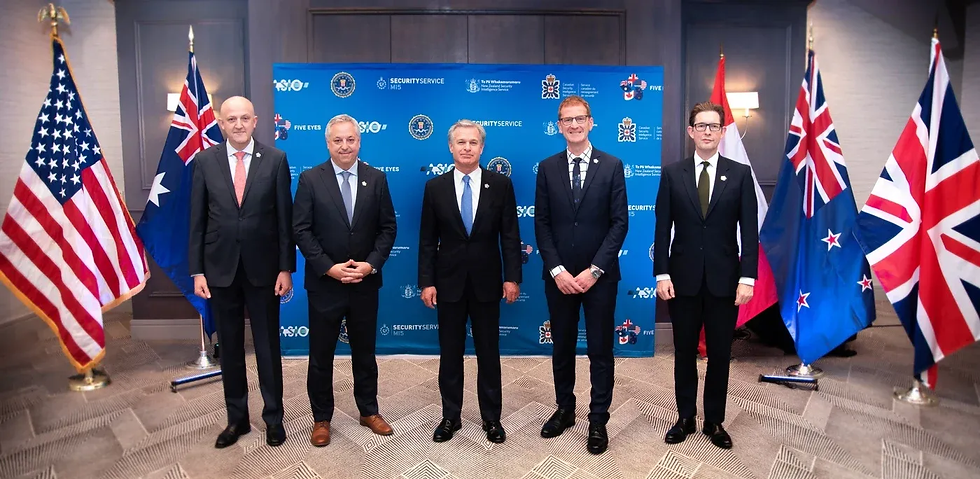
The World War II alliance deepened the relationship into a permanent institutional structure. The intelligence-sharing arrangement that became the “Five Eyes” partnership—linking the United States, United Kingdom, Canada, Australia, and New Zealand—created a framework of mutual dependence that persists to this day. Britain gained access to American signals intelligence capabilities that far exceeded its own. The United States gained access to British human intelligence networks and colonial-era relationships throughout the Middle East and Asia.⁸
How British Influence Operates
The British relationship operates largely below public consciousness, which is itself a measure of its success. Intelligence sharing creates mutual dependence: each side possesses information the other needs, making separation costly. Diplomatic coordination in international forums ensures that American and British positions align, often with Britain shaping the framing that America adopts. British officials enjoy access to American decision-makers that exceeds what other allies receive.⁹
The most consequential modern example was Tony Blair’s role in the Iraq War. Blair’s participation provided multilateral cover for what was essentially an American operation. His government produced the “dodgy dossier” on Iraqi weapons of mass destruction, which reinforced the Bush administration’s case for war. British military participation, though modest in scale, transformed a unilateral American invasion into a “coalition” operation.¹⁰ The costs of this partnership to Britain were substantial—197 British soldiers killed, billions of pounds spent, and lasting damage to British credibility. The costs to America of having British endorsement for a catastrophic war were arguably greater still, because that endorsement helped silence domestic opposition.
The Honest Assessment
The British relationship is the most institutionalized and the least scrutinized of America’s foreign entanglements. It operates on the assumption of shared interests rooted in shared language, shared legal traditions, and shared cultural heritage. These commonalities are real. But they do not guarantee that British interests and American interests align on any specific policy question.
Britain has repeatedly drawn America into conflicts—World War I, and arguably Iraq—where American interests were not clearly served. The Five Eyes arrangement gives Britain influence over American intelligence assessments that is rarely acknowledged. The relationship continues because it benefits those who manage it: the intelligence agencies, the diplomatic establishments, and the defense industries on both sides of the Atlantic.¹¹
The British relationship rarely generates controversy precisely because it is so deeply embedded. One does not question the ocean.
The Israel Lobby: Structure and Operation
The Israel lobby is the most scrutinized, the most controversial, and arguably the most effective foreign policy lobby in the United States. It is also the most misunderstood—in no small part because honest discussion of its activities has been treated as evidence of bigotry.
Defining the Lobby
The Israel lobby is not a conspiracy. It is not a monolith. It is not synonymous with American Jews, many of whom are critical of Israeli policy and some of whom are among the most eloquent opponents of the occupation of Palestinian territories. The lobby is, as Mearsheimer and Walt defined it, “a loose coalition of individuals and organizations who actively work to steer U.S. foreign policy in a pro-Israel direction.”¹²
At the center of this coalition stands the American Israel Public Affairs Committee (AIPAC), founded in 1953 and grown into one of the most powerful lobbying organizations in Washington. AIPAC does not contribute directly to campaigns—a structure that has allowed it to avoid registration as a foreign agent—but it directs donor networks, organizes congressional trips to Israel, grades members of Congress on Israel-related votes, and coordinates primary challenges against insufficiently supportive incumbents.¹³
But AIPAC is only one organization. Christians United for Israel (CUFI), led for years by Pastor John Hagee, claims millions of evangelical Christian supporters whose backing for Israel is rooted in biblical prophecy and the theological belief that Jewish control of the Holy Land is necessary for the End Times. The lobby is not primarily or exclusively Jewish; evangelical Christian Zionism represents a larger voting bloc than American Jewish Zionism.¹⁴
Think tanks amplify the lobby’s influence through the production of policy analysis that shapes media coverage and government thinking. The Washington Institute for Near East Policy was founded in 1985 as a spinoff of AIPAC. The Foundation for Defense of Democracies has become one of the most influential voices advocating hawkish policies toward Iran. The American Enterprise Institute has served as a neoconservative intellectual home where government officials become fellows and fellows become government officials.¹⁵
The Donor Networks
The financial dimension of the lobby is substantial and a matter of public record. In the 2023-2024 election cycle, AIPAC’s PAC and its affiliated super PAC, the United Democracy Project (UDP), spent approximately $100 million on elections—more than doubling their 2022 spending. AIPAC funded candidates in over 80 percent of the 469 congressional seats contested in 2024.¹⁶
The spending had specific targets. Representatives Jamaal Bowman of New York and Cori Bush of Missouri—both progressive Democrats who had called for a ceasefire in Israel’s war in Gaza—faced AIPAC-backed primary challengers supported by approximately $20 million in combined spending. Both were defeated.¹⁷ The message to other members of Congress was unmistakable: opposition to Israeli policy carries a quantifiable electoral cost.
Major donors who prioritize Israel in their political giving—including the late Sheldon Adelson, Haim Saban, and Paul Singer—have contributed to both parties, ensuring that support for Israel remains a bipartisan commitment. This bipartisan funding strategy is among the lobby’s most effective tools.¹⁸
The Congressional Trip
Nearly every newly elected member of Congress is invited on an AIPAC-affiliated trip to Israel shortly after taking office. These trips present the Israeli perspective intensively. Members meet with Israeli officials, visit military installations, and tour the country under Israeli guidance. No comparable trips to Palestinian territories or Arab states are routinely organized. Members return having seen one side of an extraordinarily complex situation presented with professional sophistication.¹⁹
The mechanism is not hidden or illegal. It is lobbying at its most effective: shaping the information environment within which decision-makers form their views.
The Policy Outcomes
The 1967 Shift
The United States-Israel relationship was not always unconditional. When Israel, along with Britain and France, invaded Egypt during the Suez Crisis of 1956, President Eisenhower forced all three to withdraw—a remarkable assertion of American interests over allied preferences. As late as the early 1960s, the Kennedy administration pressured Israel over its nuclear weapons program at Dimona.²⁰
The transformation came after the Six-Day War of 1967, when Israel captured the West Bank, Gaza, the Sinai Peninsula, and the Golan Heights. After 1967, American support became increasingly unconditional. The occupation began. The settlements expanded. And American support continued regardless. The question of why this shift occurred—and whose interests it served—is precisely the question Mearsheimer and Walt posed.²¹
The Special Arrangements
The United States provides Israel with a level of support that has no parallel in American foreign policy. Under a ten-year Memorandum of Understanding signed in 2016, the United States committed to providing Israel $3.8 billion annually in military aid—$38 billion over the decade.²² Israel is the only recipient of American foreign military financing permitted to spend a portion of the aid on its own domestic defense industry rather than purchasing exclusively American-made equipment. Israel also benefits from “cash flow financing,” a unique arrangement that allows it to receive major weapons systems and defer payment, effectively receiving interest-free loans backed by the American taxpayer.²³
Since the October 7, 2023 Hamas attacks and the subsequent war in Gaza, American military aid to Israel has accelerated dramatically. According to Brown University’s Costs of War Project, the United States spent approximately $17.9 billion in military aid to Israel in the year following October 7—the highest annual total in the history of the relationship, adjusted for inflation.²⁴ The Israeli Defense Ministry reported that the United States had delivered ninety thousand tons of arms and equipment on eight hundred transport planes and 140 ships between October 2023 and May 2025.²⁵
Cumulatively, Israel has received over $300 billion in total American aid since its founding, adjusted for inflation—more than any other country in the history of American foreign assistance.²⁶
The Diplomatic Shield
Beyond financial aid, the United States provides Israel with diplomatic protection at the United Nations that is virtually automatic. Between 1972 and 2024, the United States vetoed dozens of UN Security Council resolutions critical of Israel—more vetoes cast on behalf of Israel than on any other issue. These vetoes have blocked resolutions condemning settlement expansion, military operations in Gaza and Lebanon, and violations of international humanitarian law.²⁷
This diplomatic shield carries costs. It isolates the United States from the vast majority of the international community on Middle East issues. It undermines American credibility when Washington invokes international law against adversaries while shielding allies from the same standards. And it makes the United States a target for the resentment that Israeli policies generate—a point Osama bin Laden explicitly cited among his grievances against America.²⁸
The Costs and Benefits
The Case for the Relationship
Fairness demands that the strongest case for the United States-Israel relationship be presented honestly before it is examined.
Defenders argue that Israel is the only democracy in the Middle East and that shared democratic values create a natural alliance. Israel’s intelligence services provide valuable information on terrorism and regional threats. Israel serves as a reliable military partner in an unstable region. Israeli technology companies contribute to American innovation and economic growth. The relationship reflects a moral commitment to supporting a Jewish state in the aftermath of the Holocaust—a commitment that transcends narrow strategic calculation.²⁹
These arguments are not trivial. Israeli intelligence cooperation has produced genuine benefits for American security. Shared democratic institutions, however imperfect, create real commonalities. The moral weight of the Holocaust is not diminished by noting that it is sometimes invoked to shield Israeli policies from legitimate criticism.
The Case Against Current Policy
The costs of the relationship are substantial and growing.
The financial burden—$3.8 billion in annual baseline aid, plus emergency supplementals that brought the total to nearly $18 billion in a single year—flows to a country with a per capita GDP exceeding $50,000, a sophisticated technology sector, and nuclear weapons capabilities. Israel is not a developing nation in need of foreign assistance.³⁰
The diplomatic costs are significant. American isolation on Israel-related votes at the United Nations undermines Washington’s ability to build coalitions on other issues. The perception that the United States applies one standard to Israel and another to the rest of the world damages American credibility throughout the Middle East and the Global South.
The security costs may be the most consequential. Unconditional American support for Israel has been cited by terrorist organizations as a primary grievance against the United States. The 9/11 Commission Report documented that American support for Israel was among the motivating factors for al-Qaeda’s attacks.³¹ This is not to assign moral responsibility to Israel for terrorism directed against America—the responsibility lies with those who commit acts of violence. It is to note that the relationship carries security costs that are rarely tallied.
The occupation of Palestinian territories—now approaching six decades—is incompatible with the democratic values that defenders of the relationship invoke. The expansion of settlements on occupied land violates international law as understood by virtually every country in the world, including, officially, the United States. American military aid that enables the continuation of the occupation implicates the United States in policies that contradict its stated principles.³²
The Mearsheimer-Walt Thesis
The central claim of Mearsheimer and Walt’s analysis was not that the Israel lobby is all-powerful or that it constitutes a conspiracy. Their argument was more modest and more difficult to refute: the lobby explains why American policy toward Israel differs so dramatically from the policies of other democracies with similar values. Canada, France, Germany, and the United Kingdom all maintain relationships with Israel, but none provides the level of unconditional support that characterizes American policy. The difference, Mearsheimer and Walt argued, is the political influence of the lobby on the American domestic political process.³³
Their conclusion was blunt: “No lobby has managed to divert U.S. foreign policy as far from what the American national interest would otherwise suggest.”³⁴ One need not accept every element of their analysis to acknowledge that the question they posed—whose interests does this policy serve?—is legitimate and necessary.
The Methodology of Influence in Practice
The Campaign Finance Mechanism
The mechanism by which the lobby influences electoral politics is neither secret nor illegal, but it is remarkably effective. AIPAC does not merely contribute to candidates who already support its positions—it actively shapes the field of candidates who run. Potential candidates learn early that support for Israel brings funding while criticism brings opposition. The calculus is straightforward: why risk a well-funded primary challenge over a policy issue that most constituents do not follow closely?³⁵
In the 2024 cycle, AIPAC’s United Democracy Project spent approximately $14.6 million against Jamaal Bowman and $8.6 million against Cori Bush—sums that dwarfed what either incumbent could raise.³⁶ Notably, much of the UDP’s advertising in these races did not mention Israel at all, instead focusing on local issues. The spending functioned as a demonstration effect: this is what happens to members of Congress who deviate from the lobby’s positions.
The Primary Challenge
The primary election is the lobby’s most effective tool. In a general election, partisan loyalty often overrides policy disagreements. In a primary, where turnout is low and voters are less ideologically differentiated, a well-funded challenger backed by outside spending can defeat an incumbent who holds positions supported by a majority of the electorate on most other issues.
The examples accumulate across decades. Senator Charles Percy of Illinois, once chairman of the Senate Foreign Relations Committee, lost his seat in 1984 after crossing AIPAC on arms sales to Saudi Arabia. Representative Cynthia McKinney of Georgia and Representative Earl Hilliard of Alabama both faced AIPAC-backed primary challengers after criticizing Israeli policy.³⁷ The defeats send a message that reverberates far beyond the individual races.
Few members of Congress are willing to pay the political cost of opposing the lobby on its core issues. This is not conspiracy—it is political reality, operating in plain sight.
The Media Environment
Coverage of the Israel-Palestine conflict in mainstream American media has historically tilted heavily toward the Israeli narrative. Palestinian perspectives have been marginalized, Palestinian casualties reported with less context and empathy than Israeli casualties, and critics of Israeli policy have faced accusations of antisemitism that function as professional sanctions.³⁸
This dynamic has shifted somewhat since October 2023, as the scale of destruction in Gaza has strained the capacity of even sympathetic media to maintain the traditional framing. Independent media, social media platforms, and international outlets have provided alternative perspectives that were previously unavailable to most American audiences. But the structural advantages of the pro-Israel narrative in mainstream American media—cultivated over decades through access, advertising, and organized pressure campaigns—remain substantial.³⁹
Other Foreign Influences
Saudi Arabia
Applying the same standard to other relationships produces illuminating comparisons.
Saudi Arabia has purchased influence through mechanisms that are, in many respects, the mirror image of the Israel lobby. Where the Israel lobby operates primarily through domestic political organizations and campaign contributions, Saudi influence operates through arms sales that create American jobs and corporate dependence, sovereign wealth fund investments in American companies and real estate, and direct donations to American universities and think tanks.⁴⁰
The Saudi relationship presents a particularly stark test of the cui bono question. Fifteen of the nineteen September 11 hijackers were Saudi nationals. The Saudi government’s promotion of Wahhabist ideology through global mosque-building and educational programs created the ideological infrastructure within which jihadist terrorism flourished. Yet Saudi Arabia faced no consequences after September 11—no sanctions, no reduction in arms sales, no diplomatic downgrade. The oil relationship and the resulting corporate and financial entanglements protected Saudi Arabia from scrutiny it would otherwise have faced.⁴¹
Gulf States
Qatar maintains American military bases while funding Al Jazeera and various think tanks that shape American policy debates. The United Arab Emirates has invested heavily in American real estate, technology, and media, purchasing influence through economic integration rather than traditional lobbying. These states have interests that frequently diverge from American interests, yet their influence on American policy is rarely discussed with the intensity directed at the Israel lobby.⁴²
Taiwan
Taiwan maintains a sophisticated lobbying operation that has cultivated strong congressional support despite the official “One China” policy. The American commitment to Taiwan’s defense risks a catastrophic war with nuclear-armed China—a risk whose costs to American interests dwarf those of any Middle Eastern entanglement. Yet the Taiwan lobby operates with relatively little public scrutiny or controversy.⁴³
The Consistent Question
The point is not that any of these relationships is inherently illegitimate. The point is that every foreign influence relationship should face the same scrutiny and the same question: does this serve American interests? Israel is not unique in seeking to influence American policy. What is unique is that the influence is uniquely protected from criticism—a protection that itself distorts democratic deliberation.
The Interventionist Defense
The Case for Foreign Alliances
The strongest defense of American alliance commitments runs as follows: America benefits from allies who share intelligence, provide military bases, offer diplomatic support, and contribute to a rules-based international order. Some asymmetry in these relationships is acceptable given the benefits received. Lobbying by allied interests is a form of democratic participation, not corruption. Accusations of “dual loyalty” directed at Americans who advocate for allied nations are bigoted and have a long history of being used to marginalize minority communities. The Israel relationship in particular reflects genuine American values—support for democracy, opposition to terrorism, and moral solidarity with a people who have faced persecution—not manipulation by a shadowy lobby.⁴⁴
These arguments deserve serious engagement. The charge of dual loyalty is indeed bigoted when directed at individuals based on their ethnicity or religion. Lobbying is indeed protected speech. And the moral dimensions of the relationship are real.
The Response
But alliance benefits must be weighed against costs. When allies draw the United States into conflicts—Iraq, potentially Iran—the costs may exceed the benefits. Noting that foreign influence exists is not questioning anyone’s loyalty; it is describing how politics works. Policy should be debated on its merits, not insulated from criticism by accusations of bigotry.
The pattern is consistent: when American policy in the Middle East is questioned, the questioner’s motives are attacked rather than the substance of the question addressed. Mearsheimer and Walt were not antisemites. They were realist scholars applying their analytical framework to a policy relationship. The ferocity of the response to their work illustrated, rather than refuted, their central claim about the lobby’s ability to police the boundaries of acceptable discourse.⁴⁵
Patrick Buchanan, writing from the paleoconservative tradition, observed that the same foreign policy establishment that invokes democracy to justify the Israel relationship works actively to prevent democratic deliberation about it. “Congress,” Buchanan wrote, “is Israeli-occupied territory.”⁴⁶ The statement is deliberately provocative—but the underlying observation about congressional deference to the lobby on Middle East policy is difficult to dispute on the evidence.
The Taboo Must End
Every other foreign policy question in America can be debated. The merits of the NATO alliance, the wisdom of defending Taiwan, the costs of the Saudi relationship, the value of the Five Eyes partnership—all are subjects of legitimate scholarly and political discussion. Exempting one relationship from the same scrutiny is itself a form of bias, and it prevents American citizens from making informed judgments about policies conducted in their name and funded with their money.
The accusation of antisemitism, deployed against legitimate policy criticism, is not merely unfair to the critics. It is corrosive to the fight against actual antisemitism, because it conflates a political lobby with a religious and ethnic community, and it transforms a serious moral category into a political weapon. This must change if American interests are to be properly assessed.⁴⁷
Conclusion: Whose Interests?
The pattern that emerges across all of these relationships is consistent and troubling.
Britain drew America into World War I through propaganda and intelligence manipulation, and British participation in the Iraq War provided multilateral cover for a catastrophic decision. Israel has shaped American Middle East policy in directions that have isolated the United States diplomatically, generated terrorist blowback, and cost American taxpayers hundreds of billions of dollars. Saudi Arabia has protected itself from the consequences of its role in fostering jihadist ideology while purchasing American political support through arms deals and investments. Each relationship has its defenders, its beneficiaries, and its costs.
The costs are borne by the American people. The benefits accrue disproportionately to allied governments, to the defense industries that profit from the relationships, and to the foreign policy establishment that manages them. This is not the system the founders envisioned.
Washington’s warning about “passionate attachment” to foreign nations was not an abstraction. He understood, with the clarity of a man who had fought a revolution against an empire, that foreign influence was among the gravest threats to republican self-government. He understood that sympathy for a favored nation could create “the illusion of an imaginary common interest” and draw the republic into “the quarrels and wars of the latter without adequate inducement or justification.”⁴⁸
Two hundred and thirty years later, the warning reads like prophecy.
The path forward does not require hostility toward any nation. It requires honest assessment of every relationship based on a single standard: does this serve American interests? It requires the courage to ask questions that powerful lobbies would prefer remain unasked. It requires resistance to the accusation that analyzing foreign influence on American policy is itself evidence of prejudice. And it requires the democratic deliberation that the founders considered essential to self-government—deliberation that cannot occur when certain topics are placed beyond the reach of legitimate debate.
The question with which this series began remains the question with which it must continue: did this leave Americans more free or more governed? The answer, when applied to the foreign influence relationships examined here, is uncomfortable. Americans are governed by policies they did not choose, shaped by influences they cannot discuss, and funded by taxes they were never asked to approve. The founders had a word for this condition. They called it tyranny.
Self-Reflection Prompts
As you consider this history, ask yourself these questions:
Legitimate criticism. The Mearsheimer-Walt paper was denounced as antisemitic by many who did not engage with its arguments. Is it possible to criticize Israeli government policy or the influence of the Israel lobby without being antisemitic? What would legitimate criticism look like, and how would you distinguish it from actual antisemitism?
Asymmetric scrutiny. The British relationship with the United States is rarely scrutinized despite British influence on American entry into multiple wars. Why do you think some foreign influences generate controversy while others do not? What does the asymmetry tell us about how political discourse is shaped?
Washington’s warning. The founders warned against “passionate attachment” to foreign nations. Do any current American alliances reflect the pattern Washington described—sympathy creating the illusion of common interest where none exists? What would a dispassionate assessment of these alliances look like?
Campaign finance and democracy. Campaign contributions and lobbying by foreign-aligned groups are legal under American law. Should there be limits on the ability of lobbying organizations aligned with foreign governments to influence American elections? If so, what should those limits be, and how would you design them without infringing on protected speech?
Cui bono applied consistently. This article examines British, Israeli, Saudi, and other foreign influence on American policy. Apply the cui bono question to another alliance not discussed here. Who benefits? Who pays? And are the American people making informed choices about the costs?
Endnotes
George Washington, Farewell Address, September 19, 1796. Available at Founders Online, National Archives: https://founders.archives.gov/documents/Washington/05-20-02-0440-0002
John J. Mearsheimer is the R. Wendell Harrison Distinguished Service Professor of Political Science at the University of Chicago. Stephen M. Walt is the Robert and Renée Belfer Professor of International Affairs at Harvard Kennedy School. Their essay was published in the London Review of Books, March 23, 2006, with an expanded faculty working paper posted simultaneously on the Kennedy School website.
Alan Dershowitz, “Debunking the Newest—and Oldest—Jewish Conspiracy,” Harvard University Working Paper, April 2006. Eliot A. Cohen, “Yes, It’s Anti-Semitic,” Washington Post, April 5, 2006. Jeffrey Goldberg cited in Security Studies 18, no. 1 (2009).
On the asymmetry in public discourse about foreign lobbies, see John J. Mearsheimer and Stephen M. Walt, The Israel Lobby and U.S. Foreign Policy (New York: Farrar, Straus and Giroux, 2007), pp. 6-12.
On lobbying as protected speech, see the First Amendment and the Supreme Court’s interpretation in United States v. Harriss (1954). On the Foreign Agents Registration Act, see 22 U.S.C. §§ 611-621.
For a comprehensive overview of the mechanisms of foreign influence on American policy, see Ben Freeman, The Foreign Policy Auction: Foreign Lobbying in America (Independently Published, 2012).
On British influence on American entry into World War I, see Thomas Boghardt, The Zimmermann Telegram: Intelligence, Diplomacy, and America’s Entry into World War I (Annapolis: Naval Institute Press, 2012). See also Empire of Liberty, Article 5.
On the Five Eyes partnership, see Richard J. Aldrich, GCHQ: The Uncensored Story of Britain’s Most Secret Intelligence Agency (London: HarperPress, 2010), pp. 84-112.
On British access to American decision-makers and diplomatic coordination, see John Dumbrell, A Special Relationship: Anglo-American Relations from the Cold War to Iraq (London: Palgrave Macmillan, 2006), pp. 1-28.
On Blair’s role in the Iraq War and the “dodgy dossier,” see The Report of the Iraq Inquiry (Chilcot Report), July 6, 2016, Executive Summary, pp. 63-78. British casualties: 179 service personnel died in Iraq operations according to the UK Ministry of Defence.
On the costs and benefits of the Anglo-American intelligence relationship, see Christopher Andrew, The Defence of the Realm: The Authorized History of MI5 (London: Allen Lane, 2009).
Mearsheimer and Walt, The Israel Lobby and U.S. Foreign Policy, p. 5.
On AIPAC’s structure and operations, see Grant F. Smith, Big Israel: How Israel’s Lobby Moves America (Washington: Institute for Research: Middle Eastern Policy, 2016), pp. 45-72.
On Christian Zionism, see Victoria Clark, Allies for Armageddon: The Rise of Christian Zionism (New Haven: Yale University Press, 2007). CUFI claims over ten million members; see https://www.cufi.org.
On the Washington Institute for Near East Policy’s origins as an AIPAC spinoff, see Mearsheimer and Walt, The Israel Lobby, p. 175. On the Foundation for Defense of Democracies, see Eli Clifton, “Follow the Money: Three Billionaires Paved the Way for Trump’s Iran Deal Withdrawal,” The Nation, May 8, 2018. On the neoconservative think tank ecosystem, see James Mann, Rise of the Vulcans: The History of Bush’s War Cabinet (New York: Viking, 2004).
AIPAC PAC and United Democracy Project combined spending of approximately $100 million in the 2023-2024 cycle per Federal Election Commission filings. See “AIPAC Officially Surpasses $100 Million in Spending on 2024 Elections,” Sludge, August 27, 2024. AIPAC funded candidates in 389 of 469 contested races per The Intercept, October 24, 2024.
On the Bowman and Bush primary defeats, see “Report: AIPAC Spent a Record Amount on the 2024 Election,” The New Republic, January 9, 2025. UDP spending of $14.6 million on the Bowman race and $8.6 million on the Bush race per OpenSecrets, cited in JNS, February 6, 2025.
On bipartisan donor strategy, see Mearsheimer and Walt, The Israel Lobby, pp. 151-164. On major donors, see The Intercept, October 24, 2024.
On congressional trips to Israel, see Kirk J. Beattie, Congress and the Shaping of the Middle East (New York: Seven Stories Press, 2015), pp. 101-124.
On Eisenhower forcing Israeli withdrawal from Sinai, see Donald Neff, Warriors at Suez: Eisenhower Takes America into the Middle East (New York: Linden Press, 1981). On Kennedy and Dimona, see Avner Cohen, Israel and the Bomb (New York: Columbia University Press, 1998), pp. 99-152.
On the post-1967 shift in the relationship, see Mearsheimer and Walt, The Israel Lobby, pp. 48-55. On settlement expansion, see Gershom Gorenberg, The Accidental Empire: Israel and the Birth of the Settlements, 1967-1977 (New York: Times Books, 2006).
The 2016 Memorandum of Understanding, signed September 14, 2016, committed $38 billion over ten years (FY2019-2028), including $33 billion in Foreign Military Financing and $5 billion in missile defense. See Congressional Research Service, “U.S. Foreign Aid to Israel,” RL33222, updated 2025.
On cash flow financing and other unique provisions, see Congressional Research Service, “U.S. Foreign Aid to Israel,” RL33222. On the offshore procurement exception, see Sharp, “U.S. Foreign Aid to Israel,” CRS Report, Section on FMF.
Linda J. Bilmes, Stephen Semler, and William D. Hartung, “United States Spending on Israel’s Military Operations,” Brown University Watson Institute Costs of War Project, October 7, 2024.
Israeli Defense Ministry statement on U.S. deliveries, May 2025, cited in Council on Foreign Relations, “U.S. Aid to Israel in Four Charts,” updated October 2025.
Council on Foreign Relations reports over $300 billion in cumulative aid adjusted for inflation; Stephen Semler’s independent research places the figure at approximately $352 billion including previously unaccounted-for missile defense funding. See Semler, “How Much Aid Has the US Given Israel?” Security Policy Reform Institute, January 20, 2026.
On U.S. vetoes at the UN Security Council on behalf of Israel, see Rashid Khalidi, Brokers of Deceit: How the U.S. Has Undermined Peace in the Middle East (Boston: Beacon Press, 2013), pp. 1-35.
On bin Laden’s stated grievances including U.S. support for Israel, see the 9/11 Commission Report (2004), pp. 48-49. See also Scott Horton, Enough Already: Time to End the War on Terrorism (Libertarian Institute, 2021), pp. 15-32.
For the strongest formulation of the strategic and moral case for the U.S.-Israel relationship, see Michael Oren, Ally: My Journey Across the American-Israeli Divide (New York: Random House, 2015).
Israel’s GDP per capita exceeded $52,000 in 2023 per World Bank data. On the argument that wealthy nations should not receive foreign aid, see Doug Bandow, “End Welfare for Israel,” The American Conservative, March 2014.
9/11 Commission Report (2004), pp. 48-49, 147, 362. Bin Laden’s 1996 fatwa and 1998 declaration of jihad both cite U.S. support for Israel as a grievance.
On the legal status of settlements under international law, see International Court of Justice Advisory Opinion on the Legal Consequences of the Construction of a Wall in the Occupied Palestinian Territory, July 9, 2004. The United States has officially considered settlements inconsistent with international law, though enforcement has been absent.
Mearsheimer and Walt, The Israel Lobby, pp. 5-16. The comparative point—that no other democracy provides equivalent unconditional support—is documented at pp. 49-51.
Mearsheimer and Walt, The Israel Lobby, p. 6.
On the chilling effect of AIPAC’s electoral activity on congressional behavior, see Beattie, Congress and the Shaping of the Middle East, pp. 85-100.
UDP spending figures from Federal Election Commission filings, reported in “Campaign Spending at Pro-Israel Political Action Committees Up in 2024,” JNS, February 6, 2025.
On the Percy, McKinney, and Hilliard cases, see Mearsheimer and Walt, The Israel Lobby, pp. 162-168. See also Paul Findley, They Dare to Speak Out: People and Institutions Confront Israel’s Lobby (Westport, CT: Lawrence Hill, 1985).
On media coverage asymmetries, see Marda Dunsky, Pens and Swords: How the American Mainstream Media Report the Israeli-Palestinian Conflict (New York: Columbia University Press, 2008).
On the shift in media coverage since October 2023, see multiple analyses including coverage from The Intercept, The Guardian, and independent media monitoring organizations.
On Saudi lobbying mechanisms, see Ben Freeman, “Saudi Arabia’s Lobbying in America,” Quincy Institute, 2019. On Saudi investments and arms purchases, see Andrew Scott Cooper, The Oil Kings: How the U.S., Iran, and Saudi Arabia Changed the Balance of Power in the Middle East (New York: Simon & Schuster, 2011).
On the Saudi role in September 11, including the redacted 28 pages of the 9/11 Commission Report, see Scott Horton, Enough Already, pp. 33-52. The 28 pages, declassified in 2016, documented Saudi government connections to the hijackers.
On Qatari and Emirati influence in Washington, see Ben Freeman, “Foreign Government Funded Think Tanks in Washington,” Quincy Institute, 2020.
On the Taiwan lobby, see Nancy Bernkopf Tucker, Strait Talk: United States-Taiwan Relations and the Crisis with China (Cambridge: Harvard University Press, 2009).
For the strongest formulation of the interventionist defense, see Dennis Ross, Doomed to Succeed: The U.S.-Israel Relationship from Truman to Obama (New York: Farrar, Straus and Giroux, 2015).
On the response to Mearsheimer and Walt illustrating their thesis, see Michael Scheuer (former CIA official) quoted on NPR, March 2006: “They should be credited for the courage they have had to actually present a paper on the subject.” Zbigniew Brzezinski wrote that Mearsheimer and Walt “adduce a great deal of factual evidence” for their claims. See Brzezinski, “A Dangerous Exemption,” Foreign Policy, July-August 2006.
Patrick Buchanan, quoted in various columns and interviews. See Buchanan, A Republic, Not an Empire (Washington: Regnery, 1999), and his syndicated columns on Middle East policy.
On the conflation of antisemitism with policy criticism, see Norman Finkelstein, Beyond Chutzpah: On the Misuse of Anti-Semitism and the Abuse of History (Berkeley: University of California Press, 2005). See also Jewish Voice for Peace, “A Dangerous Conflation,” 2019.
Washington, Farewell Address, 1796.
Sources and Further Reading
Primary Sources
George Washington, Farewell Address (1796) — The foundational warning against passionate attachment to foreign nations and foreign influence on republican government.
Foreign Agents Registration Act (1938, amended) — The legal framework governing foreign lobbying in the United States.
AIPAC and United Democracy Project, Federal Election Commission filings (2023-2024) — Public records of campaign spending.
9/11 Commission Report (2004) — Documents the role of U.S. Middle East policy in motivating the September 11 attacks.
U.S.-Israel Memorandum of Understanding (2016) — The ten-year, $38 billion aid commitment.
Secondary Sources
John J. Mearsheimer and Stephen M. Walt, The Israel Lobby and U.S. Foreign Policy (2007) — The seminal scholarly analysis of the Israel lobby’s influence on American policy.
Rashid Khalidi, Brokers of Deceit (2013) — On American undermining of peace in the Middle East.
Grant F. Smith, Big Israel (2016) — Detailed analysis of the lobby’s organizational structure.
Kirk J. Beattie, Congress and the Shaping of the Middle East (2015) — On congressional dynamics around Middle East policy.
Linda J. Bilmes, Stephen Semler, and William D. Hartung, Costs of War Project (2024) — Brown University research on U.S. spending on Israel’s military operations.
From the Non-Interventionist Tradition
Patrick Buchanan, A Republic, Not an Empire (1999) — On foreign influence and the case against entangling alliances.
Scott Horton, Enough Already: Time to End the War on Terrorism (2021) — On the consequences of Middle East intervention and the blowback generated by unconditional support for Israel.
Ron Paul — Speeches on foreign aid, Middle East policy, and the constitutional case against entangling alliances.
On Specific Topics
Alison Weir, Against Our Better Judgment (2014) — On the history of U.S. involvement in the creation of Israel.
Victoria Clark, Allies for Armageddon (2007) — On Christian Zionism and its political influence.
Paul Findley, They Dare to Speak Out (1985) — A former congressman’s account of the lobby’s influence.
John Dumbrell, A Special Relationship (2006) — On the Anglo-American alliance and its consequences.


Comments