“The Arab Spring’s Winter” — Libya, Syria, Yemen, and the Pattern Continues

“Every gun that is made, every warship launched, every rocket fired signifies, in the final sense, a theft from those who hunger and are not fed, those who are cold and are not clothed. This world in arms is not spending money alone. It is spending the sweat of its laborers, the genius of its scientists, the hopes of its children.”—Dwight D. Eisenhower, speech, 1953¹
Introduction: The Spring That Became Winter
In December 2010, a Tunisian street vendor named Mohamed Bouazizi set himself on fire to protest government harassment. His death sparked protests that spread across the Arab world: Tunisia, Egypt, Libya, Syria, Yemen, Bahrain. For a moment, it appeared that democratic revolution was sweeping away dictators. Western observers celebrated the “Arab Spring.” The comparisons to 1989 and the fall of the Berlin Wall were intoxicating.
A decade and a half later, the results are in. Tunisia, the one success story, reverted to authoritarianism under President Kais Saied, who dissolved parliament in 2021 and rewrote the constitution to concentrate power in his own hands. Egypt’s brief democratic experiment ended in a military coup that installed Abdel Fattah el-Sisi, whose regime is more repressive than Mubarak’s. Libya is a failed state, fragmented among rival governments and militias. Syria endured nearly fourteen years of civil war that killed over half a million people, displaced thirteen million, and ultimately ended not with the democratic revolution the West promised to support but with the country’s seizure by a coalition led by a former al-Qaeda affiliate. Yemen became the world’s worst humanitarian catastrophe, with nearly twenty million people in need of assistance after a decade of war fueled by American weapons.²
American intervention did not cause all of this. But it made much of it immeasurably worse. The Arab Spring interventions demonstrate, with devastating clarity, that the United States learned nothing from Iraq. Every error was repeated. Regime change without a plan for the aftermath. Arming rebels who proved neither moderate nor effective. Creating chaos that extremists exploited. And abandoning commitments when the consequences became inconvenient — leaving populations to bear the costs of American decisions.
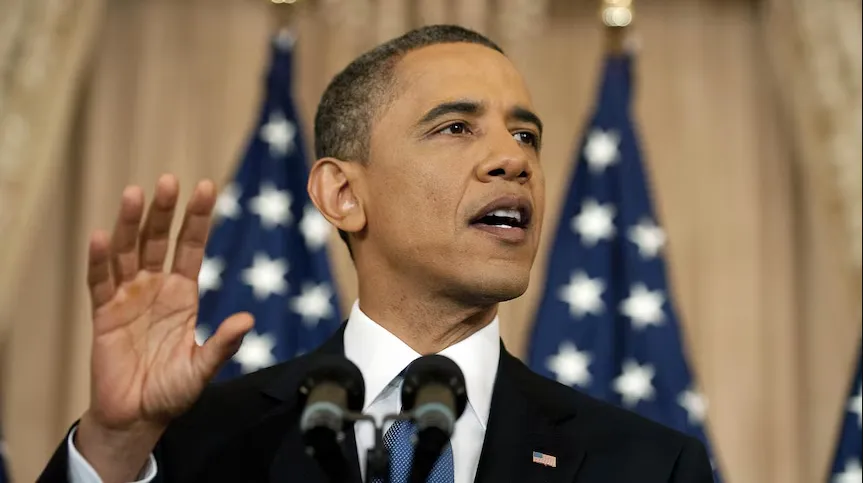
What makes the Arab Spring interventions particularly instructive is that they occurred under a president who had been elected in part because of his opposition to the Iraq War. Barack Obama had opposed the invasion of Iraq as a state senator. He had campaigned on ending the war. He understood, or should have understood, the lessons of that catastrophe. Yet within two years of taking office, his administration was pursuing regime change in Libya and covert war in Syria—repeating the Iraq playbook with cosmetic modifications. The fact that even a president skeptical of intervention could not resist the institutional pressures, the humanitarian rhetoric, and the advisory apparatus that pushed toward war suggests that the problem is not individual judgment but systemic. The machinery of intervention operates regardless of who sits in the Oval Office.
This article examines three interventions — Libya, Syria, and Yemen — that together constitute the proof that the pattern identified throughout this series is not a series of mistakes but a structural feature of American foreign policy. The question is no longer whether interventionism fails. It is whether the system that produces it can be changed.
Libya: “We Came, We Saw, He Died”
The Intervention
When protests against Muammar Gaddafi erupted in February 2011, the Libyan leader threatened to crush the rebellion. Within the Obama administration, a faction led by Secretary of State Hillary Clinton, UN Ambassador Susan Rice, and National Security Council aide Samantha Power pushed for military intervention. They invoked the doctrine of “Responsibility to Protect” — R2P — arguing that the United States had a moral obligation to prevent a humanitarian catastrophe.³
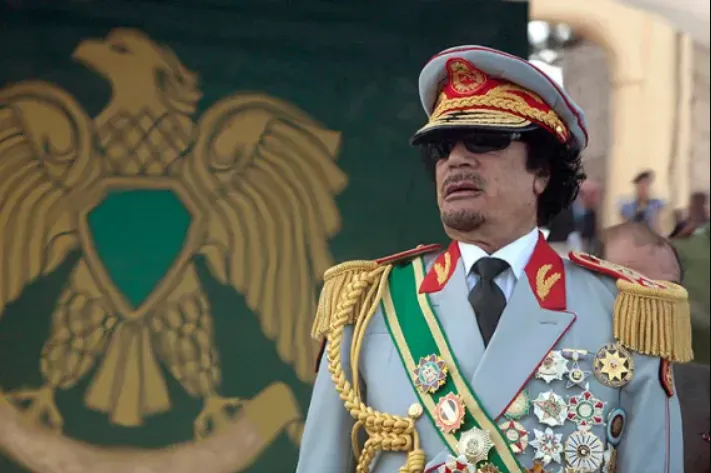
The irony of the Libya intervention is difficult to overstate. Gaddafi had, in the years prior, cooperated extensively with the United States. After the Iraq invasion, he had voluntarily surrendered Libya’s nuclear weapons program — the very outcome that American policy ostensibly sought to achieve through regime change elsewhere. He had opened Libya’s intelligence files to Western agencies. He had cooperated on counterterrorism. The lesson his overthrow sent to every other dictator in the world was devastating: cooperate with the United States, surrender your weapons, and you will be overthrown anyway. North Korea’s Kim Jong-un explicitly cited Gaddafi’s fate as the reason he would never surrender his nuclear program. The Libya intervention did not merely fail on its own terms — it made every future nonproliferation effort harder.⁴
The United Nations Security Council passed Resolution 1973 in March 2011, authorizing a no-fly zone and “all necessary measures” to protect civilians. Russia and China abstained rather than veto — a decision they would bitterly regret. The resolution authorized civilian protection. NATO used it to pursue regime change — a bait-and-switch that Russia and China would never forgive and that effectively destroyed R2P as a workable doctrine for future crises.⁵
NATO airpower, led by the United States, France, and Britain, systematically destroyed Gaddafi’s military capabilities. Rebel forces, with NATO air support, advanced on Tripoli. On October 20, 2011, Gaddafi was captured and killed by rebel fighters — sodomized with a bayonet before being shot. Secretary of State Clinton, informed of his death on camera, laughed and said: “We came, we saw, he died.”⁶
The Aftermath
What followed was precisely what Iraq should have taught Washington to expect. Libya collapsed into a failed state. The central government disintegrated. Rival militias— many of them armed with weapons looted from Gaddafi’s arsenals — carved the country into competing fiefdoms. Two rival governments claimed legitimacy. ISIS established a foothold. Human trafficking networks turned Libya into a transit point for migrants attempting to reach Europe, with open-air slave markets operating in a country the United States had “liberated.”⁶
Gaddafi’s weapons arsenals were looted and dispersed across North Africa and the Sahel. Weapons flowed to militant groups in Mali, Nigeria, and beyond. The Tuareg fighters who had served in Gaddafi’s military returned to Mali and launched a rebellion that destabilized the entire region.⁷
The refugee and migration crisis that Libya’s collapse produced reshaped European politics. With no functioning coast guard and no government capable of controlling the country’s borders, Libya became the primary departure point for hundreds of thousands of migrants and refugees attempting to cross the Mediterranean to Europe. Thousands drowned. The survivors who reached European shores fueled a backlash against immigration that strengthened far-right parties across the continent—a political consequence of the Libya intervention that its architects never anticipated and have never acknowledged.⁷
On September 11, 2012 — eleven years to the day after the original September 11 attacks — armed militants attacked the American diplomatic compound in Benghazi, killing Ambassador Christopher Stevens and three other Americans. Stevens was the first American ambassador killed in the line of duty since 1979. The attack became a partisan controversy in the United States, consumed by questions about talking points and security failures. The deeper question—why the United States had intervened in Libya, what it had accomplished, and whether the entire enterprise had been a catastrophic error — was never seriously addressed.⁸
In 2016, President Obama was asked about his worst mistake. He identified Libya, specifically “failing to plan for the day after” the intervention. But the problem was not merely the failure to plan for the aftermath. The problem was the intervention itself — the same problem the United States had created in Iraq, had been warned about in Iraq, and had apparently learned nothing from in Iraq.⁹
Clinton had called Libya “smart power at its best.” It was, in fact, the Iraq playbook executed with airpower instead of ground troops—and with identical results.
The connection between Libya and Syria was not merely thematic. Investigative reporting revealed that the CIA facilitated the transfer of weapons from Libya’s looted arsenals to Syrian rebel groups — a pipeline that allegedly ran through the Benghazi diplomatic facility where Ambassador Stevens was killed. The intervention in one country fed directly into the intervention in the next. The weapons that America helped scatter across Libya ended up in the hands of fighters in Syria, some of whom were jihadists. The blowback was not sequential — it was simultaneous, with each intervention compounding the consequences of the other.¹⁰
Syria: The Civil War America Prolonged
The Uprising and the Decision
Protests against Bashar al-Assad began in March 2011, inspired by the revolutions elsewhere in the Arab world. Assad responded with brutal repression. The protests escalated into armed resistance. By late 2011, Syria was descending into civil war.
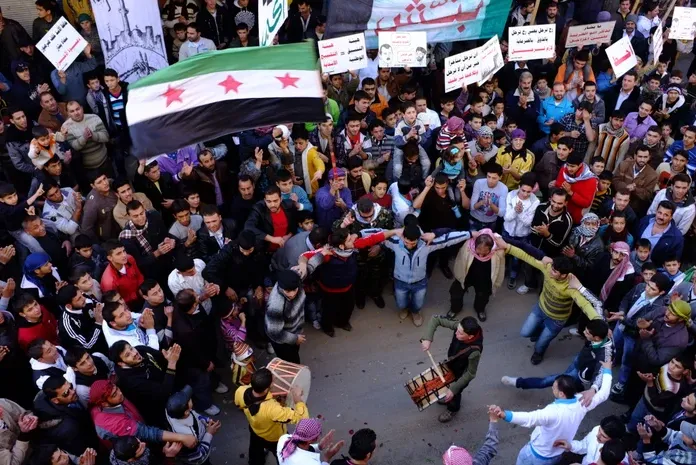
In August 2011, President Obama declared that Assad must “step aside.” It was a statement of desire without a plan for achievement — and it committed American credibility to an outcome the administration was unwilling to pursue with the resources necessary to achieve it.¹⁰
The CIA launched Operation Timber Sycamore, a covert program to arm and train Syrian rebels that would ultimately cost over one billion dollars. The Pentagon ran a separate program, spending $500 million to train “moderate” fighters. In September 2015, General Lloyd Austin, commander of U.S. Central Command, testified before Congress that the Pentagon’s program had produced “four or five” trained fighters — a ratio of approximately $100 million per fighter. The admission was so absurd that it might have been comic had the stakes not been measured in human lives.¹¹
The “Moderate Rebel” Fiction
The central problem of the Syrian intervention was the fiction of the “moderate rebel.” The opposition to Assad was never unified. It included secular nationalists, Islamists of varying degrees of radicalism, Kurdish separatists, and jihadists affiliated with al-Qaeda and eventually ISIS. The United States attempted to identify and support moderate factions, but the battlefield reality defied such tidy categorizations.
Weapons and support provided to “moderate” groups routinely ended up in the hands of extremists. Al-Nusra Front — al-Qaeda’s Syrian affiliate — was among the strongest rebel factions and frequently cooperated with groups receiving American support. The line between “moderate” and “extremist” was often indistinguishable on the ground, and fighters moved between factions depending on which offered the best weapons, pay, and prospects. In some cases, entire units defected from American-backed groups to jihadist organizations, taking their American-supplied weapons with them.¹¹
The absurdity reached its peak when American-backed rebels and Pentagon-backed rebels fought each other in northern Syria. The CIA’s Timber Sycamore program and the Pentagon’s own training program operated with different objectives, different vetted groups, and occasionally conflicting operational goals. The United States was not merely failing to coordinate its allies — it was failing to coordinate with itself.
Meanwhile, America’s ostensible allies pursued their own interests with relentless determination. Saudi Arabia and Qatar funded rebel factions — including extremist ones — that aligned with their sectarian and geopolitical objectives rather than American interests. Turkey, a NATO ally, allowed jihadist fighters to transit its territory into Syria while prioritizing the suppression of Kurdish forces — the very forces that proved most effective against ISIS and that the United States was simultaneously supporting. The Syrian battlefield became a laboratory demonstration of everything the non-interventionist tradition had warned about: the impossibility of controlling complex civil wars from the outside, the unreliability of allies who pursue their own agendas, and the certainty that weapons distributed in chaotic environments will end up in the wrong hands.
The Red Line
In August 2012, Obama declared that the use of chemical weapons by the Assad regime would constitute a “red line” that would change his calculus for intervention. In August 2013, a chemical weapons attack in the Damascus suburb of Ghouta killed hundreds of civilians. The evidence pointed to the Assad regime. Obama prepared military strikes — then pulled back, opting instead for a Russian-brokered deal under which Assad would surrender his chemical weapons stockpiles.
The episode was interpreted in Washington as a failure of American credibility. Hawks argued that Obama’s failure to enforce his red line emboldened Assad, Putin, and adversaries worldwide. The non-interventionist reading was different: Obama had stumbled into an ultimatum he did not want to enforce, recognized that missile strikes would not resolve the conflict, and found an off-ramp that actually achieved the ostensible objective — the removal of chemical weapons — without escalation. The fact that the diplomatic solution was treated as weakness while the military option was treated as strength reveals the distorted incentive structure of American foreign policy discourse.¹²
The Russian Intervention
In September 2015, Russia intervened militarily in Syria to support the Assad regime. Russian airpower, combined with Iranian-backed ground forces including Hezbollah, turned the tide of the war. The rebel groups that the United States had armed and supported were pushed back. Cities were besieged and bombarded. The humanitarian cost was enormous—but so was the strategic reality: Russia had demonstrated that it would defend its allies with military force, while the United States had demonstrated that its commitments were contingent, half-hearted, and ultimately unreliable.¹³
The Russian intervention also exposed the incoherence of American strategy. The United States was simultaneously fighting ISIS (which was fighting Assad), supporting rebels (who were fighting Assad and sometimes cooperating with al-Qaeda affiliates), and opposing Russia (which was fighting the rebels the United States supported). Kurdish forces — America’s most effective partners against ISIS — were under attack from Turkey, a NATO ally. The policy was not merely failing; it was self-contradicting at every level.
ISIS in Syria
The Islamic State, which had emerged from the wreckage of the Iraq War as documented in Article 15, expanded into eastern Syria in 2013, exploiting the chaos of the civil war. The power vacuum created by the conflict—which American intervention helped sustain — provided ISIS with territory, weapons, and recruits. By 2014, ISIS controlled vast swathes of both Iraq and Syria and had declared a caliphate.
The United States then intervened against ISIS—fighting, in effect, against a force that the broader conditions of American Middle East policy had helped create. The multi-year campaign to destroy the ISIS caliphate succeeded militarily by 2019, but at enormous cost in civilian lives and physical destruction, particularly in the city of Raqqa, which Amnesty International described as having suffered a “war of annihilation.”¹⁴
The Fall of Assad
In December 2024, after nearly fourteen years of civil war, a rebel offensive led by Hayat Tahrir al-Sham—an organization that evolved from al-Qaeda’s Syrian affiliate—swept across the country and toppled the Assad regime. Assad fled to Moscow. The war, by the most comprehensive estimates, had killed over 528,000 people, with some monitors placing the figure above 600,000. More than six million Syrians had fled the country as refugees. Another seven million were internally displaced. Entire cities—Aleppo, Homs, eastern Ghouta—had been reduced to rubble.¹⁵
The outcome was bitterly ironic. The United States had spent years and billions of dollars attempting to remove Assad. Assad was eventually removed—not by American policy but by a rebel coalition led by a group with jihadist roots, in circumstances that the United States could neither control nor predict. The intervention had achieved none of its stated objectives. It had prolonged the war, empowered extremists, generated a refugee crisis that destabilized Europe, and provided Russia with its first significant military foothold in the Middle East in decades.¹⁶
Scott Horton, in Enough Already, documents the Syrian intervention with meticulous precision, tracing how each escalation produced consequences worse than the problem it purported to solve. The pattern is identical to Afghanistan and Iraq: intervene, create chaos, generate enemies, fight the enemies you created, and declare that more intervention is needed to address the consequences of the last intervention.¹⁷
Yemen: The Forgotten War
American Complicity
Yemen’s civil war began in 2014 when Houthi rebels, a Shia movement aligned with Iran, captured the capital Sanaa and displaced the internationally recognized government. In March 2015, Saudi Arabia launched a military intervention to restore the government, with a coalition that included the United Arab Emirates and other Gulf states.
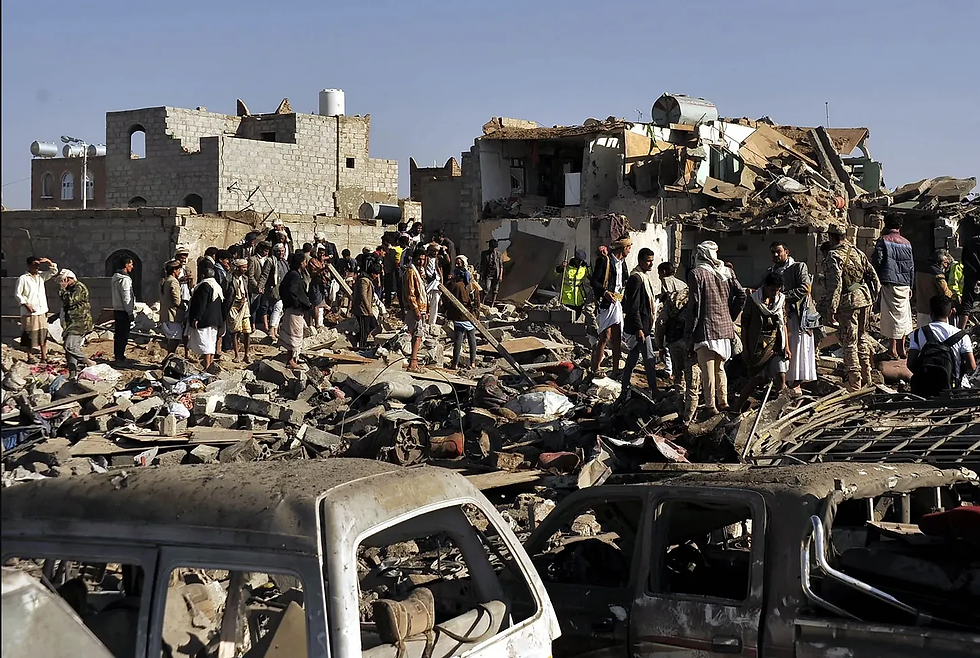
The Obama administration supported the Saudi intervention with weapons sales, intelligence sharing, logistical support, and in-flight refueling for Saudi aircraft. The Trump administration continued and expanded the support. The Biden administration nominally paused offensive support but continued arms sales and logistical assistance.¹⁸
American weapons killed Yemeni civilians. American bombs—manufactured by Raytheon, Lockheed Martin, and General Dynamics—were dropped on school buses, hospitals, wedding parties, and funeral gatherings. American intelligence supported the targeting. American tanker aircraft kept Saudi planes in the air. This was not indirect responsibility. It was direct complicity in what the United Nations repeatedly designated as the world’s worst humanitarian crisis.¹⁹
The Humanitarian Catastrophe
The numbers are staggering. Over 150,000 people were killed as a direct result of military action between 2015 and 2019 alone, with far more dying from the indirect consequences of war—disease, malnutrition, and the collapse of infrastructure. As of 2025, ten years into the conflict, approximately 19.5 million Yemenis—more than half the population—require humanitarian assistance. Over 83 percent of the population lives in poverty. More than 4.5 million people are internally displaced. Seventeen million face severe food insecurity, with five million on the brink of famine.²⁰
The Saudi-led coalition imposed a blockade that restricted the flow of food, fuel, and medicine into Houthi-controlled territory—where the majority of Yemen’s population lives. A cholera epidemic, the largest in modern history at its peak, swept the country. Children starved in numbers that should have provoked international outrage and instead produced little more than periodic expressions of concern from officials who continued approving arms sales.²¹
The Strategic Absurdity
The strategic incoherence of American policy in Yemen was breathtaking. Al-Qaeda in the Arabian Peninsula—AQAP—operated in Yemen and was considered among the most dangerous terrorist threats to the United States. The Houthis, whatever their other characteristics, were fighting AQAP. The Saudi intervention, which the United States supported, destabilized the country and strengthened AQAP by creating the chaos in which terrorist organizations thrive. The United States was simultaneously supporting the Saudi war against the Houthis and conducting its own counterterrorism operations against AQAP—working at cross-purposes with itself.²²
Iran’s influence grew as the war dragged on, precisely as it had in Iraq—precisely as non-interventionists had predicted. The pattern was identical: intervene in a complex civil conflict, take one side in a sectarian war, create conditions that benefit the adversary you claim to be containing, and then cite the adversary’s increased influence as justification for further intervention.
The Houthi attacks on commercial shipping in the Red Sea that began in late 2023—launched in solidarity with Palestinians during Israel’s war in Gaza—added a further layer of consequence. The United States and United Kingdom responded with airstrikes on Houthi-controlled territory in Yemen, escalating involvement in a conflict that had already cost the Yemeni people immeasurably. The Houthis, hardened by a decade of war against the world’s most advanced weapons systems, proved resilient. The attacks on shipping continued. The cycle of intervention and blowback spiraled onward.²³
After ten years, the Yemen war has produced no outcome that serves American interests. The Houthis control most of the country’s population centers. AQAP, though weakened, persists. Iran’s influence is greater than before the war began. Saudi Arabia, having spent billions and damaged its international reputation, has sought an exit. And nearly twenty million Yemeni civilians bear the consequences of decisions made in Riyadh, Washington, and Abu Dhabi—decisions over which they had no voice and from which they received no benefit.
The Responsibility to Protect—and Its Corruption
The doctrine of Responsibility to Protect was developed in the aftermath of the Rwandan genocide, when the international community’s failure to prevent the murder of approximately 800,000 Tutsis created a moral imperative for action. R2P held that when a state fails to protect its population from genocide, war crimes, ethnic cleansing, or crimes against humanity, the international community has a responsibility to intervene.²³
The doctrine was noble in conception. It was corrupted in application. In Libya, R2P was invoked to authorize civilian protection and then used to justify regime change. Russia and China, feeling deceived, blocked its application in Syria—ensuring that genuine humanitarian concerns could not be addressed because the doctrine had been discredited by its abuse.²⁴
The record of “humanitarian intervention” since the 1990s is damning. Kosovo produced a limited success but created a precedent and a Russian grievance that would fester for decades. Libya produced a failed state. Syria produced the prolongation of a war that killed over half a million people. Yemen produced the world’s worst humanitarian crisis with American weapons. The doctrine designed to prevent atrocities became the vehicle for creating them.
The deeper problem is that R2P, as practiced, conflates two very different propositions. The first—that atrocities against civilian populations are morally intolerable—is widely shared and correct. The second—that military intervention by outside powers is an effective remedy for such atrocities—is contradicted by virtually every case in which it has been tested. The moral clarity of the first proposition is used to smuggle in the unwarranted optimism of the second. And the people who pay the price for this intellectual sleight of hand are the civilians the doctrine claims to protect.
The Interventionist Defense
The Case for Intervention
The interventionist argument runs as follows: The United States cannot stand by while dictators massacre their people. The failure to act in Rwanda haunts the conscience of the international community. The Arab Spring offered a genuine opportunity for democratic transformation, and supporting it was the right thing to do. Interventions went wrong in execution, not in conception. Intentions were good. And inaction would have produced its own costs—Gaddafi’s threatened massacre in Benghazi, Assad’s continued brutality, the Houthis’ authoritarian rule.²⁵
More sophisticated defenders argue that the problem was not intervention itself but insufficient commitment. In Libya, the United States led from behind when it should have led from the front—investing in post-conflict stabilization rather than walking away after the regime fell. In Syria, Obama’s half-measures—arming rebels without committing to their victory—produced the worst possible outcome: enough intervention to prolong the war but not enough to win it. In Yemen, the problem was not American involvement per se but the choice of partner—Saudi Arabia’s brutal campaign was not inevitable, and American influence could have been used to restrain rather than enable.
These arguments deserve engagement. The moral impulse behind humanitarian intervention is real. The failure in Rwanda was genuine. The human suffering produced by the dictators the United States opposed was also genuine. And it is true that half-measures often produce worse outcomes than either full commitment or complete abstention.
The Response
But the argument for “doing it better next time” has been made after every failed intervention since Vietnam. After Vietnam, the lesson was supposed to be clearer objectives and better execution. After Somalia, the lesson was supposed to be avoiding mission creep. After Iraq, the lesson was supposed to be post-conflict planning. After Libya, the lesson was supposed to be sustained engagement. Each failure generates a new theory about what went wrong that conveniently preserves the fundamental assumption that intervention itself is sound.
After Iraq, after Afghanistan, after Libya, after Syria, after Yemen—at what point does the evidence overcome the theory? Libya demonstrates that standing by would have been better than creating a failed state with slave markets and weapons flowing across a continent. Syria demonstrates that prolonging a war causes more death than allowing it to reach a conclusion—however unjust that conclusion may be. Yemen demonstrates that American humanitarian rhetoric is compatible with direct complicity in humanitarian catastrophe when the perpetrator is a weapons-purchasing ally.²⁶
Good intentions do not justify catastrophic outcomes. The road from Benghazi to the slave markets of Tripoli was paved with humanitarian rhetoric. The road from “Assad must go” to 528,000 dead was paved with the fiction of moderate rebels. The road from the Saudi alliance to starving Yemeni children was paved with arms contracts and “strategic partnership.”
The pattern is now documented across a dozen interventions spanning three decades: regime change creates power vacuums that extremists fill; armed rebels prove uncontrollable; allies pursue their own interests at American expense; humanitarian intervention produces humanitarian catastrophe; and the foreign policy establishment learns nothing from failure because failure carries no consequences for those who design and promote it.
The Role of Allied Interests
A consistent thread across all three interventions is the role of allied governments pursuing their own interests at American expense.
In Libya, Saudi Arabia and the UAE pushed for intervention against Gaddafi, whom they viewed as an unpredictable rival. France led the military campaign in part to reassert influence in North Africa. Each ally had objectives that overlapped with but were not identical to American interests.²⁷
In Syria, the situation was more complex and more damaging. Saudi Arabia and Qatar funded rebel factions—including extremist ones—that aligned with their sectarian objectives. Turkey used the chaos to suppress Kurdish autonomy while allowing jihadist fighters to transit its territory. Israel, viewing Assad as an ally of Iran and Hezbollah, preferred rebel victory and conducted strikes on Syrian and Iranian targets. Each ally pursued its own strategic logic. The United States bore the costs and the blame while allies harvested whatever benefits the chaos produced.²⁸
In Yemen, the United States subordinated its counterterrorism objectives to the Saudi alliance—supporting a Saudi war that strengthened the very terrorist organizations America was fighting. The relationship with Riyadh, built on arms sales and oil, took precedence over both American strategic interests and the humanitarian principles Washington claimed to represent.
The pattern echoes Article 14’s analysis of foreign influence: allied governments shape American policy toward their interests, and the American people bear the consequences. The founders’ warning about “passionate attachment” to foreign nations applies not only to the relationships examined in that article but to the entire architecture of alliances that draws the United States into conflicts that serve others’ objectives at American cost.
Conclusion: The Lessons Still Unlearned
The Arab Spring interventions complete a trajectory that stretches from Iran in 1953 through Iraq in 2003 through Libya and Syria in 2011. Each intervention created the conditions for the next. The overthrow of Mossadegh produced the Iranian Revolution. The Iranian Revolution shaped the context for the Iran-Iraq War. The Iran-Iraq War and the Gulf War produced the sanctions regime that devastated Iraqi society. The Iraq invasion produced ISIS. ISIS expanded into the chaos of the Syrian civil war. The Syrian refugee crisis destabilized Europe and fueled populist nationalism. Each consequence became the justification for the next intervention. The cycle continues because the institutions that produce it remain intact and unaccountable.
How many failed interventions are required before the lesson is learned? How many destroyed countries? How many dead? How many refugees? How many trillions of dollars? The question is not rhetorical. It demands an answer from every citizen who funds these operations with their taxes and every official who authorizes them with their signature.
Patrick Buchanan asked whether the United States was a republic or an empire. The evidence of this series suggests the answer: the United States is an empire that still calls itself a republic. The interventions examined in this article—conducted without declarations of war, without meaningful congressional debate, without informed public consent, and without accountability for failure—are the actions of an empire. They serve the interests of the foreign policy establishment, the defense industry, and allied governments. They do not serve the interests of the American people, who pay for them, or the populations subjected to them, who die in them.
The founders understood this. They designed a system intended to prevent it. That system has failed—not because the design was flawed but because the people entrusted with its maintenance chose empire over republic, intervention over restraint, and the illusion of control over the humility of limits.
The question this series has asked from the beginning remains the only question that matters: did this leave Americans more free or more governed? The answer, written in the ruins of Tripoli, Aleppo, Raqqa, and Sanaa, is unambiguous.
The Arab Spring began with a man setting himself on fire because his government would not let him sell vegetables in peace. It ended with millions of refugees, hundreds of thousands dead, failed states across a continent, and the arsenals of the world’s most advanced militaries deployed to produce outcomes indistinguishable from those they were designed to prevent. The tragedy of the Arab Spring is not that hopes for freedom were disappointed—such disappointments are the common experience of history. The tragedy is that American intervention, undertaken in the name of those hopes, became the instrument of their destruction.
Self-Reflection Prompts
As you consider this history, ask yourself these questions:
Smart power. Hillary Clinton called Libya “smart power at its best” before the country collapsed into a failed state with open-air slave markets. What does this suggest about the ability of policymakers to assess their own decisions in real time? How should policy be evaluated—by intentions or by outcomes?
The moderate rebel fiction. The Pentagon spent $500 million to train Syrian rebels and produced, by the commanding general’s own testimony, “four or five” fighters. What does this suggest about the capacity of the United States to shape outcomes in complex civil wars through covert and overt military assistance?
American complicity. American weapons and logistical support enabled Saudi Arabia to create what the United Nations called “the world’s worst humanitarian crisis” in Yemen. Does this knowledge affect how you evaluate American claims to stand for human rights and international law? Should there be consequences for officials who authorize arms sales used to kill civilians?
R2P and its corruption. The Responsibility to Protect doctrine was designed to prevent atrocities. In practice, it was used to justify regime change in Libya, discredited by that abuse, and then unavailable for genuine humanitarian crises. Can the doctrine be salvaged, or has its corruption rendered it permanently unusable?
The cycle. Iran 1953 led to Iraq 2003 led to Libya and Syria 2011 led to the crises of today. Each intervention created conditions for the next. What would it take to break this cycle? Is non-interventionism naive—or is it the only policy that has not been discredited by its results?
Endnotes
Dwight D. Eisenhower, speech to the American Society of Newspaper Editors, April 16, 1953, “The Chance for Peace.”
On the outcomes of the Arab Spring, see Marc Lynch, The New Arab Wars: Uprisings and Anarchy in the Middle East (New York: PublicAffairs, 2016). On Tunisia’s democratic reversal, see various reporting from 2021-2023. On Syria’s death toll, see Syrian Observatory for Human Rights, which estimated 528,000-656,000 deaths as of 2025. On Yemen, see IRC, “A Decade of Conflict in Yemen,” March 26, 2025.
On the internal debate within the Obama administration, see Jo Becker and Scott Shane, “Hillary Clinton, ‘Smart Power’ and a Dictator’s Fall,” New York Times, February 27, 2016.
UN Security Council Resolution 1973, March 17, 2011. On Russian and Chinese perceptions of the Libya intervention, see Micah Zenko, “The Big Lie About the Libyan War,” Foreign Policy, March 22, 2016.
Clinton’s remark, captured on camera by CBS News, October 20, 2011.
On Libya’s descent into failed statehood, see Frederic Wehrey, The Burning Shores: Inside the Battle for the New Libya (New York: Farrar, Straus and Giroux, 2018). On slave markets, see CNN investigation, November 2017.
On weapons proliferation from Libya, see UN Panel of Experts on Libya, multiple reports 2012-2016. On the destabilization of Mali, see Scott Horton, Enough Already, pp. 241-248.
On the Benghazi attack, see the House Select Committee on Benghazi, Final Report, 2016.
Obama’s identification of Libya as his “worst mistake,” Fox News interview, April 10, 2016.
Obama statement on Assad, August 18, 2011.
On Operation Timber Sycamore, see Mark Mazzetti, “C.I.A. Arms for Syrian Rebels Supplied Black Market, Officials Say,” New York Times, June 26, 2016. General Austin testimony before the Senate Armed Services Committee, September 16, 2015.
On the flow of weapons to extremists, see C. J. Chivers, “How Many Guns Did the U.S. Lose Track of in Iraq and Afghanistan? Hundreds of Thousands,” New York Times, August 24, 2016. On al-Nusra cooperation with “moderate” groups, see Horton, Enough Already, pp. 199-220.
On Saudi and Qatari funding of extremist factions, see Patrick Cockburn, The Rise of Islamic State (London: Verso, 2014), pp. 89-112. On Turkey’s role, see various reporting on jihadist transit through Turkish territory.
On the destruction of Raqqa, see Amnesty International, “War of Annihilation: Devastating Toll on Civilians, Raqqa—Syria,” June 2018.
Syrian Observatory for Human Rights, death toll estimates updated through 2025: 528,000-656,000 depending on methodology. On Assad’s fall, December 8, 2024, see extensive international reporting. On refugee figures, see UNHCR Syria data.
On Russia’s military intervention in Syria beginning September 2015, see various analyses. On the refugee crisis and European politics, see Patrick Kingsley, The New Odyssey: The Story of the Twenty-First-Century Refugee Crisis (New York: Liveright, 2017).
Scott Horton, Enough Already: Time to End the War on Terrorism (Libertarian Institute, 2021), pp. 199-248.
On American support for the Saudi-led coalition in Yemen, see Congressional Research Service, “Yemen: Civil War and Regional Intervention,” updated regularly. On the evolution of U.S. policy across administrations, see Bruce Riedel, “Who Are the Houthis, and Why Are We at War with Them?” Brookings, December 18, 2017.
On American weapons used against Yemeni civilians, see Mwatana for Human Rights, “Day of Judgment: The Role of the US and Europe in Civilian Death, Destruction, and Trauma in Yemen,” 2019. On the school bus bombing, see CNN reporting, August 9, 2018.
On the humanitarian toll in Yemen, see IRC, “A Decade of Conflict in Yemen,” March 26, 2025: 19.5 million people needing assistance, 83% in poverty, 4.5 million displaced. On direct deaths, see ACLED and Yemen Data Project data: over 150,000 killed 2015-2019.
On the Saudi blockade and cholera epidemic, see Human Rights Watch, “World Report 2025: Yemen.”
On the strategic incoherence of U.S. policy regarding AQAP and the Saudi intervention, see Horton, Enough Already, pp. 249-278.
On the development of R2P after Rwanda, see Gareth Evans, The Responsibility to Protect: Ending Mass Atrocity Crimes Once and for All (Washington: Brookings, 2008).
On the corruption of R2P through the Libya intervention, see Micah Zenko, “The Big Lie About the Libyan War.” On Russian and Chinese responses, see various analyses of the Syria vetoes at the UN Security Council.
For the strongest formulation of the interventionist defense of the Arab Spring interventions, see Samantha Power, The Education of an Idealist: A Memoir (New York: Dey Street Books, 2019).
On the relationship between humanitarian rhetoric and humanitarian outcomes, see Patrick Buchanan, columns on Libya and Syria interventions. Ron Paul, speeches on Arab Spring interventions.
Sources and Further Reading
Primary Sources
UN Security Council Resolution 1973 (2011) — The resolution authorizing the Libya intervention, subsequently used to justify regime change.
Downing Street Memo (2002) — Referenced in context of the intelligence-policy relationship; the Libya and Syria interventions followed the same pattern.
General Lloyd Austin, Senate testimony (September 2015) — The admission that $500 million in training produced “four or five” fighters.
UN reports on Yemen humanitarian situation (2015-2025) — Documenting the world’s worst humanitarian crisis.
Secondary Sources
Frederic Wehrey, The Burning Shores (2018) — On Libya’s descent into failed statehood after the intervention.
Patrick Cockburn, The Rise of Islamic State (2014) — On the role of Gulf state funding in empowering jihadist factions.
Marc Lynch, The New Arab Wars (2016) — On the Arab Spring’s trajectory from hope to catastrophe.
Mwatana for Human Rights, “Day of Judgment” (2019) — Documenting the role of American and European weapons in Yemeni civilian deaths.
From the Non-Interventionist Tradition
Scott Horton, Enough Already: Time to End the War on Terrorism (2021) — Extensive, meticulously documented coverage of the Libya, Syria, and Yemen interventions.
Ron Paul — Speeches opposing intervention in Libya and Syria, warning of precisely the outcomes that occurred.
Patrick Buchanan — Columns on Libya and Syria applying the same non-interventionist analysis that had been vindicated in Iraq.


Comments