“The Long War” — Afghanistan Redux and the Iraq Catastrophe

“Of all the enemies to public liberty war is, perhaps, the most to be dreaded, because it comprises and develops the germ of every other. War is the parent of armies; from these proceed debts and taxes; and armies, and debts, and taxes are the known instruments for bringing the many under the domination of the few.”—James Madison, “Political Observations,” April 20, 1795¹
Note: This article focuses on the foreign policy dimension of the post-9/11 wars. The domestic consequences—surveillance, civil liberties, emergency powers—are covered in the Consequential Actions series “The New Leviathan: From 9/11 to COVID.” The two series are designed to be read together.
Introduction: The Twenty-Year War
On September 11, 2001, 2,977 Americans were murdered by al-Qaeda terrorists operating from Afghanistan. Twenty years later, in August 2021, the last American forces evacuated Kabul as the Taliban—the same Taliban the United States had overthrown in 2001—reclaimed control of the country. The Afghan government America had spent two decades building collapsed in eleven days. Twenty years of progress, two trillion dollars, and thousands of lives were erased in less than a fortnight.
In between those two dates, the United States fought the longest war in its history, launched a catastrophic war of choice in Iraq, created the conditions for the rise of the Islamic State, displaced tens of millions of people, and spent approximately eight trillion dollars—all funded by debt that Americans and their children will be repaying for generations.² The “War on Terror” was not merely lost. It was the most consequential strategic failure in American history since Vietnam—and by several measures, including duration, cost, and geographic scope, it surpassed Vietnam.
These wars represent the culmination of every pattern this series has traced: ideological crusading mistaken for strategy, threat inflation used to manufacture consent, institutional momentum that perpetuates conflict long after its justification has evaporated, and the absolute refusal of the foreign policy establishment to learn from failure or accept accountability for catastrophe. Understanding what happened, and why, is essential to understanding why the non-interventionist tradition the founders established was not naive idealism but hard-won strategic wisdom.
September 11 and the Choice of Response
The Attack
The nineteen hijackers who carried out the September 11 attacks were not Afghans. They were not Iraqis. Fifteen were Saudi nationals. Two were from the United Arab Emirates. One was Egyptian. One was Lebanese. They were members of al-Qaeda, the network that had emerged from the anti-Soviet jihad in Afghanistan that the United States had funded and armed throughout the 1980s—the subject of Article 12 in this series.³
Osama bin Laden, the Saudi whom the CIA had indirectly supported through Pakistan’s Inter-Services Intelligence during the Afghan war, had declared war on the United States in 1996 and again in 1998. His stated grievances included the presence of American military bases in Saudi Arabia, American support for Israel, and American sanctions against Iraq that had contributed to the deaths of hundreds of thousands of Iraqi civilians.⁴ None of these grievances justified the mass murder of civilians. But understanding them was essential to crafting an effective response. The Bush administration chose not to understand them. It chose, instead, to wage war on an abstraction.
The Legitimate Response
Military action against al-Qaeda in Afghanistan was justified. The Taliban regime had provided sanctuary to bin Laden and his organization. When the Taliban refused to surrender bin Laden after September 11, the United States had legitimate cause to use force to destroy al-Qaeda’s bases and disrupt its operational capacity.
The initial operation succeeded brilliantly. CIA officers and Army Special Forces, working with the Northern Alliance, overthrew the Taliban in weeks. Al-Qaeda’s training camps were destroyed. The organization was scattered. The cost in American lives was minimal. If the United States had declared victory, installed a friendly government in Kabul, and departed — leaving behind a small intelligence presence to monitor for threats—the outcome would have been incomparably better than what followed.⁵
But the Bush administration had larger ambitions.
The AUMF: A Blank Check for Permanent War
On September 14, 2001, three days after the attacks, Congress passed the Authorization for Use of Military Force. The resolution authorized the president to use “all necessary and appropriate force” against those who “planned, authorized, committed, or aided the terrorist attacks that occurred on September 11, 2001, or harbored such organizations or persons.”⁶
Only one member of Congress voted against it: Representative Barbara Lee of California, who warned that the resolution was a blank check for endless war. She was denounced as unpatriotic. She received death threats. She was proven right.⁷
The AUMF was invoked to justify military operations not only in Afghanistan but in Iraq, Syria, Yemen, Somalia, Libya, Niger, and dozens of other countries. It was used to authorize drone strikes against individuals who had not been born when the September 11 attacks occurred. It was used to justify operations against organizations—al-Shabaab in Somalia, ISIS in Iraq and Syria—that did not exist on September 11, 2001. The legal theory employed to justify this expansion was the concept of “associated forces”—a term that appears nowhere in the resolution itself but that has been interpreted to encompass any organization deemed to be affiliated with al-Qaeda, however loosely. Under this interpretation, the sixty words of the AUMF constitute authorization for permanent, global war against an ever-expanding list of enemies, determined by the executive branch without meaningful congressional oversight. As of this writing, the 2001 AUMF remains in effect, a quarter of a century after the attacks it was passed to address.⁸
The framers of the Constitution placed the war power in Congress because, as Madison wrote, the executive branch was “most interested in war, and most prone to it.”⁹ The AUMF transferred that power to the executive. It has never been reclaimed. Barbara Lee saw this coming. She stood alone.
Afghanistan: The War That Could Not Be Won
Mission Creep
The initial military operation against al-Qaeda succeeded. What followed was not a military campaign but an exercise in imperial fantasy: the attempt to build a liberal democratic state in one of the most tribally fragmented, geographically forbidding, and historically resistant territories on earth.
The mission expanded relentlessly. First came the installation of Hamid Karzai as president — a figure whose legitimacy rested entirely on American support and whose government became synonymous with corruption. Then came nation-building: schools, roads, elections, a national army, a national police force, women’s rights initiatives, and a constitutional order modeled on Western democratic principles. Then came counterinsurgency doctrine, imported from the textbooks of General David Petraeus, which held that protecting the population and winning hearts and minds would defeat the insurgency.¹⁰
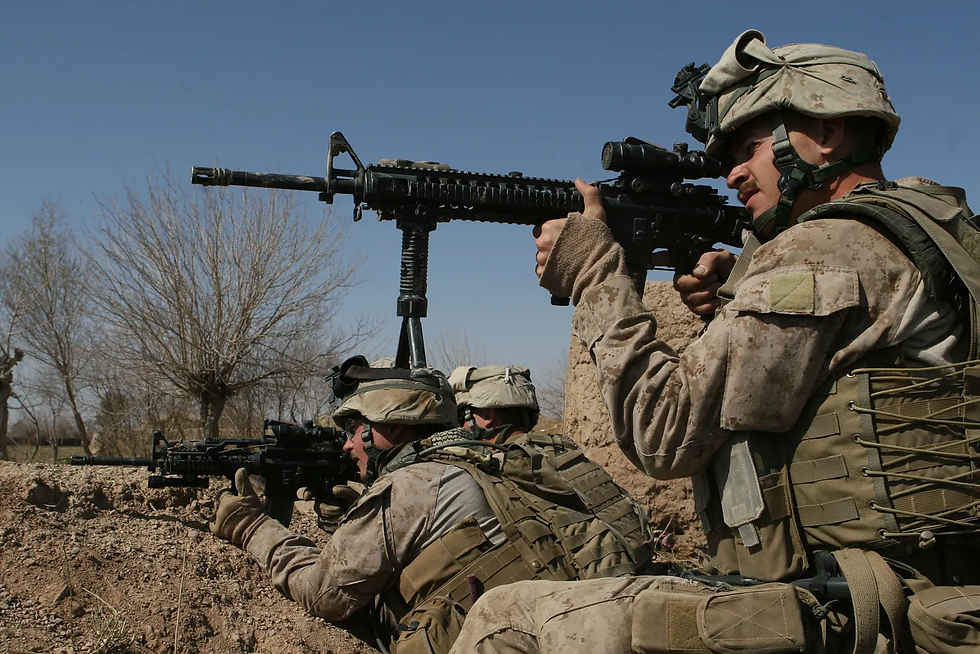
Each expansion of the mission required more troops, more money, and more time. Each expansion assumed that the Afghan government possessed a legitimacy it had never earned. And each expansion ignored the fundamental reality that the Taliban had not been defeated—they had retreated across the Pakistani border, into the territory of America’s nominal ally, where they regrouped, rearmed, and waited.¹¹
The Surge and Its Failure
President Obama, who had campaigned on ending the Iraq War but escalating the “good war” in Afghanistan, authorized a surge of approximately 100,000 troops in 2009-2010. The counterinsurgency strategy was applied at scale: villages cleared, schools built, elections held. The strategy assumed that the Afghan government could eventually stand on its own — an assumption contradicted by virtually every assessment produced by American military and intelligence officials, as the Afghanistan Papers published by the Washington Post would later reveal.¹²
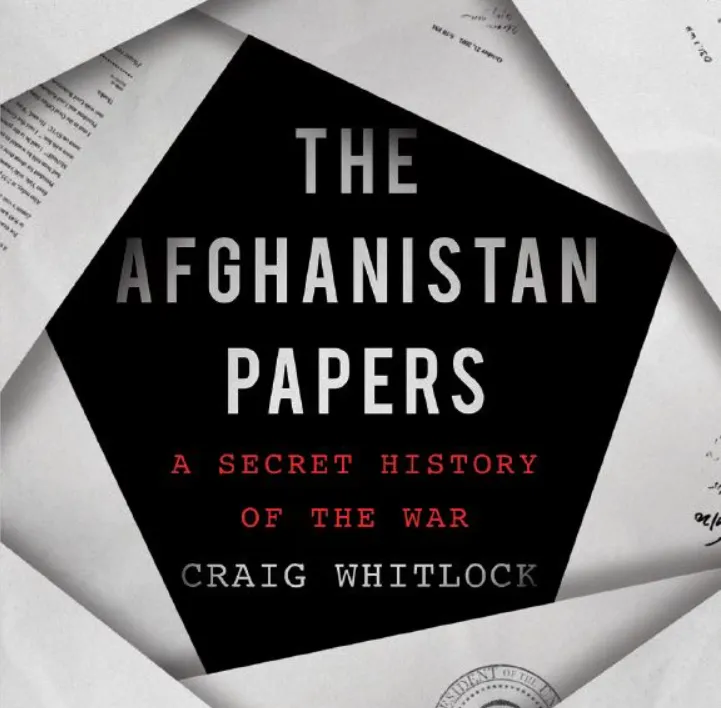
The Afghanistan Papers—a trove of internal government documents obtained by Craig Whitlock — demonstrated that American officials had known for years that the war was failing and had systematically misled the public about the prospects for success. “We were devoid of a fundamental understanding of Afghanistan,” one three-star general told government interviewers. “We did not know what we were doing.”¹³ The pattern was identical to Vietnam: private pessimism concealed behind public optimism, a credibility gap between what officials knew and what they told the American people.
Obama began the drawdown. Trump negotiated a withdrawal agreement with the Taliban in Doha—negotiations from which the Afghan government was excluded. Biden executed the withdrawal.
The Collapse
In August 2021, as American forces completed their withdrawal, the Afghan government collapsed with a speed that stunned even pessimistic observers. Provincial capitals fell in days. The Afghan National Army — trained and equipped at a cost of approximately $83 billion — melted away.¹⁴ President Ashraf Ghani fled the country. The Taliban entered Kabul without firing a shot.
The evacuation from Hamid Karzai International Airport was chaotic and desperate. On August 26, an ISIS-K suicide bomber killed thirteen American service members and approximately 170 Afghan civilians at Abbey Gate.¹⁵ It was the deadliest day for American forces in Afghanistan in a decade, and it came during a withdrawal, not a battle.
Included in the chaos was the staggering amount of military equipment left behind and left to Taliban control.
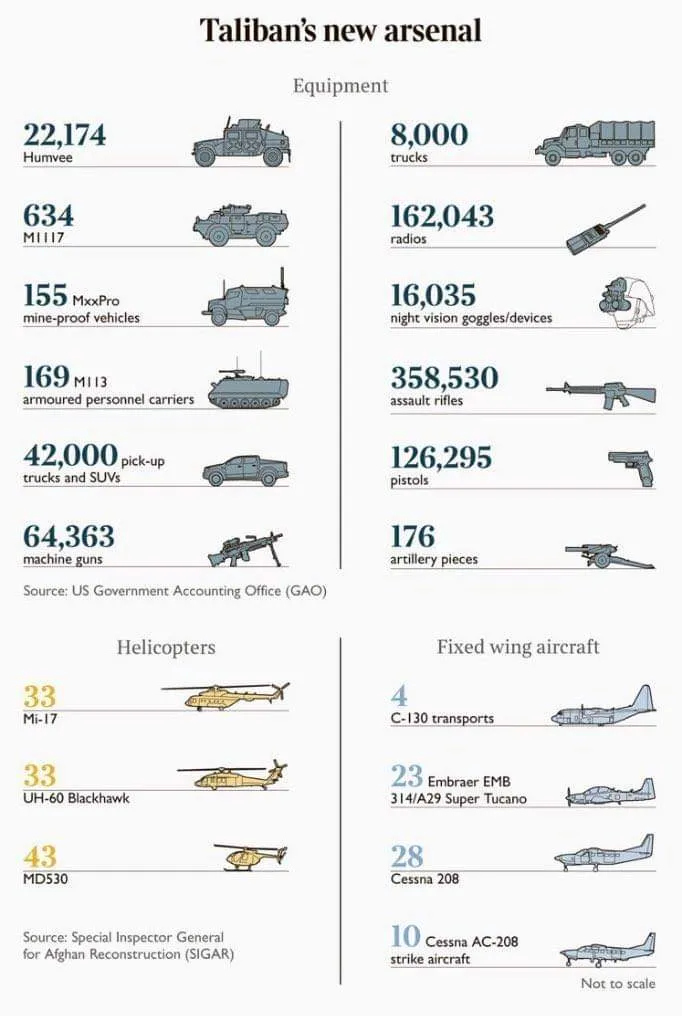
Twenty years of “progress” were erased in weeks. The Taliban ruled Afghanistan again. The schools for girls were closed. The women who had served in government went into hiding. The interpreters who had served alongside American forces were largely abandoned. The war ended exactly where it began.
The Costs
The accounting is devastating. Over the twenty years of the Afghan war, 2,461 American military personnel were killed. An additional 3,846 American military contractors died. More than 20,000 Americans were wounded. On the Afghan side, at least 176,000 people were killed—soldiers, police, civilians, and Taliban fighters. The Brown University Costs of War Project estimates the total budgetary cost of the Afghanistan and Pakistan war zone at approximately $2.3 trillion.¹⁶
The duration bears emphasis: twenty years. Longer than World War I, World War II, Korea, and Vietnam combined. The outcome: strategic defeat and return to the status quo ante.
Iraq: The War of Choice
The Decision
Iraq had nothing to do with September 11. There was no operational connection between Saddam Hussein and al-Qaeda. The 9/11 Commission concluded definitively that no collaborative relationship existed.¹⁷ Saddam Hussein was a secular dictator who viewed Islamist movements as threats to his regime. Al-Qaeda viewed Saddam as an apostate.
None of this mattered to the officials who had decided to invade Iraq before September 11 provided the opportunity.
The Project for the New American Century, the neoconservative think tank whose members included Dick Cheney, Donald Rumsfeld, Paul Wolfowitz, and John Bolton, had urged regime change in Iraq as early as 1998, in a letter to President Clinton. Their 2000 report, “Rebuilding America’s Defenses,” called for a massive military buildup and American global dominance, noting that the transformation they sought would be slow “absent some catastrophic and catalyzing event—like a new Pearl Harbor.”¹⁸
September 11 provided the catalyzing event. Within hours of the attacks, Rumsfeld was asking aides to find evidence connecting Iraq to the hijackers. Within days, Deputy Secretary of Defense Wolfowitz was arguing for including Iraq in the military response. By early 2002, the decision to invade had been made. All that remained was to manufacture the justification.¹⁹
The WMD Deception
The justification chosen was weapons of mass destruction. Iraq had possessed chemical weapons in the past and had used them against Iranian soldiers and Kurdish civilians in the 1980s — with American knowledge and, in some cases, with materials supplied by American companies. But Iraq’s weapons programs had been substantially dismantled under United Nations supervision in the 1990s.²⁰
The Bush administration claimed that Iraq possessed active WMD programs and posed an imminent threat. National Security Advisor Condoleezza Rice warned that “we do not want the smoking gun to be a mushroom cloud.” Secretary of State Colin Powell delivered a presentation to the United Nations Security Council in February 2003 that included fabricated evidence, dubious intelligence from unreliable sources, and assertions he would later disavow and call a “blot” on his record.²¹
The intelligence, as the Downing Street Memo revealed, was “being fixed around the policy.”²² The decision to invade had already been made; the WMD claims were manufactured to justify it. The Senate Intelligence Committee later concluded that the intelligence community’s assessments on Iraqi WMD were fundamentally wrong, and that administration officials had presented the intelligence in ways that were more certain and alarming than the evidence supported.²³
No weapons of mass destruction were found. The central justification for the invasion of Iraq was false.
The Selling of the War
The media environment that enabled the Iraq War deserves examination. Major American news organizations, most notably the New York Times through the reporting of Judith Miller, amplified the administration’s WMD claims with minimal skepticism. The Times would later publish an editors’ note acknowledging that its coverage had been insufficiently rigorous.²⁴ Dissenting voices—the weapons inspectors who said Iraq had been substantially disarmed, the intelligence professionals who challenged the WMD narrative, the millions who marched in global protests on February 15, 2003—were marginalized, dismissed, or ignored.
The war was authorized by Congress in October 2002 with broad bipartisan support. Senators Joe Biden, Hillary Clinton, and John Kerry—all future presidential candidates—voted in favor. Only twenty-three senators voted against. Ron Paul voted against the war in the House and warned, with remarkable prescience, of quagmire, blowback, and the empowerment of Iran.²⁵ Patrick Buchanan, writing in The American Conservative, predicted a Sunni-Shia civil war and regional destabilization.²⁶ They were proven right. They were treated as cranks.
Invasion and Occupation
The invasion succeeded rapidly. Baghdad fell on April 9, 2003. Saddam’s statue was toppled. On May 1, President Bush stood beneath a “Mission Accomplished” banner on the deck of the USS Abraham Lincoln and declared the end of major combat operations.²⁷

The occupation that followed was catastrophic. Two decisions, both made by L. Paul Bremer, the head of the Coalition Provisional Authority, ensured disaster. The first was de-Baathification: the purging of members of Saddam’s Baath Party from all government positions, which dismantled the Iraqi state. The second was the dissolution of the Iraqi military, which put approximately 400,000 armed, trained men on the streets with no jobs, no income, and a grievance against the occupying power.²⁸
The insurgency that followed was predictable and predicted. Sunni resistance fighters, former Baathist officers, and al-Qaeda in Iraq—a group that had not existed before the invasion—converged in a campaign of violence that killed thousands of Americans and tens of thousands of Iraqis. Sectarian civil war erupted between Sunni and Shia communities, with death squads operating on both sides and the American military caught between factions whose animosities predated the United States by centuries. The Abu Ghraib scandal, in which American soldiers tortured and abused Iraqi prisoners and photographed the abuse, generated global outrage and became a recruiting tool for jihadist organizations worldwide. The images from Abu Ghraib did more damage to American credibility than any terrorist propaganda could have achieved.²⁹
The battles of Fallujah in 2004—first an aborted assault, then a devastating siege that destroyed much of the city—epitomized the war’s trajectory: destroying a city to save it, creating enemies faster than they could be killed, and applying overwhelming force to a problem that had no military solution.
The “surge” of 2007, which added approximately 30,000 troops and coincided with the Sunni Awakening—a movement of tribal leaders who turned against al-Qaeda in Iraq—temporarily reduced violence. But it did not resolve the underlying political dysfunction. Iran emerged as the dominant foreign influence in Iraqi politics, a strategic outcome precisely opposite to what the invasion’s architects had intended.³⁰
The Costs
The Iraq War killed 4,507 American military personnel. Estimates of Iraqi deaths range from 200,000 to over one million, depending on methodology—the uncertainty itself a measure of how little the lives lost were counted. The Brown University Costs of War Project estimates the total budgetary cost of the Iraq and Syria war zone at approximately $2.89 trillion, including future veterans’ care.³¹ More than four million Iraqis were displaced. The war destabilized the entire region.
The outcome: a fragmented Iraq under heavy Iranian influence, a destroyed society, and the incubation of the most dangerous terrorist organization the world had yet seen.
The Creation of ISIS
The Islamic State of Iraq and Syria—ISIS—is the direct product of the Iraq War. This is not a matter of interpretation or partisan argument. It is a matter of documented causation.
Al-Qaeda in Iraq, led by the Jordanian Abu Musab al-Zarqawi, emerged during the occupation. It drew recruits from the pool of unemployed, embittered former soldiers and Baathist officials created by de-Baathification and the dissolution of the Iraqi military. It was fueled by the sectarian tensions that the occupation unleashed and that the Shia-dominated government exacerbated.³²
From al-Qaeda in Iraq evolved the Islamic State of Iraq, and then, exploiting the chaos of the Syrian civil war, the Islamic State of Iraq and Syria. In June 2014, ISIS captured Mosul, Iraq’s second-largest city, and declared a caliphate stretching across vast territories in Iraq and Syria. The Iraqi army that the United States had spent billions training and equipping collapsed, abandoning American-supplied equipment that ISIS then used to expand its conquests.³³
The United States re-intervened in Iraq in 2014 to fight ISIS—an enemy that American policy had created. The multi-year campaign to destroy the caliphate succeeded militarily by 2019, but at enormous cost in civilian lives and physical destruction. And ISIS’s ideology persists; its affiliates operate across Africa, Asia, and the Middle East.
The sequence is clear and damning: the United States invaded Iraq to eliminate a threat that did not exist. The invasion created a power vacuum. The power vacuum produced an insurgency. The insurgency produced al-Qaeda in Iraq. Al-Qaeda in Iraq produced ISIS. The United States then spent years and billions of dollars fighting the enemy it had created. This is blowback on a civilizational scale.³⁴
The Voices Who Were Right
The most damning indictment of the foreign policy establishment is not that it was wrong about the post-9/11 wars. It is that the people who were right were systematically marginalized while the people who were wrong faced no consequences.
Ron Paul, the libertarian Republican congressman from Texas, voted against both the Iraq War authorization and the AUMF. He warned that the Iraq invasion would produce a quagmire, empower Iran, generate terrorist blowback, and cost far more than projected. Every prediction was vindicated.³⁵ Patrick Buchanan, writing from the paleoconservative tradition, made identical arguments with identical accuracy. He predicted the Sunni-Shia civil war, the regional destabilization, and the imperial overreach that would exhaust American power.³⁶
Scott Horton, in Fool’s Errand and Enough Already, has documented the Afghan and Iraq Wars with a thoroughness that shames the major media organizations that failed to scrutinize these conflicts in real time. Chalmers Johnson’s Blowback, published in 2000—before the September 11 attacks—predicted that American military interventions would generate retaliatory violence. The book’s title became the defining concept of the post-9/11 era.³⁷
The Veteran Intelligence Professionals for Sanity (VIPS), including former CIA analyst Ray McGovern, publicly challenged the WMD claims before the invasion. They were ignored.³⁸ The millions who marched on February 15, 2003, in the largest coordinated global protest in human history, were dismissed as naive or unpatriotic.³⁹
They were all right. The wars happened anyway.
The Interventionist Defense
The Case for the Wars
The interventionist defense runs as follows. Afghanistan was a legitimate response to attack. The United States could not allow a terrorist sanctuary to persist after three thousand Americans had been murdered. Nation-building was a necessary component of counterterrorism because failed states breed terrorism. Iraq removed a dangerous dictator who had used weapons of mass destruction, had invaded his neighbors, and was believed to pose a continuing threat. The intelligence on WMD was genuinely believed to be accurate by most policymakers. Mistakes were made, but intentions were good. The world is better without Saddam Hussein. Afghanistan had twenty years of relative freedom, particularly for women and girls, that would not have occurred without American intervention.⁴⁰
These arguments deserve engagement. The Afghanistan intervention was initially justified. Afghan women did gain freedoms during the occupation. The world is marginally better without Saddam Hussein in power. And some intelligence officials did genuinely believe the WMD assessments.
The Response
But intentions do not exculpate catastrophic outcomes. Twenty years, eight trillion dollars, 900,000 dead, and thirty-eight million displaced—for strategic defeat in Afghanistan and the creation of ISIS in Iraq—cannot be justified by good intentions.⁴¹ The WMD intelligence was not an honest mistake but a case of policy driving intelligence rather than the reverse, as the Downing Street Memo and the Senate Intelligence Committee confirmed. The nation-building in Afghanistan was not a realistic strategy but an imperial fantasy imposed on a society that did not want it and could not sustain it, as the Afghanistan Papers documented.
The comparison to Vietnam is inescapable—and the comparison is unflattering. Vietnam should have taught the lessons that Iraq and Afghanistan retaught at exponentially greater cost. The same pattern repeated: threat inflation, manufactured consent, mission creep, credibility gaps, and ultimate withdrawal after objectives were revealed to be unachievable. The foreign policy establishment learned nothing from Vietnam, applied nothing from its lessons, and repeated every error with remarkable fidelity.
The Accountability That Never Came
The most striking feature of the post-9/11 wars is the absolute absence of accountability for the officials who designed, promoted, and executed them.
No one was fired for the intelligence failure on WMD. George Tenet, the CIA director who presided over both the September 11 intelligence failure and the WMD debacle, received the Presidential Medal of Freedom.⁴² No one was prosecuted for the torture conducted at Abu Ghraib, at Guantanamo Bay, or at CIA black sites. The architects of the Iraq War—Cheney, Rumsfeld, Wolfowitz, Feith, Bolton—retired to comfortable sinecures at think tanks, universities, and consulting firms. The neoconservative institutions that promoted the war—the American Enterprise Institute, the Foundation for Defense of Democracies, the Hudson Institute—continue to operate with undiminished budgets and undiminished influence.
Failure, in the American foreign policy establishment, carries no professional consequences. This is not an oversight. It is a feature of a system designed to perpetuate itself.⁴³
Conclusion: The Lessons Unlearned
The post-9/11 wars demonstrated, at a cost of eight trillion dollars and nearly a million lives, five propositions that the founders understood and that the foreign policy establishment refuses to accept.
First, military force cannot create democracies in societies that lack the cultural, institutional, and economic foundations for democratic governance. The attempt to build Western-style states in Afghanistan and Iraq was not merely unsuccessful—it was always going to be unsuccessful, as anyone familiar with the histories of those societies could have predicted and many did.
Second, occupation breeds insurgency. Foreign armies on foreign soil generate resistance. This is not a theory. It is a law of human behavior as reliable as gravity.
Third, regime change creates power vacuums that enemies fill. Removing Saddam Hussein did not produce a grateful, democratic Iraq. It produced a failed state, a civil war, Iranian dominance, and the Islamic State.
Fourth, war has unintended consequences that exceed its intended objectives. The War on Terror killed far more people than the September 11 attacks. It cost more than any military campaign in American history. It produced enemies that did not exist before the wars began. By every measure except the enrichment of defense contractors and the expansion of executive power, it was a failure.
And fifth, the foreign policy establishment is capable of catastrophic error without accountability. The same people, the same institutions, and the same assumptions that produced the Iraq disaster continue to shape American foreign policy. The think tanks are funded. The experts appear on television. The revolving door spins. Nothing has changed.⁴⁴
Madison warned that war was the most dangerous enemy of public liberty because it “comprises and develops the germ of every other.” The post-9/11 wars vindicated his warning in every particular. They produced armies and the debts and taxes that sustain them. They produced surveillance and the erosion of civil liberties that accompanies it. They produced the concentration of power in the executive and the atrophy of congressional authority. They produced, in short, everything the founders feared and everything this series has documented.
The question that haunts the twenty-year war is whether the lessons will finally be learned—or whether the next crisis will produce the next war, justified by the next threat inflation, promoted by the same institutions, and funded by the same blank-check authorizations that Madison would have recognized as the death of republican government.
Vietnam should have taught these lessons. It did not. Iraq and Afghanistan retaught them at greater cost. The machinery of war remains intact. The defense budget has not decreased. The AUMF has not been repealed. The think tanks have not closed. The revolving door has not stopped spinning. The question is whether the American people will dismantle this machinery before it consumes what remains of the republic—or whether the next generation will be asked to learn the same lessons at still greater cost, in some country they cannot yet locate on a map, for reasons that will not survive scrutiny.
Self-Reflection Prompts
As you consider this history, ask yourself these questions:
Democratic accountability. The Iraq War was supported by majorities in both chambers of Congress and, initially, by the American public. What does this suggest about democratic decision-making on matters of war and peace? Can a democracy be manipulated into war through intelligence deception and media failure? If so, what safeguards should exist?
Consequences without accountability. The architects of the Iraq War—Cheney, Rumsfeld, Wolfowitz, and others—faced no professional consequences for their errors. What accountability mechanisms would you propose for catastrophic foreign policy decisions? Should policymakers bear personal consequences when their decisions produce results this devastating?
The vindicated dissenters. Ron Paul and Patrick Buchanan were marginalized for opposing the Iraq War. They were proven correct on virtually every point. What does their treatment suggest about how expertise and dissent are valued in American foreign policy debates? Why do the people who are right carry less influence than the institutions that are wrong?
Twenty years of war. The Afghanistan War lasted twenty years with bipartisan support. Why did it continue so long despite a consistent lack of progress? What interests—institutional, financial, political—benefited from its continuation? And what does the answer suggest about the relationship between democracy and permanent war?
The pattern. Vietnam should have taught the lessons that Iraq and Afghanistan retaught. Why does the pattern repeat? Is it possible to break the cycle of intervention, failure, and repetition without fundamental structural reform of the foreign policy establishment?
Endnotes
James Madison, “Political Observations,” April 20, 1795. Reprinted in The Writings of James Madison, ed. Gaillard Hunt (New York: G. P. Putnam’s Sons, 1906), vol. 6, p. 238.
Brown University Costs of War Project, “Economic Costs of Post-9/11 Wars,” updated 2024. The $8 trillion figure includes direct war spending, increases to the Pentagon’s base budget, Homeland Security spending, interest on war borrowing, and obligations for veterans’ care through 2050.
9/11 Commission Report (2004), Chapter 5: “Al-Qaeda Aims at the American Homeland,” pp. 145-169. On the hijackers’ nationalities, see pp. 215-241.
On bin Laden’s stated grievances, see his 1996 fatwa, “Declaration of War Against the Americans Occupying the Land of the Two Holy Places,” and the 1998 “World Islamic Front Statement Urging Jihad Against Jews and Crusaders.” See also Scott Horton, Enough Already: Time to End the War on Terrorism (Libertarian Institute, 2021), pp. 15-32.
On the initial success of the Afghan operation, see Gary Berntsen, Jawbreaker: The Attack on Bin Laden and Al-Qaeda (New York: Crown, 2005). On the missed opportunity at Tora Bora, see Senate Foreign Relations Committee, “Tora Bora Revisited: How We Failed to Get Bin Laden and Why It Matters Today,” November 30, 2009.
Authorization for Use of Military Force, Public Law 107-40, September 18, 2001. The text is remarkably brief—sixty words of authorization that have sustained over two decades of global war.
On Barbara Lee’s vote and its aftermath, see Barbara Lee, Renegade for Peace and Justice: A Memoir of Political and Personal Courage (Lanham, MD: Rowman & Littlefield, 2008). See also Scott Horton, Enough Already, p. 72.
On the expanding use of the 2001 AUMF, see Congressional Research Service, “The 2001 Authorization for Use of Military Force: Issues and Proposals,” updated regularly. The AUMF has been cited as authority for operations in at least 22 countries.
James Madison, “Political Observations,” 1795.
On nation-building in Afghanistan and the Karzai government, see Craig Whitlock, The Afghanistan Papers: A Secret History of the War (New York: Simon & Schuster, 2021), Chapters 4-8.
On the Taliban’s retreat to Pakistan and reconstitution, see Carlotta Gall, The Wrong Enemy: America in Afghanistan, 2001-2014 (Boston: Houghton Mifflin Harcourt, 2014).
On the Obama surge, see Whitlock, The Afghanistan Papers, Chapters 9-13. On the gap between internal assessments and public statements, see the “Lessons Learned” interviews published by the Special Inspector General for Afghanistan Reconstruction (SIGAR).
Three-star general quoted in Whitlock, The Afghanistan Papers, p. 11.
On the cost of training and equipping the Afghan National Army, see SIGAR, “What We Need to Learn: Lessons from Twenty Years of Afghanistan Reconstruction,” August 2021, p. ix.
On the Abbey Gate bombing, August 26, 2021, see Pentagon investigation released February 2022.
Casualty figures from Brown University Costs of War Project: 2,461 U.S. military deaths; 3,846 U.S. contractor deaths; 176,000+ Afghan deaths including soldiers, police, civilians, and opposition fighters. Cost estimate of $2.3 trillion from Neta Crawford, “United States Budgetary Costs and Obligations of Post-9/11 Wars through FY2022,” Costs of War, September 2021.
9/11 Commission Report (2004), p. 66: “We have no credible evidence that Iraq and al Qaeda cooperated on attacks against the United States.”
Project for the New American Century, letter to President Clinton, January 26, 1998, signed by Rumsfeld, Wolfowitz, Bolton, Armitage, and others. PNAC, “Rebuilding America’s Defenses: Strategies, Forces, and Resources for a New Century,” September 2000, p. 51.
On Rumsfeld’s instructions to find Iraq connections on September 11, see Richard Clarke, Against All Enemies: Inside America’s War on Terror (New York: Free Press, 2004), pp. 30-33. On Wolfowitz’s advocacy for including Iraq, see Bob Woodward, Bush at War (New York: Simon & Schuster, 2002), pp. 49, 83-84.
On Iraq’s prior WMD programs and their dismantlement, see Hans Blix, Disarming Iraq (New York: Pantheon, 2004).
Condoleezza Rice, CNN interview, September 8, 2002. On Powell’s UN presentation and his later regret, see Karen DeYoung, Soldier: The Life of Colin Powell (New York: Knopf, 2006), pp. 447-472.
The Downing Street Memo, minutes of a meeting at 10 Downing Street, July 23, 2002, recorded that “the intelligence and facts were being fixed around the policy.” Published by the Sunday Times (London), May 1, 2005.
Senate Select Committee on Intelligence, “Report on the U.S. Intelligence Community’s Prewar Intelligence Assessments on Iraq,” July 7, 2004.
“The Times and Iraq,” New York Times editors’ note, May 26, 2004. On Judith Miller’s reporting, see Michael Massing, “Now They Tell Us,” New York Review of Books, February 26, 2004.
Ron Paul, speech opposing the Iraq War Resolution, October 8, 2002. See also Ron Paul, A Foreign Policy of Freedom (Lake Jackson, TX: Foundation for Rational Economics and Education, 2007).
Patrick Buchanan, “Whose War?” The American Conservative, March 24, 2003. See also Buchanan, Where the Right Went Wrong: How Neoconservatives Subverted the Reagan Revolution and Hijacked the Bush Presidency (New York: Thomas Dunne, 2004).
On the “Mission Accomplished” speech, see Bush remarks aboard USS Abraham Lincoln, May 1, 2003.
On de-Baathification and the dissolution of the Iraqi military, see Thomas Ricks, Fiasco: The American Military Adventure in Iraq (New York: Penguin, 2006), pp. 158-166. On Bremer’s orders, see L. Paul Bremer, CPA Order Number 1 (De-Baathification of Iraqi Society), May 16, 2003, and CPA Order Number 2 (Dissolution of Entities), May 23, 2003.
On Abu Ghraib, see Seymour Hersh, “Torture at Abu Ghraib,” The New Yorker, May 10, 2004. On the recruitment effect, see Horton, Enough Already, pp. 136-141.
On the surge and the Sunni Awakening, see Ricks, The Gamble: General David Petraeus and the American Military Adventure in Iraq, 2006-2008 (New York: Penguin, 2009). On Iranian influence in post-invasion Iraq, see Vali Nasr, The Shia Revival (New York: Norton, 2006).
American deaths in Iraq: 4,507 per Department of Defense. Iraqi deaths: estimates from various sources including the Iraq Body Count Project (documented civilian deaths exceeding 200,000), The Lancet surveys (which estimated far higher figures), and Brown University Costs of War. Cost estimate of $2.89 trillion from Neta Crawford, “Blood and Treasure: United States Budgetary Costs and Human Costs of 20 Years of War in Iraq and Syria, 2003-2023,” Costs of War, 2023.
On the origins of al-Qaeda in Iraq, see Loretta Napoleoni, Insurgent Iraq: Al Zarqawi and the New Generation (New York: Seven Stories Press, 2005).
On the rise of ISIS and the fall of Mosul, see Joby Warrick, Black Flags: The Rise of ISIS (New York: Doubleday, 2015).
Scott Horton, Enough Already, pp. 171-198, traces the causal chain from the Iraq invasion to the creation of ISIS.
Ron Paul’s Iraq War predictions are documented in his October 8, 2002 speech and subsequent writings. See A Foreign Policy of Freedom.
Patrick Buchanan, Where the Right Went Wrong, pp. 31-58.
Scott Horton, Fool’s Errand: Time to End the War in Afghanistan (Libertarian Institute, 2017). Chalmers Johnson, Blowback: The Costs and Consequences of American Empire (New York: Metropolitan Books, 2000).
Veteran Intelligence Professionals for Sanity (VIPS), memorandum to President Bush, “Intelligence Unglued,” September 26, 2002, warning that the intelligence was being politicized.
On the February 15, 2003 global protests, see Patrick Tyler, “A New Power in the Streets,” New York Times, February 17, 2003. Guinness World Records recognized it as the largest coordinated protest in human history.
For the strongest formulation of the interventionist defense, see Peter Bergen, The Longest War: The Enduring Conflict Between America and Al-Qaeda (New York: Free Press, 2011).
Brown University Costs of War Project: $8 trillion total cost; 900,000+ deaths; 38 million displaced.
George Tenet received the Presidential Medal of Freedom on December 14, 2004, nine months after he resigned and before the full extent of the WMD intelligence failure was officially documented.
On the absence of accountability in the foreign policy establishment, see Andrew Bacevich, Washington Rules: America’s Path to Permanent War (New York: Metropolitan Books, 2010), pp. 12-28.
On institutional continuity in the foreign policy establishment, see Bacevich, The Age of Illusions: How America Squandered Its Cold War Victory (New York: Metropolitan Books, 2020).
Sources and Further Reading
Primary Sources
Authorization for Use of Military Force (2001) — The sixty-word resolution that authorized two decades of global war.
Iraq War Resolution (2002) — Congressional authorization for the invasion of Iraq.
Downing Street Memo (2002) — Minutes revealing that intelligence was “being fixed around the policy.”
Senate Intelligence Committee Report on Iraq WMD Intelligence (2004) — The official accounting of the intelligence failure.
9/11 Commission Report (2004) — Definitive account of the September 11 attacks and their origins.
SIGAR Reports (2001-2021) — The Special Inspector General’s documentation of waste, fraud, and failure in Afghanistan.
Secondary Sources
Craig Whitlock, The Afghanistan Papers (2021) — The definitive exposure of how officials misled the public about Afghanistan.
Thomas Ricks, Fiasco (2006) and The Gamble (2009) — Essential accounts of the Iraq War and the surge.
Joby Warrick, Black Flags (2015) — On the rise of ISIS from the wreckage of the Iraq War.
Andrew Bacevich, America’s War for the Greater Middle East (2016) — On the four-decade arc of American military intervention in the Middle East.
Neta Crawford and the Costs of War Project (ongoing) — The most comprehensive accounting of the human and financial costs of the post-9/11 wars.
From the Non-Interventionist Tradition
Scott Horton, Enough Already: Time to End the War on Terrorism (2021) — The essential non-interventionist account of the post-9/11 wars, meticulously documented and relentlessly argued.
Scott Horton, Fool’s Errand: Time to End the War in Afghanistan (2017) — Comprehensive case against the Afghan war.
Chalmers Johnson, Blowback (2000) — Published before September 11, it predicted the consequences of American empire.
Ron Paul, A Foreign Policy of Freedom (2007) — Speeches documenting the constitutional and strategic case against the wars.
Patrick Buchanan, Where the Right Went Wrong (2004) — On the neoconservative hijacking of conservative foreign policy.


Comments