top of page
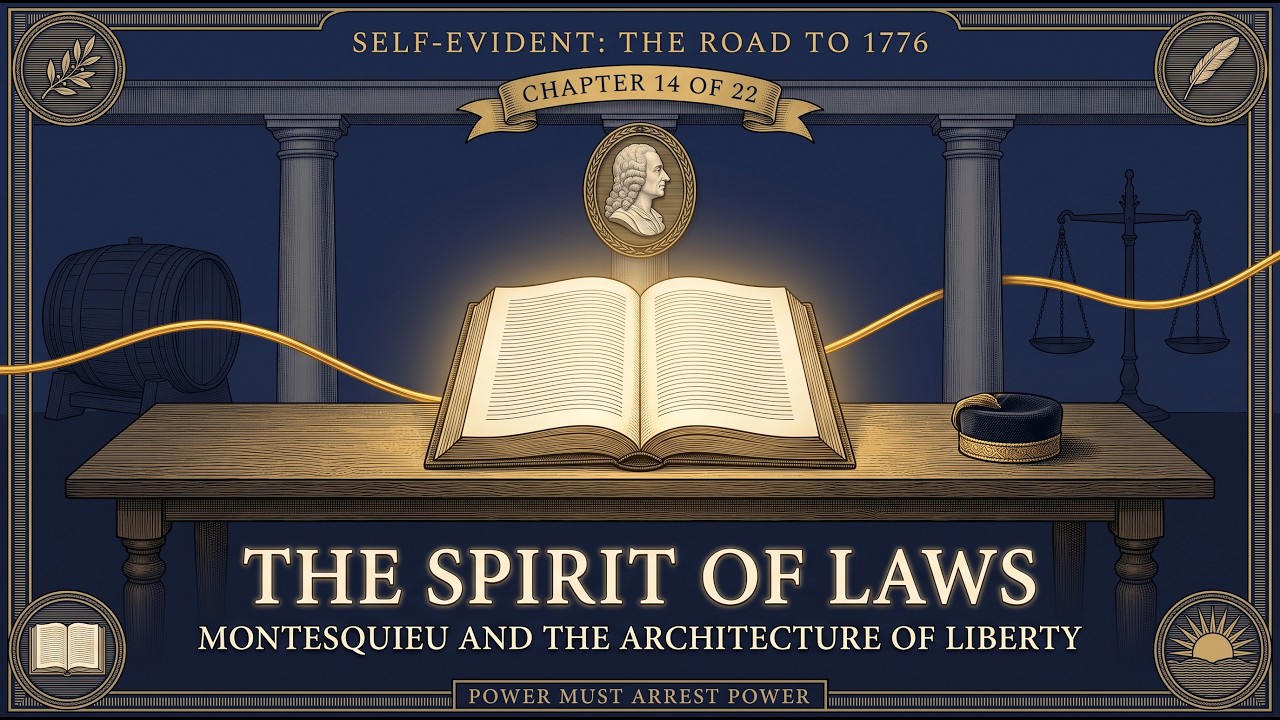
Everyone Quotes Montesquieu Almost Nobody Reads Past the First Page
This episode goes into the sixth chapter of the eleventh book — the most quoted passage of political writing produced in the eighteenth century, and among the least accurately remembered. Read to the halfway mark it says what everyone thinks it says: three powers, three sets of hands, keep them apart. Read past that point and Montesquieu dismantles both prohibitions. He does not want a permanent judiciary at all. He wants occasional tribunals of ordinary men, assembled for th
Sep 193 min read

Enumerated Powers and the Early Republic: Federalism Before the Fracture
From 1789 to 1860, the United States actually lived under the system of enumerated powers James Madison designed. The federal government really was limited. States really did dominate most policy. And somehow—imperfectly, with glaring contradictions we’ll address—it worked.
Oct 19, 20251 min read

The Forgotten Debate: Madison vs. Hamilton on General Welfare
Every modern debate about federal power — from Social Security and Medicare to student loan forgiveness and pandemic bailouts — traces back to a fight most Americans have never heard of. It wasn’t about guns or abortion or the culture wars. It was about a single phrase in Article I of the Constitution
Oct 18, 20251 min read


Enumerated Powers and the Early Republic — Federalism Before the Fracture
Before income taxes, before Social Security, before the alphabet soup of federal agencies, the United States lived under what the Founders called a government of enumerated powers. The federal government was meant to be strong enough to defend the Union and regulate commerce, yet weak enough to leave most of life untouched.
That balance—between energy and restraint—defined the first seven decades of the Republic. It was not perfect, not consistent, and certainly not unanimou
Oct 5, 20254 min read


The Federalist Divide — Madison vs. Hamilton and the General Welfare Debate
Every modern debate about federal power — from Social Security and Medicare to student loan forgiveness and pandemic bailouts — traces back to a fight most Americans have never heard of. It wasn’t about guns or abortion or the culture wars. It was about a single phrase in Article I of the Constitution:
“The Congress shall have Power to lay and collect Taxes, Duties, Imposts and Excises, to pay the Debts and provide for the common Defence and general Welfare of the United S
Oct 4, 20254 min read
bottom of page