When Is Resistance Lawful? — Calvinist Resistance Theory

Updated: Sep 24
SELF-EVIDENT The Road to 1776 Article 6 of 22
“Then he is no longer a prince, but a tyrant, and the subjects are to consider him in no other view.”— Act of Abjuration, the States General of the United Provinces, July 26, 1581¹
Saint Bartholomew’s Day
A note before beginning. This article is secular political history. It traces how a theory of lawful resistance to tyranny was worked out in the sixteenth century by Protestant jurists and ministers, under the pressure of persecution, and how that theory traveled across two centuries to Philadelphia. It takes no position on the theological quarrels between Catholics and Protestants that occasioned the bloodshed described here, and it means no judgment on either faith. The atrocities recounted below were committed and suffered by people on both sides of that quarrel. The concern here is not who was right about grace or the sacraments, but how the experience of being hunted taught a generation to ask when a subject may lawfully resist a king.
Before dawn on August 24, 1572, the killing began in Paris.
The occasion had been a wedding. Marguerite of Valois, sister of the French king, had been married to the Protestant prince Henry of Navarre, and the leading Huguenots — the French Calvinists — had gathered in the capital for the celebration. It was meant as a gesture of reconciliation in a kingdom torn by a decade of religious civil war. Two days before the massacre, the Huguenot commander Admiral Coligny had survived an assassination attempt in the streets of Paris. The failed attack inflamed Huguenot fury and court panic alike, and in that atmosphere the crown and the Catholic faction resolved to eliminate the Protestant leadership gathered in the capital. Coligny was murdered in his lodgings as the killing began. And then, spreading beyond the crown’s decision, the slaughter escaped into the streets, mob and militia falling upon Protestant men, women, and children wherever they could be found. It ran for days and spread to the provinces over the following weeks. The dead numbered in the thousands in Paris alone, and thousands more across France. Contemporary Protestants believed the figure ran far higher.²

The Saint Bartholomew’s Day Massacre was not merely one more atrocity in a bloody century. It was a turning point in the history of political thought, because of what it did to the minds of the men who survived it. The Reformed tradition before 1572 was not one of pure and unbroken obedience — the theory existed in seed and in scattered precedent. Calvin himself, in the closing pages of his Institutes, had allowed that “popular magistrates” appointed to curb the tyranny of kings might lawfully do so, and betrayed the people if they failed to. The Lutheran ministers of Magdeburg had defended armed resistance to the Emperor in 1550, and the English exiles who fled the Catholic Queen Mary had written more radical defenses of resistance in the same decade.³ But these were exceptions, hedged and scattered, against a general presumption of obedience that both Luther and Calvin had taught as the ordinary Christian duty. Persecution was to be endured, not resisted; the Christian’s weapons were prayer and patience and, at most, flight. A king who commanded what God forbade might be disobeyed to the point of accepting martyrdom, but he might not, on the common teaching, be actively opposed by force. What the massacre did was make that presumption impossible to sustain and drive the scattered exceptions into systematic form. A theory of pure obedience, in the aftermath of a crown-sanctioned massacre of the faithful, was not piety but a suicide note.
In the decade after 1572, and especially in the seven years that followed, the Calvinist world produced a body of political theory that would change the trajectory of Western liberty. Theodore Beza, François Hotman, the anonymous author of the most systematic treatise of them all, and the Scot George Buchanan set out to answer, with rigor and at length, the question that Luther had raised at Worms and refused to resolve. Luther had shown that conscience might judge the highest authority. He had not shown when, by whom, and by what right that judgment might pass from private refusal into lawful resistance. The massacre forced the question, and the men it radicalized answered it. This is the clearest instance in this series of a principle we have followed from the beginning: that tyranny is the great teacher of liberty, and that the doctrines by which free peoples limit power are most often written in the aftermath of power’s abuses. The Huguenots did not theorize resistance because they loved theory. They theorized it because they had watched their families die.
The Problem
To understand the achievement, one must first feel the weight of the difficulty. Resistance to a lawful ruler was not, in the sixteenth century, a live and respectable political option that merely awaited a clever defense. It was very nearly unthinkable, and it was unthinkable for reasons that pressed on the conscience of every serious Christian.
The chief obstacle was a text. In the thirteenth chapter of his letter to the Romans, the Apostle Paul had written that every soul should be subject to the higher powers, for there is no power but of God, and the powers that be are ordained of God; and that whoever resists the power resists the ordinance of God, and shall receive damnation.⁴ For a thousand years and more, this passage had stood as the great scriptural bulwark of obedience. If rulers are established by God, then to rebel against a ruler is to rebel against God, and the rebel imperils not merely his neck but his soul. Kings and their apologists cited Romans 13 endlessly, and with reason: it appears to say, in the plainest terms, that resistance to established authority is a sin.
To this was joined a developing language of sacral monarchy and absolute sovereignty, which would harden over the following decades into the full theory of the divine right of kings: the claim that royal authority came from God and was not finally answerable to subjects, nobles, or any representative body. On this view the king stood above human judgment. His subjects might petition and pray, but they might never call him to account, for they were not his judges; God alone was. To resist was not only rebellion but sacrilege.
The problem, then, was not simply political but theological, and any theory of lawful resistance had to solve it on that ground or not at all. It was not enough to show that resistance might be prudent or that a particular king was wicked. One had to show that resistance to a tyrant was consistent with — indeed required by — the same divine order that Romans 13 invoked. One had to find, within the structure of authority itself, the principle that limited it. The Calvinist theorists did precisely this, and they did it in three distinct ways: through the office of the lesser magistrate, through the history of the ancient constitution, and through the logic of the covenant. Each attacked the problem from a different direction, and together they formed the most formidable case for the right of resistance that had yet been made.
Beza and the Lesser Magistrates
Theodore Beza had been Calvin’s closest associate and became his successor as the leader of the Reformed church at Geneva. In 1574, two years after the massacre, he published The Right of Magistrates, a work that took Calvin’s own guarded opening and built it into a doctrine.⁵ Beza did not conjure the argument from nothing. Calvin had already admitted, in the closing pages of the Institutes, that magistrates appointed to curb the tyranny of kings might lawfully do so. Beza took that cautious exception and turned it into a working theory of lawful resistance. Its central move solved the problem that had most frightened Luther, and it is the reason the doctrine proved so durable.
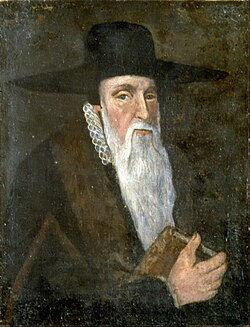
Beza granted the traditional position most of what it claimed. A private individual, acting on his own authority, may not take up arms against the ruler. On this point the whole tradition was agreed, and Beza did not dispute it, for he saw as clearly as any king’s apologist that a right of private rebellion is a recipe for endless bloodshed, every malcontent his own judge and army. But Beza drew a distinction that the apologists for absolute power had elided. Between the sovereign at the top and the private subject at the bottom stood a whole range of intermediate authorities: the magistrates of the towns, the provincial governors, the estates and assemblies, the lesser nobility, the constituted officers of the realm. These men were not private persons. They held public office, and they held it not as the king’s personal servants but as authorities in their own right, established to protect the people committed to their charge. Their office, like the king’s, existed for the good of the community.
From this Beza drew his conclusion. These lesser magistrates not only may but must resist a ruler who turns tyrant. Their duty to protect those beneath them is not suspended when the threat comes from above; it is most urgent precisely then. When a king makes war upon his own people, the inferior magistrate who stands aside betrays the very office that justifies his authority. Resistance, on this account, is not rebellion against the ordinance of God. It is the discharge of a lawful office against a superior who has abandoned his own. The magistrate who resists a tyrant is not a private man taking the sword into his own hands; he is a public authority doing exactly what public authority exists to do.
The elegance of the argument lies in what it accomplished at a stroke. It made resistance lawful without making it universal, authorized without making it anarchic. It answered Romans 13 on its own terms: authority is indeed ordained of God, and the lesser magistrate who resists is exercising an authority ordained of God against one who has forfeited his. And it drew directly on the inheritance this series traced in the medieval schoolmen. Aquinas had argued, three centuries earlier — in his treatise On Kingship and in his discussion of tyranny and sedition in the Summa — that the community which established a king retained the authority to restrain him, and that remedy against a tyrant belonged properly to public authority rather than to the private avenger.⁶ Beza took that hedged and careful medieval doctrine and gave it a sharper institutional form, naming the specific offices in which the right of resistance resided. What had been a cautious qualification became, in the hands of a persecuted church, a working doctrine of lawful revolt.
The lesser-magistrate doctrine would have an extraordinarily long life. It crossed to Scotland and England, shaped the political thought of the Puritan revolution, and crossed the Atlantic to the American colonies, where the idea that a subordinate authority might lawfully interpose itself against a tyrannical superior would echo through the arguments of the Revolution. The colonists who insisted that their elected assemblies stood between the people and a distant crown were reasoning, whether they knew it or not, along lines Beza had drawn in the shadow of the Paris killings.
Hotman and the Ancient Constitution
While Beza built his case from the structure of office, his contemporary François Hotman built a different case from the record of history. Hotman was a distinguished French legal scholar who had converted to the Reformed faith, and in 1573, the year after the massacre, he published Francogallia, a work that argued for the limitation of royal power not from scripture but from the constitution of France itself.⁷
Hotman’s method was historical. He set out to show that the France of his own day, with its pretensions to absolute monarchy, was a corruption of an older and better constitution. In the beginning, he argued, the kings of the Franks had been elected, not born to the throne; they had ruled alongside a great assembly of the nation that met to decide the weightiest matters; and their authority had been limited by law and by the consent of the governed. Absolute monarchy was not the ancient and rightful order of the kingdom but a recent usurpation, a departure from the true constitution that the nation had every right to reclaim. The assembly, representing the people, had once made and unmade kings, and what it had once done it retained the right to do.
This was a different kind of argument from Beza’s, and its power lay in its appeal to something the French revered: their own past. Hotman did not ask his readers to accept a novel theory of resistance. He asked them to remember who they had been, and to see the absolute king as the innovation and the limited king as the tradition. The right of the nation to check its ruler was not a new claim but an ancient possession, wrongfully lost and rightfully recovered.
Hotman’s history was, in significant part, a construction. The elective, constitutional Frankish monarchy he described was considerably tidier and more congenial to his purposes than the messy historical record would support, and later scholarship has treated the Francogallia as a work of political argument dressed in the robes of history rather than as sober historiography. This is less damaging than it first appears, and the reason matters for this whole series. The appeal to an ancient constitution is one of the most powerful and recurrent instruments in the history of liberty, and it works whether or not the history is exact. Men reach for a usable past when they wish to limit present power, and the past they find is always shaped by the finding. We will meet this pattern again, and soon, when Sir Edward Coke reaches back to an idealized common law and a mythologized Magna Carta to bind the Stuart kings. The ancient constitution is often as much invention as discovery. Its force in the history of freedom is undiminished by that fact, because a people persuaded that liberty is their birthright will defend it more fiercely than a people offered liberty as a novelty.
The Vindiciae Contra Tyrannos
The most systematic and influential of all the resistance treatises appeared in 1579, seven years after the massacre, under a pseudonym. Its author called himself Stephanus Junius Brutus, the Celt — a name chosen to evoke the Brutus who had driven the last king from Rome — and the mask has never been removed with certainty. The work is most often attributed to the French Huguenot nobleman Philippe du Plessis-Mornay, or to the diplomat Hubert Languet, or to some collaboration between them; the attribution remains unsettled. Its title was A Defense of Liberty Against Tyrants — in Latin, Vindiciae Contra Tyrannos — and it gathered the scattered arguments of the resistance tradition into a single rigorous structure.⁸
The Vindiciae organized itself around four questions, posed and answered in turn.
Are subjects bound to obey a prince who commands what is contrary to the law of God?
May a prince who seeks to ruin the church be resisted, and by whom?
May a prince who oppresses or ruins the commonwealth be resisted, by whom, to what extent, and by what right?
And may neighboring princes lawfully aid the subjects of another prince who are afflicted for the true religion or crushed by manifest tyranny?
Very similar in structure to the Liberty Test, the progression is deliberate, moving from the individual conscience outward to the international order, and its cumulative effect is to hedge the ruler about with limits on every side.
The foundation of the whole structure was the idea of the covenant, and here the Vindiciae gave consent its recognizably modern shape. The author described not one covenant but two. The first was between God on the one side and the king and people together on the other, binding both to uphold true religion. The second was between the king and the people, in which the king promised to rule justly and according to law, and the people promised obedience — obedience conditioned upon that just rule. This second covenant is the seed of the social contract that would flower in the following century. Authority is not a gift bestowed on the ruler to use as he pleases. It is a trust, granted on terms, and the terms bind the one who receives it. A king who breaks the covenant, who rules not for the people’s good but for their ruin, has dissolved the compact that obliged their obedience. He has, by his own act, released them.
Who then may call him to account? Not, the Vindiciae insisted, the private individual — here the treatise agreed with Beza. The people act through their representatives, the magistrates and officers and estates who embody the community in its corporate capacity. It is they who contracted with the king on the people’s behalf, and they who may hold him to the contract. The whole people, acting through its proper organs, stands as a party to the covenant and therefore as a judge of its breach.
The importance of this argument to what followed is difficult to overstate. Strip away the specifically religious elements — the covenant to uphold true religion, the concern for the church — and what remains is a theory of government by consent, limited by compact, forfeit upon breach, with a lawful remedy vested in the representatives of the people. That is the architecture, in its essentials, of John Locke’s Second Treatise, written a little more than a century later, and through Locke it is the architecture of the Declaration of Independence. The line does not run in a single unbroken strand, and the Vindiciae was neither the first nor the only source of these ideas. But when Jefferson wrote that governments derive their just powers from the consent of the governed, and that when a government becomes destructive of its ends it is the right of the people to alter or abolish it, he was giving American voice to a doctrine that this anonymous Huguenot had set out in rigorous form while the memory of the Paris killings was still fresh.
The Doctrine Crosses the Border
The resistance theory of the French Calvinists did not stay in France. It traveled quickly to Scotland, where it found a formidable proponent in George Buchanan, the humanist scholar who had been tutor to the young King James VI. In the same year the Vindiciae appeared, Buchanan completed De Jure Regni apud Scotos, usually rendered A Dialogue on the Law of Kingship among the Scots, a dialogue defending the accountability of kings to the people and the lawfulness of resisting, and even punishing, a tyrant.⁹ Buchanan grounded the argument in the claim that royal power originates in the people, who confer it and may therefore withdraw it, and that the king who rules against law becomes a public enemy whom the community may resist. That he addressed these arguments to the education of the very king who would later champion the divine right of kings against exactly such theories is one of the sharper ironies of the period.
The doctrine put down roots in the English-speaking world that would matter enormously in the century to come. The Vindiciae was translated and printed in English during the upheavals of the seventeenth century, when the English were engaged in their own struggle against a king who claimed to rule by divine right. Buchanan’s arguments fed the Scottish Presbyterian tradition of resistance, which reached its fullest expression in 1644 when Samuel Rutherford published Lex, Rex — the law is king — a title that inverted the royal motto and asserted the supremacy of law over the monarch. Rutherford’s work, which belongs properly to the English constitutional struggles this series takes up in a later article, drew the resistance tradition to its Presbyterian conclusion and carried it directly into the political battles from which the American founders would learn. The theory forged in the aftermath of a French massacre became part of the common inheritance of the Protestant Atlantic, available to every people that came to believe its rulers had broken faith.
The Theory Made Fact
Theory was tested against the world in the Low Countries. The seventeen provinces of the Netherlands, then ruled by Philip II of Spain, had risen in revolt against a distant king whose attempts to crush Protestantism, override their ancient charters, and govern them through Spanish soldiers and the machinery of the Inquisition had provoked a war for their liberties. The revolt would run for decades. Its decisive constitutional moment came in 1581, when the States General — the assembly of the provinces — formally renounced their allegiance to Philip in a document called the Act of Abjuration.¹⁰
The Act reads like a working demonstration of the resistance theory the Huguenots had built, and this is no coincidence: its preamble closely echoed the monarchomach resistance theory of the period, and the Vindiciae Contra Tyrannos above all.¹¹ It opens by stating the principle of the whole tradition in a few plain sentences. A prince is established by God to be the shepherd of his people, to defend and cherish them as a father his children; God did not make the people slaves to their prince, to obey whether he commands rightly or wrongly, but made the prince for the sake of the people, without whom he would be no prince at all. And when a prince, instead of protecting his subjects, oppresses them, strips them of their ancient liberties, and treats them as slaves, then — in the words the document makes its pivot — “he is no longer a prince, but a tyrant, and the subjects are to consider him in no other view.” Having established the principle, the Act proceeds to the particulars: a long recital of Philip’s specific violations, the grievances that proved him a tyrant in fact and not merely in theory, and the formal conclusion that the provinces were therefore free of their oaths of allegiance and entitled to govern themselves.
The resemblance to a document that would be written on another continent nearly two centuries later is not the invention of later patriots. It was noticed at the time, and scholars, most notably Stephen Lucas, have argued that the Dutch Act stood among the models available to the Americans who drafted their own declaration of independence in 1776. The structure is the same: a statement of the principle that legitimate authority rests on the ruler’s fidelity to the people’s good, followed by a bill of particulars demonstrating that the ruler in question has forfeited his authority, followed by the formal renunciation of allegiance. The Dutch had done in 1581 what the Americans would do in 1776 — reasoned from a theory of conditional authority to the lawful deposition of a king who had failed his charge.
What the Dutch built upon that foundation — the first great commercial republic of the modern age, a commonwealth of merchants and propertied free citizens (burghers) that would become the wonder and the envy of Europe — is the subject of the article that follows. Here the point is narrower and it is decisive: the resistance theory was not merely an academic construction. It was put to the test in the hardest possible circumstances, against one of the most powerful monarchs on earth, and it held. A people had reasoned its way from the principle that authority is a trust to the conclusion that a faithless ruler may be lawfully abandoned, and had made the conclusion stick.
The Honest Reckoning
The men who built this theory were not apostles of universal liberty. They were persecuted Calvinists who developed a defense of resistance because they were the ones being hunted, and there is little evidence that most of them would have extended the same right to those they in turn regarded as heretics. When Calvinists held power rather than suffered under it, their record was not one of toleration.
The sharpest instance stands at the very origin of the tradition. In 1553, in Calvin’s own Geneva, the Spanish physician and theologian Michael Servetus was burned at the stake for denying the Trinity and the validity of infant baptism. Calvin approved of the execution and had pressed for Servetus’s conviction, objecting only, and unsuccessfully, that he be beheaded rather than burned.¹² The city that became a refuge for the persecuted had itself put a man to death for theological error — a reminder that the persecuted, once in power, could reproduce the very logic of coercion they condemned in others. Beza himself wrote a defense of the execution of heretics by the civil magistrate, arguing that the ruler rightly punishes false religion. The doctrine that the lesser magistrate must resist a tyrant coexisted, in the same minds, with the doctrine that the magistrate must suppress heresy.
The resistance theorists, in short, were arguing for their own liberty more than for liberty as such. The covenant they invoked was a covenant to uphold true religion, by which they meant their religion; the tyranny they resisted was, centrally, the tyranny of being prevented from practicing it. Their theory contained no principle of religious freedom for all, and its authors would have been surprised and displeased to see it become one. The Geneva that sheltered them was in its own way a confessional state that brooked little dissent, and the Presbyterian Scotland that carried their banner would enforce its own orthodoxy with a rigor that later generations found oppressive.
None of this is erased by what follows. But neither does it cancel the contribution, and the reason is the pattern this series has met at every stage of the road. The men who articulate a principle rarely grasp its full reach, and often would recoil from it. Aristotle defended slavery and gave us the mixed constitution. Aquinas endorsed the killing of heretics and gave us the natural law that condemns it. Luther preached obedience to princes and taught Europe to defy the highest authority in Christendom. The Calvinist resistance theorists argued for the liberty of their own sect and built, in the process, a general theory of government by consent, limited by compact, forfeit upon breach — a theory whose logic ran far past the sectarian purpose that produced it. Their covenant to uphold true religion could be, and was, secularized into a covenant to uphold the people’s rights; their lesser magistrate defending the elect could become the elected representative defending the citizen; their tyrant who ruined the church could become the tyrant who violated the constitution. The instrument they forged for the defense of one faith became a tool for the defense of liberty itself, in hands they never imagined and would not have chosen. That is how the inheritance has always grown: not by the purity of its authors, but by the escape of their ideas from the limits of their intentions.
The Skeptic’s Case
Two serious objections stand against the argument of this article, and each deserves its full strength before any reply.
The Objection That These Were Partisans, Not Friends of Liberty
The first objection presses the point the previous section conceded. The Calvinist resistance theorists, the critic argues, have no business in a genealogy of liberty at all, because they were not defenders of freedom but partisans of a faction. They developed the right of resistance for one reason: their own sect was losing the wars of religion and needed a justification for taking up arms. When the shoe was on the other foot — when Calvinists governed — they persecuted as readily as any king, burning Servetus and hounding dissenters. Their theory was special pleading, a weapon forged for a particular fight and cloaked in the language of universal principle. To read them as ancestors of the Declaration is to mistake sectarian self-interest for a philosophy of freedom, and to launder a group of confessional warriors into liberals they would have despised.
The reply does not contest the facts, which are as the previous section stated them. It contests the conclusion drawn from them. The objection assumes that a principle is discredited by the impurity of its authors’ motives, and this assumption, consistently applied, would empty the history of liberty of nearly every figure in it. Motives in history are almost always mixed, and great principles are almost always born of particular struggles. The barons at Runnymede wanted their own feudal privileges; they produced a charter that grew into a guarantee of due process for all. The English parliamentarians wanted the upper hand against the Stuarts; they produced constitutional protections that outlived their quarrel. What matters, for the history of ideas, is not the width of the authors’ sympathies but the logic of what they built. And what the Calvinists built was a theory whose internal logic could not be confined to Calvinists. Once it is established that authority rests on a covenant, that the covenant binds the ruler to the people’s good, and that its breach releases the obligation to obey, the argument is available to anyone who can claim to have been wronged — Catholic or Protestant, believer or skeptic, the persecuted of any creed. The authors meant it for themselves. The logic meant it for everyone, and later generations, less interested in the theological quarrel and more interested in the principle, took the logic and left the sectarianism behind. That the Huguenots would not have approved is beside the point. Ideas are not bound by the intentions of the men who first set them down.
The Objection That Resistance Theory Is a Recipe for Anarchy
The second objection comes from the opposite direction, and it was made forcefully at the time by the defenders of sovereign power. To legitimize resistance at all, the critic argues, is to dissolve the foundation of all order. If subjects may judge when their ruler has become a tyrant and may act on that judgment, then every discontented faction will discover a tyrant in any ruler it dislikes, and the result is not liberty but endless civil war, each party certain of its cause and armed in its defense. The wars of religion themselves are the proof: once the principle of resistance was loose in the world, Europe descended into a century of slaughter. Order requires a final authority whose judgment cannot be second-guessed, for the alternative to sovereignty is not justice but chaos. Better the certain evil of an unchecked ruler than the boundless evil of a society in which every man is judge in his own cause. This was the argument of Jean Bodin in the sixteenth century and would be the argument of Thomas Hobbes in the seventeenth, and it drew its force from the very bloodshed that had produced the resistance theory in the first place.
This is the more powerful of the two objections, and the reply must concede the danger it names rather than deny it. The right of resistance is genuinely dangerous. A principle that licenses subjects to judge and depose their rulers can indeed be abused by any faction that cares to call its opponents tyrants, and the history of revolution offers no shortage of examples in which the charge of tyranny was a pretext and the cure worse than the disease. The Calvinist theorists were not blind to this. It is precisely why they labored so hard to deny the right of resistance to the private individual and to vest it only in the lesser magistrates, the constituted authorities, the people acting through their lawful representatives. The whole architecture of the doctrine was built to distinguish lawful resistance from mere rebellion, to channel the right through public office rather than private grievance, and thereby to answer the charge of anarchy. Whether the distinction can always hold under the pressure of events is a fair question, and this series will watch it strain and sometimes break in the revolutions to come. But the objection proves less than it claims. The alternative it offers — an unchecked sovereign whose judgment may never be questioned — is not in fact a formula for order but for a particular kind of disorder, the disorder inflicted from above, the massacre and the confiscation and the ruined liberties that the Act of Abjuration catalogued. A doctrine that forbids all resistance does not abolish tyranny; it merely disarms its victims. The resistance theorists chose, with open eyes, the risks of a limited right to resist over the certainty of unlimited submission. It is not obvious, looking at the century they lived through, that they chose wrongly. And the question of how a people may claim the right to resist without dissolving into the war of all against all is not a flaw peculiar to their theory. It is the central problem of free government, and the whole remainder of this series is in one sense an account of the attempts to solve it.
The Republic to Come
The question Luther left open has been answered. When may resistance to a tyrant be called lawful? The Calvinist jurists gave the answer in three voices that reinforced one another. It is lawful when it is undertaken not by the private individual but by the lesser magistrates and constituted authorities of the realm, who hold their own office for the people’s protection. It is lawful because the ancient constitution of a free people reserves to the nation the right to limit and, if need be, to depose its rulers. And it is lawful because authority rests upon a covenant that binds the ruler to the people’s good, so that a ruler who breaks the covenant has released his subjects from their obedience. Resistance, so understood, is not rebellion against the order of God. It is the defense of that order against the ruler who has betrayed it.
This was a genuine advance in the theory of liberty, and it was made, as such advances usually are, under duress, by men who had watched tyranny do its work and were determined to justify the sword against it. They built better than they knew. The theory they forged for the defense of a persecuted church became, in the hands of those who came after, a general charter of government by consent, and it traveled from France to Scotland to England to America, gathering force as it went.
But a theory of when a king may be deposed is not yet a theory of what should be built in his place. The Huguenots and the Scots had shown how to justify resistance to a tyrant. They had not shown how a free people might govern itself once the tyrant was gone. That demonstration would be given not in a treatise but in the world, by the people who had reasoned their way to the Act of Abjuration and then had to live with the consequences. Having renounced Philip, the Dutch did not at once resolve to do without a king; they first sought a replacement sovereign, and only when that search failed did they settle into the republican experiment that would become the Dutch Republic. What they made — the first great commercial republic of the modern age, a merchant nation that turned toleration and commerce and self-government into the marvel of Europe — is where this series turns next.
This is the road to 1776. The right to resist has been established. Now a free people must learn to rule itself.
Self-Reflection Prompts
The Calvinist theorists worked to deny the right of resistance to the private individual and to vest it only in the lesser magistrates and constituted authorities. What problem were they solving with this restriction, and does it succeed? In a modern republic, who occupies the place of the lesser magistrate — the authority that may lawfully interpose itself between the citizen and an overreaching central power? When you consider the candidates, do you find the distinction between lawful interposition and mere faction as clear in practice as Beza made it in theory?
The Vindiciae grounded the obligation of obedience in a covenant that binds the ruler to the people’s good and dissolves when the ruler breaks faith. Apply the idea to your own government. What are the terms of the covenant, as you understand them? What would a breach grave enough to dissolve the obligation actually look like — and who, on the theory, would be entitled to declare it? If you find you cannot answer the last question cleanly, what does that difficulty tell you about the theory?
Apply the Liberty Test to the right of resistance itself. An individual may defend himself and his household against one who comes to rob or kill him; no one supposes he must submit. The resistance theorists asked whether a people may do together what the individual may do alone — defend itself against one who comes, with the machinery of the state, to plunder and oppress. Is the collective right simply the individual right written large, or does something change when the aggressor wears a crown and the defender is a whole people? Where, if anywhere, does the analogy break down?
Hotman defended the liberties of his day by appeal to an ancient constitution that later scholarship judged substantially invented. The article argues that the appeal to an idealized past is a powerful instrument of liberty whether or not the history is exact. Is this a legitimate use of the past or a noble lie? When a people is told that freedom is its ancient birthright, wrongfully taken and rightfully reclaimed, is the story’s usefulness a sufficient defense of its truth — and if not, what is lost when the invention is exposed?
The men who built the resistance theory argued for their own liberty and would not have extended it to those they called heretics; the Geneva that sheltered them burned Servetus. The article holds that the logic of their theory ran past their intentions and became, in other hands, a defense of liberty for all. When you inherit a principle from authors who meant it far more narrowly than you now apply it, are you honoring their achievement or overturning it? Is there a discipline that lets you take the logic while leaving the sectarianism behind, or does every such inheritance quietly rewrite the thing it claims to receive?
Endnotes
Act of Abjuration (Plakkaat van Verlatinghe), States General of the United Provinces of the Low Countries, July 26, 1581. The English text is available in the Fordham University Internet Modern History Sourcebook, https://sourcebooks.fordham.edu/mod/1581abjuration.asp. On the document and its significance, see Martin van Gelderen, The Political Thought of the Dutch Revolt, 1555–1590 (Cambridge: Cambridge University Press, 1992).
On the Saint Bartholomew’s Day Massacre of August 1572, see Barbara B. Diefendorf, Beneath the Cross: Catholics and Huguenots in Sixteenth-Century Paris (New York: Oxford University Press, 1991), and Diefendorf, The Saint Bartholomew’s Day Massacre: A Brief History with Documents (Boston: Bedford/St. Martin’s, 2009). Estimates of the dead vary widely; scholarly figures commonly range from roughly two thousand in Paris to several thousand more across the provinces in the weeks that followed, with contemporary Protestant accounts giving much higher numbers. The precise toll cannot be established with certainty.
On Reformed resistance theory before 1572, see John Calvin, Institutes of the Christian Religion, IV.20.31, on the “popular magistrates” appointed to curb the tyranny of kings; the Magdeburg Confession (1550); and the writings of the Marian exiles John Ponet, A Short Treatise of Politic Power (1556), and Christopher Goodman, How Superior Powers Ought to Be Obeyed (1558). On this earlier tradition and its development, see Quentin Skinner, The Foundations of Modern Political Thought, vol. 2, The Age of Reformation (Cambridge: Cambridge University Press, 1978), and Robert M. Kingdon’s studies of Calvinist resistance.
Romans 13:1–2. The Apostle Paul writes that “the powers that be are ordained of God” and that “whosoever therefore resisteth the power, resisteth the ordinance of God” (King James Version). This passage was the central scriptural authority cited against a right of resistance throughout the medieval and early modern periods.
Theodore Beza, Du droit des magistrats (The Right of Magistrates), 1574. English translation in Constitutionalism and Resistance in the Sixteenth Century: Three Treatises by Hotman, Beza, and Mornay, ed. and trans. Julian H. Franklin (New York: Pegasus, 1969). Beza had succeeded John Calvin as moderator of the Company of Pastors at Geneva. On Calvin’s own guarded allowance for resistance by lesser magistrates, which Beza developed, see Calvin, Institutes, IV.20.31.
Thomas Aquinas, On Kingship (De Regno), to the King of Cyprus, Book I, on tyranny as a perversion of rule and the community’s authority over the ruler it establishes; and Summa Theologica, II-II, q. 42, a. 2, on why resisting a tyrannical government is not sedition. See the discussion in John Finnis, Aquinas: Moral, Political, and Legal Theory (Oxford: Oxford University Press, 1998), 287–91. Aquinas is treated at length in Article 4 of this series.
François Hotman, Francogallia, 1573. Critical edition, ed. Ralph E. Giesey, trans. J. H. M. Salmon (Cambridge: Cambridge University Press, 1972). On the work as political argument rather than sober history, see the editors’ introduction and J. G. A. Pocock, The Ancient Constitution and the Feudal Law, rev. ed. (Cambridge: Cambridge University Press, 1987).
Vindiciae Contra Tyrannos (A Defense of Liberty Against Tyrants), published 1579 under the pseudonym “Stephanus Junius Brutus.” Modern edition: Vindiciae, contra tyrannos: or, concerning the legitimate power of a prince over the people, and of the people over a prince, ed. and trans. George Garnett (Cambridge: Cambridge University Press, 1994). The work is most often attributed to Philippe du Plessis-Mornay, to Hubert Languet, or to some collaboration between them; the attribution remains unsettled. A portion is also translated in Franklin, Constitutionalism and Resistance.
George Buchanan, De Jure Regni apud Scotos, 1579. Modern edition and translation: A Dialogue on the Law of Kingship among the Scots, ed. and trans. Roger A. Mason and Martin S. Smith (Aldershot: Ashgate, 2004). Buchanan had served as a tutor to the young James VI of Scotland, later James I of England, who would become the foremost royal champion of the divine right of kings and would publish The True Law of Free Monarchies (1598) against exactly such contractual theories.
On the Act of Abjuration and the constitutional development of the Dutch Revolt, see van Gelderen, The Political Thought of the Dutch Revolt, and Jonathan I. Israel, The Dutch Republic: Its Rise, Greatness, and Fall, 1477–1806 (Oxford: Clarendon Press, 1995), 209–212.
On the resemblance between the Act of Abjuration’s preamble and the monarchomach resistance theory, especially the Vindiciae Contra Tyrannos, see van Gelderen, The Political Thought of the Dutch Revolt, and the discussion in Israel, The Dutch Republic. On the Act as a model available to the drafters of the American Declaration of Independence, see Stephen E. Lucas, “The ‘Plakkaat van Verlatinge’: A Neglected Model for the American Declaration of Independence,” in Connecting Cultures: The Netherlands in Five Centuries of Transatlantic Exchange, ed. Rosemarijn Hoefte and Johanna C. Kardux (Amsterdam: VU University Press, 1994), 187–207.
On the execution of Michael Servetus at Geneva in 1553 and Calvin’s role, see Roland H. Bainton, Hunted Heretic: The Life and Death of Michael Servetus, 1511–1553 (Boston: Beacon Press, 1953), and Carlos M. N. Eire, Reformations: The Early Modern World, 1450–1650 (New Haven: Yale University Press, 2016). On Beza’s defense of the punishment of heretics by the civil magistrate, see Théodore de Bèze, De haereticis a civili magistratu puniendis (1554).
Sources and Further Reading
Primary Sources
John Calvin. Institutes of the Christian Religion (1559 edition), Book IV, chapter 20, on civil government and the “popular magistrates” who may curb tyranny.
John Ponet. A Short Treatise of Politic Power (1556). And Christopher Goodman, How Superior Powers Ought to Be Obeyed by Their Subjects (1558).
Theodore Beza. The Right of Magistrates (Du droit des magistrats) (1574). In Constitutionalism and Resistance in the Sixteenth Century: Three Treatises by Hotman, Beza, and Mornay. Ed. and trans. Julian H. Franklin. New York: Pegasus, 1969.
François Hotman. Francogallia (1573). Ed. Ralph E. Giesey, trans. J. H. M. Salmon. Cambridge: Cambridge University Press, 1972.
Vindiciae Contra Tyrannos: or, Concerning the Legitimate Power of a Prince over the People, and of the People over a Prince (1579). Ed. and trans. George Garnett. Cambridge: Cambridge University Press, 1994.
George Buchanan. A Dialogue on the Law of Kingship among the Scots (De Jure Regni apud Scotos) (1579). Ed. and trans. Roger A. Mason and Martin S. Smith. Aldershot: Ashgate, 2004.
Act of Abjuration (Plakkaat van Verlatinghe) (1581). Fordham University Internet Modern History Sourcebook.
Samuel Rutherford. Lex, Rex, or The Law and the Prince (1644).
Secondary Works
Julian H. Franklin, ed. Constitutionalism and Resistance in the Sixteenth Century: Three Treatises by Hotman, Beza, and Mornay. New York: Pegasus, 1969.
Quentin Skinner. The Foundations of Modern Political Thought. Vol. 2, The Age of Reformation. Cambridge: Cambridge University Press, 1978.
Barbara B. Diefendorf. Beneath the Cross: Catholics and Huguenots in Sixteenth-Century Paris. New York: Oxford University Press, 1991.
Martin van Gelderen. The Political Thought of the Dutch Revolt, 1555–1590. Cambridge: Cambridge University Press, 1992.
Jonathan I. Israel. The Dutch Republic: Its Rise, Greatness, and Fall, 1477–1806. Oxford: Clarendon Press, 1995.
J. G. A. Pocock. The Ancient Constitution and the Feudal Law. Rev. ed. Cambridge: Cambridge University Press, 1987.
Roland H. Bainton. Hunted Heretic: The Life and Death of Michael Servetus, 1511–1553. Boston: Beacon Press, 1953.
Carlos M. N. Eire. Reformations: The Early Modern World, 1450–1650. New Haven: Yale University Press, 2016.
Roland H. Bainton. The Reformation of the Sixteenth Century. Boston: Beacon Press, 1952.
Next: Article 7 — “The Dutch Experiment”


Comments