top of page


“The Spirit of Laws” — Montesquieu and the Architecture of Liberty
The men who opposed ratification had the small-republic doctrine, and they used it hard. Brutus opened his first essay to the citizens of New York with it; Cato used it; it was the ground of the objection the leading Anti-Federalists put first, that a territory as large as the American states together could not be governed on free principles.⁴⁶
Hamilton answered, in the ninth number, by turning to another part of the same book. The opponents of the plan, he writes, have with
Sep 1343 min read
Top 5 Most Libertarian Presidents in U.S. History
We measure every president two ways — economic freedom and civil liberty — and a president has to move the country toward freedom on both to make the list. That single rule reshapes everything, and it is why the most famous "small government" names are not always where you expect.
The question underneath all of it: did this leave Americans more free, or more governed?
Jul 81 min read


“The Golden Thread” — The Inheritance of Liberty
We hold these truths to be self-evident, that all men are created equal, that they are endowed by their Creator with certain unalienable Rights, that among these are Life, Liberty and the pursuit of Happiness.
Jun 725 min read
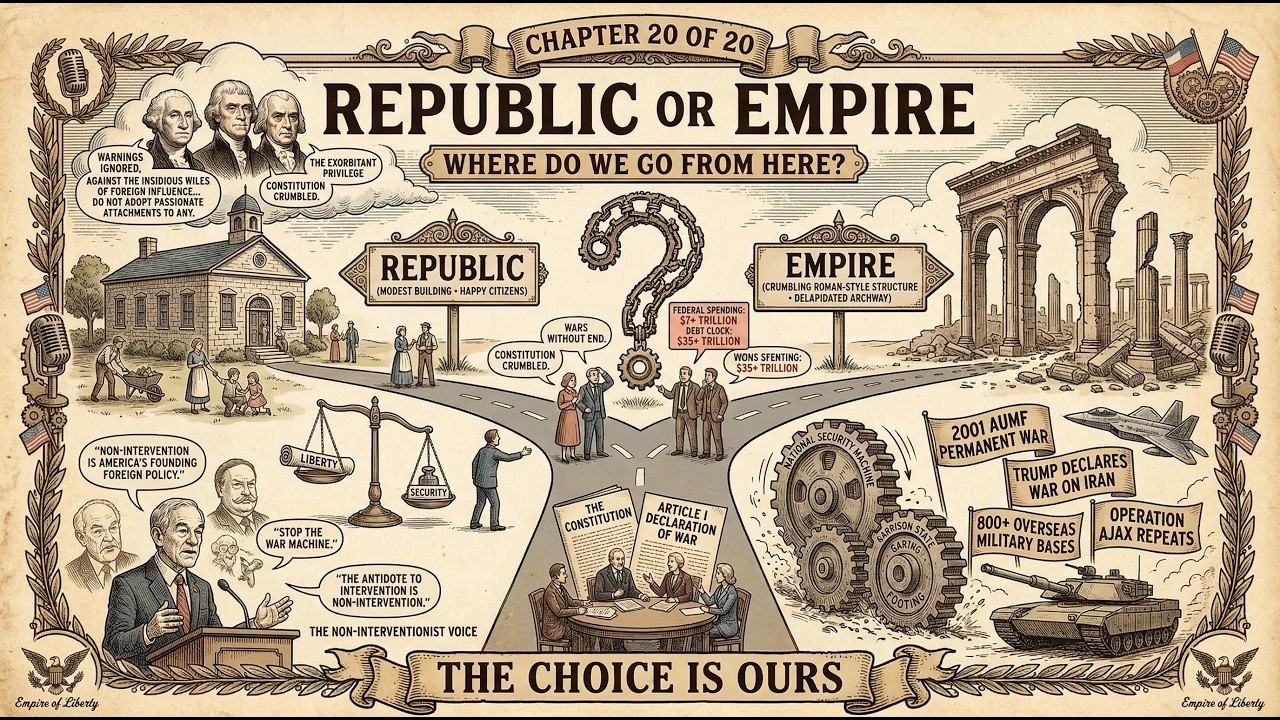
Republic or Empire — Where Do We Go From Here?
The finale of Empire of Liberty stands alone as a summary of the entire series. Opening with the cycle of democracy often attributed to Alexander Tytler, the episode tests that cycle against two centuries of American foreign policy, compresses the nineteen-installment synthesis into nine documented turns, engages the strongest interventionist counterargument in its strongest form, lays out the four pillars of constitutional restoration, and closes on Lord Acton’s insight that
Jun 61 min read
bottom of page