"Republic or Empire”—Where Do We Go From Here?

“Peace, commerce, and honest friendship with all nations, entangling alliances with none.”— Thomas Jefferson, First Inaugural Address, 1801¹
Introduction: The Choice Before Us
The empire is visible in the morning’s news. As this article is written, in late April of 2026, the United States is conducting active military operations on six continents. American special operations forces extracted the sitting president of Venezuela from his residence in January, captured him alive, flew him to New York, and installed his vice president to run the country in cooperation with American oil companies. American forces fought a brief war with Iran from late February through early April. American airstrikes continue in Somalia at a rate of two to three per week. American troops remain in Iraq, Syria, and on the Ecuadorian border. American naval vessels patrol the Caribbean and Eastern Pacific, where they have conducted forty-seven strikes on small boats since September of last year, killing more than 160 people whose alleged crimes have not been adjudicated by any court. American weapons continue to flow to a Saudi-led coalition prosecuting the world’s worst humanitarian catastrophe in Yemen.
The American national debt stands at approximately $39 trillion. Interest payments on the debt during the first half of fiscal year 2026 exceeded $529 billion, on a run rate that projects to more than one trillion dollars annually. Annual interest payments now exceed the entire Department of Defense budget. The five hundred or so military bases the United States operates abroad cost American taxpayers an amount equal to the combined defense spending of the next nine largest militaries on earth.²
Two thousand years ago, on the floor of the Roman Senate, a constitutionalist named Marcus Tullius Cicero argued that the Republic could still be saved by men of will and institution. He was wrong. He was killed for trying. Whether the American Republic faces the same choice — and whether it has the time and the will to make it differently — is the question this article exists to answer.

Nineteen previous articles have traced how the American republic became the global empire we now inhabit. They have documented the wars launched on fabricated pretexts, the coups that installed dictators, the blowback that struck the homeland, the constitutional erosion through war powers and surveillance and emergency authority, the trillions of dollars spent and the millions of lives lost, and the strategic objectives unachieved in essentially every major intervention since the Second World War. The pattern is documented. The consequences are documented. The architects of the failures, by and large, remain in their offices, on their think-tank fellowships, and on their cable news contracts.
This final article aims to do four things.
First, it synthesizes the long arc — not as a 1945 break with the founders’ republic, but as a two-century accumulation of choices, each of which could have been made differently, each of which can in principle be made differently again.
Second, it acknowledges the Roman example, which has hovered over the entire series. The Roman Republic did not fall to invasion. It was abandoned in stages, each stage seeming individually tolerable, by citizens who eventually concluded the Republic was not worth saving. The American Republic faces the same trajectory and, this article will argue, has not yet reached the point of no return.
Third, it lays out the case for non-intervention and answers the most serious objections — including the strongest argument the interventionists have, which is rarely engaged seriously in libertarian or restraint-school writing.
Fourth, and most importantly, it describes the path of restoration. That path has four pillars. They are not equal in weight. The first pillar — the relationship between citizens and their representatives — is foundational. Without it, the others are wishlist items. With it, the others become not only achievable but inevitable.
The choice between republic and empire is not historical. It is present. It is being made, at this moment, by senators who voted to advance a war powers resolution on January 8 and reversed themselves a week later, by representatives who decline to repeal the 2001 Authorization for Use of Military Force their predecessors passed twenty-four years ago for a war that no longer exists in any recognizable form, by citizens who cannot name how their representatives voted on the Yemen war powers resolution of 2019 or the Iraq AUMF repeal of 2023 or the Venezuela war powers resolution of January 2026.
It will be made tomorrow, and the day after, and at every primary and general election from now until the question is settled. The question this article asks is whether it will be settled by choice or by collapse. The founders’ answer was clear. The work of this article is to show that their answer remains available.
The Synthesis: The Long Arc of Inversion
The empire we now inhabit was not built in a day. It was not built in 1945. It was not built in 1898. It was built across roughly two centuries, in stages, each of which was contested at the time, each of which produced critics who saw clearly what was happening, and each of which the American political establishment proceeded to ratify and extend.
To understand whether the trajectory can be reversed, we must understand the shape of the trajectory. The synthesis that follows traces the arc through nine inflection points.
A. The Founders’ Republic (1789–1815)
The first inflection is the baseline against which everything else departs. The founders had read their classics and knew what kills republics. They had studied Rome closely. Madison’s notes from the Constitutional Convention reference Roman institutions repeatedly. Hamilton’s Federalist essays invoke the Roman example when arguing for and against specific constitutional provisions. John Adams’s Defence of the Constitutions of the United States devoted hundreds of pages to comparative analysis of Roman, Greek, and Italian republics in the effort to identify what had killed each of them. They concluded that the principal causes of republican death were standing armies, executive aggrandizement, foreign entanglement, and unsustainable debt. They designed the Constitution against those failure modes specifically.³
George Washington’s Farewell Address, drafted with Hamilton, warned against “permanent alliances with any portion of the foreign world” and advised that America’s “true policy” was “to steer clear of permanent alliances.”⁴ Thomas Jefferson, in his First Inaugural of 1801, articulated the doctrine that has provided the epigraph for this article: peace, commerce, and honest friendship with all nations, entangling alliances with none. James Madison warned in 1795 that “of all the enemies to public liberty war is, perhaps, the most to be dreaded, because it comprises and develops the germ of every other,” noting specifically that war “is the parent of armies; from these proceed debts and taxes; and armies, and debts, and taxes are the known instruments for bringing the many under the domination of the few.”⁵

This was not pacifism. The Barbary Wars of 1801–1805 and 1815, fought against North African states whose corsairs had been seizing American merchant ships and enslaving their crews, demonstrated that the early republic was prepared to use force when American commerce was directly attacked.⁶ But the wars were limited, congressionally authorized, directed at specific objectives, and concluded without occupation. The founders bequeathed a foreign policy of armed neutrality, commercial engagement, and constitutional restraint. The first century of the republic largely operated on those terms.
B. The First Seeds — Continental Expansion (1803–1848)
The cracks appeared within a decade.
The Louisiana Purchase of 1803 doubled the size of the United States overnight at a cost of approximately fifteen million dollars. Jefferson, the strict constructionist, recognized that the Constitution did not explicitly authorize federal acquisition of foreign territory. He drafted an amendment, then abandoned the effort when Napoleon signaled the offer might be withdrawn.⁷ The republic was strengthened. The precedent — that executive flexibility in foreign affairs could exceed strict constitutional warrant when the opportunity was good enough — would later be invoked for less benign purposes.
The Indian wars of the early nineteenth century established the practice of dispossession. The Trail of Tears (1838) was the most documented atrocity but was not the first or the last. Practices of conquest, removal, and treaty violation that would later be applied to Cuba, the Philippines, Haiti, and Nicaragua were perfected first on indigenous nations within the continental United States.⁸
But the decisive transformation came in 1846. President James K. Polk, having campaigned on the annexation of Texas, ordered American troops into disputed territory between the Nueces and the Rio Grande. When Mexican forces engaged the Americans, Polk announced that “American blood has been shed on American soil” and obtained a congressional war declaration on a preamble that would prove false. The territory was disputed; American blood had been shed in territory that was not unambiguously American.⁹
Then-Congressman Abraham Lincoln, in his Spot Resolutions of December 1847, demanded that Polk identify the precise spot on which the blood had been shed and prove it was American territory. Polk did not respond. The war continued. Mexico lost approximately half its national territory — California, Nevada, Utah, most of Arizona and New Mexico, parts of Colorado and Wyoming. The military results were celebrated; Lincoln’s dissent was treated as unpatriotic and contributed to his decision not to seek reelection to Congress.¹⁰
The Mexican War established what we may call the Polk Playbook: executive provocation, manufactured casus belli, congressional acquiescence under pressure, critics marginalized as unpatriotic, results ratified after the fact regardless of the legitimacy of the predicate. The playbook would be used again — in 1898 with the Maine, in 1917 with the Lusitania, in 1964 with the Gulf of Tonkin, in 2003 with weapons of mass destruction, in 2026 with the Cartel de los Soles. Lincoln’s dissent would have its echoes — Senator Robert Taft on the Korean War, Senator Wayne Morse on Tonkin, Senator Robert Byrd on Iraq, Senator Rand Paul on Yemen — but the dissents would not, in any of those cases, prevent the wars they identified as illegitimate.
C. The Turn to Overseas Empire (1898–1918)
The Spanish-American War of 1898 was the moment continental expansion became overseas empire. The pretext was the explosion of the USS Maine in Havana harbor on February 15, 1898, which killed 260 American sailors. The Hearst and Pulitzer newspapers immediately attributed the explosion to Spanish sabotage. Subsequent investigation, including a 1976 Navy reassessment by Admiral Hyman Rickover, concluded the explosion was almost certainly an internal accident — coal dust ignition or magazine fire — and not a Spanish attack at all.¹¹ But by the time the question was settled, the war had been fought, Spain had lost Cuba, Puerto Rico, the Philippines, and Guam, and the United States had become an overseas colonial power.

The Philippine-American War that followed (1899–1902) was longer, deadlier, and more thoroughly suppressed in American historical memory than the Spanish war that had begun it. Approximately 4,200 American troops and 200,000 Filipinos died. Concentration camps were established. Water torture, then called “the water cure,” was used on a scale that would not be matched in American military operations until Guantanamo a century later. The Filipino independence leader Emilio Aguinaldo, who had cooperated with Americans against the Spanish, was hunted down and forced to swear allegiance to American authority.¹²
President Theodore Roosevelt, in his annual message to Congress on December 6, 1904, articulated what would become known as the Roosevelt Corollary to the Monroe Doctrine. The Monroe Doctrine, originally a defensive warning to European powers to stay out of the Western Hemisphere, was transformed into a claim of American “international police power” within the hemisphere. Roosevelt’s words were precise: “chronic wrongdoing, or an impotence which results in a general loosening of the ties of civilized society,” might “force the United States, however reluctantly, in flagrant cases of such wrongdoing or impotence, to the exercise of an international police power.”¹³ The shield had become a sword.
Major General Smedley Butler, twice awarded the Medal of Honor and the most decorated Marine of his era, would later describe the practical meaning of the corollary in his 1935 monograph War Is a Racket: “I helped make Mexico and especially Tampico safe for American oil interests in 1914. I helped make Haiti and Cuba a decent place for the National City Bank boys to collect revenues in. I helped in the raping of half a dozen Central American republics for the benefits of Wall Street.”¹⁴ Butler was not a polemicist. He was a senior officer testifying to what he had personally done in service of his country across thirty-three years.
The First World War completed the inflection. President Woodrow Wilson, having campaigned in 1916 on the slogan “He kept us out of war,” led the United States into the European conflict in April 1917. The justifying rhetoric — the war to end all wars, the world made safe for democracy — was transcendent. The actual results were the Versailles settlement that produced the conditions for the Second World War, the Bolshevik consolidation in Russia that produced seventy years of Soviet rule, the dismemberment of the Ottoman Empire under the Sykes-Picot agreement that produced a century of Middle Eastern instability, and a domestic crackdown on dissent — the Espionage Act of 1917, the Sedition Act of 1918, the Palmer Raids — that constituted one of the worst civil liberties episodes in American history.¹⁵ The Old Right of the 1930s — Senator Robert Taft, journalist Garet Garrett, columnist John T. Flynn, and others — would draw the lessons explicitly. The American Republic, they argued, had begun its transformation into an American empire, and the transformation would consume the republic if not arrested.¹⁶
D. The Permanent Architecture (1941–1947)
The Second World War, more than any other inflection in this catalogue, is the one Americans are least prepared to evaluate critically. The war was, in moral terms, defensible. The Axis powers were genuine threats. The Holocaust was occurring. The Pacific theater followed a Japanese attack on American territory.
What the war produced, however, was not what was intended. It produced, for the first time in American history, the failure to demobilize. After every prior major war, the standing army had been reduced to peacetime levels and the wartime emergency authorities had been allowed to lapse. After 1945, neither happened.
The National Security Act of 1947 created the Central Intelligence Agency, the National Security Council, the Department of Defense, and the Air Force as a separate service. It created a permanent peacetime intelligence establishment for the first time in American history. It created an executive-branch national security apparatus that operated on a parallel track to the constitutional separation of powers, accountable to the president in ways no prior peacetime institution had been.¹⁷
The Truman Doctrine of March 1947, articulated to justify aid to Greece and Turkey against communist insurgencies, established the principle that American interests extended to the entire globe and that any communist gain anywhere was an American loss. The Marshall Plan of 1948, while justifiable on humanitarian and economic grounds, also created the precedent that American foreign aid would be a permanent instrument of foreign policy. NATO, established in 1949, created the first permanent peacetime alliance in American history — exactly the kind of “entangling alliance” Washington and Jefferson had specifically warned against.¹⁸
The Old Right collapsed. Senator Taft, who had opposed NATO and the Korean War, lost his bids for the Republican presidential nomination in 1948 and 1952 and died in 1953. The non-interventionist tradition that had been the dominant American foreign policy position from 1789 through the 1930s was, by the early 1950s, marginalized within both major parties. The bipartisan foreign policy consensus — interventionist, internationalist, anti-communist — was established for what would prove to be the duration of the Cold War and beyond.¹⁹
E. The Covert Empire (1953–1979)
The CIA, created in 1947 ostensibly for intelligence gathering, became operational quickly. The first major covert regime change operation was Operation Ajax in Iran in 1953. Mohammad Mossadegh, the democratically elected prime minister of Iran, had nationalized the Anglo-Iranian Oil Company. The British, unable to recover their position alone, persuaded the Eisenhower administration that Mossadegh was a communist sympathizer who threatened the Cold War balance. CIA officer Kermit Roosevelt, grandson of Theodore, organized the coup that removed Mossadegh and installed the Shah. The CIA would not officially acknowledge its role until 2013.²⁰
The template was established. Guatemala 1954: the United Fruit Company asked Washington to remove Jacobo Árbenz, who had nationalized fallow company lands. Operation PBSUCCESS removed Árbenz. The subsequent civil war killed approximately 200,000 Guatemalans, most of those indigenous Maya civilians, across thirty-six years.²¹ Indonesia 1958: failed CIA support for an anti-Sukarno rebellion, followed in 1965 by acquiescence in General Suharto’s anti-communist purge that killed approximately one million Indonesians.²² Cuba 1961: the Bay of Pigs invasion fails publicly. Operation Mongoose, the CIA assassination program against Castro, runs through multiple administrations with documented organized-crime participation.²³ Vietnam: the Gulf of Tonkin pretext of August 1964, on which Congress passed the resolution that would authorize a decade of war, was, as Robert McNamara himself later acknowledged, based on a non-event. The second alleged North Vietnamese attack on American destroyers had not occurred.²⁴
Chile 1973: Salvador Allende, democratically elected, was overthrown in a CIA-supported coup on September 11. Augusto Pinochet ruled for seventeen years; thousands are killed; tens of thousands are tortured. The Chicago Boys implemented free-market economic reforms while the political system was a dictatorship.²⁵ The pattern was and is bipartisan: the planning began under Nixon and continued under Ford. Argentina, Brazil, Uruguay, Paraguay all experience American-supported military governments under Operation Condor through the 1970s.²⁶
The constitutional consequence is the establishment of an unaccountable executive branch in foreign affairs. Congress is not informed of major operations. Oversight, when it exists, is minimal. The Church Committee of 1975–1976 documented systematic CIA abuses including assassination plots, domestic surveillance, mail-opening programs, and drug experimentation on unwitting American citizens (MK-ULTRA). The reforms that followed — the FISA Court, the intelligence committees, executive orders prohibiting assassination — were real but limited, and would be substantially undone in the wake of September 11.²⁷
F. The Blowback Generation (1979–2001)
The term “blowback” was coined within the CIA in the 1950s to describe the unintended consequences of covert operations. Chalmers Johnson, the former CIA consultant turned critic, made it the title of his 2000 book Blowback: The Costs and Consequences of American Empire. Published one year before September 11, the book predicted with substantial precision the kind of attack that would come — a terrorist strike on American soil, conducted by individuals motivated by American intervention in their countries.²⁸
The 1980s set the conditions. The Carter administration began arming the Afghan mujahideen against the Soviet occupation in 1979 — National Security Advisor Zbigniew Brzezinski later acknowledged that the program began six months before the Soviet invasion, with the explicit goal of inducing the invasion in order to give the Soviets “their Vietnam.”²⁹ The program continued and expanded under Reagan, with the Pakistani Inter-Services Intelligence directorate as the principal conduit. The CIA financed and armed a generation of jihadi fighters from across the Muslim world, including a wealthy Saudi recruit named Osama bin Laden, in service of weakening the Soviet Union.³⁰

Iran 1979 was the immediate blowback. The Shah, installed by the 1953 coup, fell to a popular revolution. The hostage crisis at the American embassy lasted 444 days and ended on the day of Reagan’s inauguration. Iran-Iraq war: the United States, having lost Iran, supported Saddam Hussein’s Iraq through the 1980s, including with intelligence-sharing while Iraq used chemical weapons against Iranian forces and Iraqi Kurds.³¹
The 1991 Gulf War expelled Iraq from Kuwait but produced the consequence that bin Laden would later cite as his principal grievance: American troops stationed permanently in Saudi Arabia, on the soil of the Two Holy Mosques. The sanctions on Iraq through the 1990s — sanctions that, by some estimates, resulted in the deaths of approximately 500,000 Iraqi children from disease and malnutrition — became the second principal grievance. Secretary of State Madeleine Albright, asked on national television in 1996 whether the price was worth it, answered: “We think the price is worth it.”³² Bin Laden quoted her statement in subsequent declarations of war.
September 11, 2001 was blowback in the precise sense Johnson had predicted. The attackers were principally Saudi nationals motivated by American troops in Saudi Arabia, American sanctions on Iraq, and American support for Israel. The 2001 Authorization for Use of Military Force passed three days later authorized the president to use force against “those nations, organizations, or persons” that “planned, authorized, committed, or aided the terrorist attacks.”³³ The text was sixty words. The interpretation has expanded over the next quarter-century to authorize operations in fourteen countries against groups that, in many cases, did not exist on September 11, 2001.
G. The Forever Wars (2001–2021)
The post-9/11 wars have been the subject of seven articles in this series and require no extensive reintroduction here. What matters for the synthesis is the cumulative scale.
Afghanistan: twenty years of occupation, ending in August 2021 with the Taliban returning to Kabul on the same buses they had ridden out in 2001. Approximately 2,400 American troops killed, approximately 20,000 wounded. Estimated Afghan deaths range from 176,000 to over 240,000. Cost to American taxpayers exceeds two trillion dollars when veteran care obligations through mid-century are included.³⁴
Iraq: invaded in March 2003 on the predicate of weapons of mass destruction that did not exist. Approximately 4,500 American troops killed. Iraqi deaths range, depending on methodology, from approximately 200,000 to over a million. The Islamic State emerged from the wreckage of the Iraqi state the invasion had destroyed, occupying significant territory in Iraq and Syria from 2014 to 2019 and conducting attacks across Europe and the Middle East. The American troop presence in Iraq, despite the Iraqi parliament’s 2020 vote to expel them, continues.³⁵
Libya 2011: NATO air campaign destroys Gaddafi’s government. Secretary of State Hillary Clinton’s “we came, we saw, he died” remark to a CBS News interviewer captured the administration’s celebratory frame. The country has not had a unified government since. Slave markets reappeared by 2017. The migration route across the Mediterranean from Libya to Europe has killed thousands.³⁶
Syria, Yemen, the drone wars in Pakistan and Somalia and Iraq and Yemen, the surveillance state at home, the torture programs at Guantanamo and the CIA black sites, the extraordinary renditions, the executive-branch kill list including American citizens. The Brown University Costs of War Project estimates direct deaths from the post-9/11 wars at approximately 940,000, with indirect deaths from war-caused famine, displacement, and infrastructure destruction pushing the total to approximately 4.5 million. Approximately 38 million people have been displaced. Cost to the American Treasury through fiscal year 2023: approximately 8 trillion dollars.³⁷
In each case, the constitutional process — congressional declaration of war, specific authorization, time-bounded engagement — was bypassed. In each case, the strategic objectives were either unachieved or counterproductive. In each case, the architects of the failures faced no consequences. They wrote books, ran for office, sat on corporate boards, and reappeared in subsequent administrations.
H. The Realists Vindicated and Ignored (2014–2026)
The contemporary realist school — John Mearsheimer, Stephen Walt, Andrew Bacevich, Barry Posen, and others — predicted with unusual precision the disasters that the foreign policy establishment was producing.
George Kennan, the Cold War strategist who had drafted the 1947 “Long Telegram,” published a 1997 op-ed in the New York Times warning that NATO expansion to former Soviet republics would be “the most fateful error of American policy in the entire post-Cold War era.” Russian nationalism, he predicted, would be inflamed; Russian foreign policy would harden; and the conditions would be created for the war the expansion was supposedly designed to prevent.³⁸
John Mearsheimer, in a 2014 Foreign Affairs essay titled “Why the Ukraine Crisis Is the West’s Fault,” predicted that NATO’s continued eastward push, combined with American-supported regime change in Kyiv, would produce a Russian military response that would be devastating for Ukraine and for the broader Western strategic position. He was attacked at the time as an apologist for Russian aggression. The 2022 Russian invasion vindicated his prediction with the precision of a clock.³⁹
The same pattern appeared in the Israel-Palestine context. Mearsheimer and Walt’s 2007 book The Israel Lobby and U.S. Foreign Policy argued that American support for Israeli policy was driven by domestic political pressures rather than American strategic interest, that the relationship was producing radicalization across the Muslim world, and that the costs to American interests were substantial. They were dismissed as antisemitic. The October 2023 Hamas attack and the subsequent Israeli campaign in Gaza, Lebanon, and Iran have demonstrated the costs they predicted.⁴⁰
The Ukraine war as it stands in April 2026, after the collapse of the April 2022 Istanbul negotiations, has produced approximately 1.2 million combined military casualties on both sides, an estimated 15,172 verified civilian deaths in Ukraine through January 2026, and Russian control of approximately twenty percent of Ukrainian territory. American aid has exceeded $188 billion. The war the realists predicted in 2014 has unfolded approximately as they predicted.⁴¹
The 2026 war with Iran — fought from late February through early April, ended by ceasefire at Trump’s announcement on or around April 7 — was the predicted consequence of the American withdrawal from the Joint Comprehensive Plan of Action in 2018. The Iranian nuclear program was damaged but not destroyed. The regime was not overthrown. The economic damage to Iran was severe. The diplomatic opening that the JCPOA had created remains closed.⁴²
In each case, the realists’ predictions were precise and public. In each case, they were dismissed by the foreign policy establishment as crank, naïve, or worse. In each case, they were vindicated. In none of the cases did the establishment that had been wrong face institutional consequences. The architects of failure remain, in 2026, the principal foreign policy commentators on cable news, the principal staff of the major think tanks, and the principal advisors to both major political parties.
I. The Empire in Real Time (2026)
Which brings us to the present.
The American national debt: approximately 39 trillion dollars, with interest payments exceeding 529 billion dollars in the first half of fiscal year 2026 and projected to exceed one trillion dollars annually. Annual interest payments now exceed the entire Department of Defense budget. The debt grows at a rate of approximately $7.58 billion per day, or roughly $87,000 per second.⁴³
Operation Absolute Resolve: January 3, 2026. The largest American military intervention in the Western Hemisphere since the 1989 Panama invasion. The sitting president of Venezuela, captured at his residence at approximately 2 a.m. local time, flown to New York to face drug trafficking charges, replaced by his vice president — who proceeded to enter into oil-revenue arrangements with the United States within weeks of taking office. President Trump publicly stated that access to Venezuelan oil had been a major reason for the operation. Two months later, on multiple occasions, he suggested Venezuela might eventually be included as the fifty-first state.⁴⁴
The Senate vote on the war powers resolution: January 8, 2026. The resolution, introduced by Senator Tim Kaine of Virginia under the War Powers Act of 1973, would have required congressional authorization for further military action in Venezuela. It advanced 52 to 47, with five Republicans (Hawley of Missouri, Young of Indiana, Murkowski of Alaska, Collins of Maine, and Paul of Kentucky) joining all Senate Democrats. Six days later, on January 14, the resolution was blocked, 51 to 49. Hawley and Young had reversed under pressure from the White House.⁴⁵
The simultaneous empire: AFRICOM strikes in Somalia continuing at two to three per week. American special operations forces conducting joint operations with Ecuadorian forces against “Designated Terrorist Organizations.” Approximately 2,500 American troops in Iraq under a counter-ISIS mission the Iraqi parliament voted to end in 2020. Approximately 900 American troops in Syria after the December 2024 fall of the Assad government to a jihadist coalition. American weapons continuing to flow to a Saudi-led coalition prosecuting the Yemeni war that has produced the worst humanitarian catastrophe of the present era. Naval strikes on small boats in the Caribbean and Eastern Pacific killing approximately 163 people through late March, with no judicial process, on charges that would not survive scrutiny in any American court.⁴⁶

The empire does not rest. It rotates attention. Venezuela in January, Iran in February and March, AFRICOM continuously, the Pacific perpetually warming. The financial arithmetic — debt exceeding GDP, interest payments exceeding defense, the dollar-denominated reserve order eroding at the margins as documented in Article 18 of this series — projects a forced reckoning within the next decade if a chosen reckoning does not occur first.
The arc is complete. The empire we now inhabit is not a 1945 break with the founders’ republic. It is the maturation of patterns visible from 1846, accelerated by 1898, institutionalized by 1947, weaponized by 1953, normalized by 1991, weaponized again by 2001, and demonstrated as functionally unrestrained in 2026. Each stage was contested at the time. Each stage produced critics who saw clearly what was happening. Each stage was ratified anyway.
Which means each stage could have been resisted. And the next stage — whichever stage it turns out to be — can be resisted as well.
The Roman Echo
The Roman analogy has hovered over this synthesis. It deserves brief, direct treatment.
The Roman Republic existed for nearly five centuries — from approximately 509 BCE, when the last king Tarquinius Superbus was expelled, to approximately 27 BCE, when Octavian assumed the title princeps and the principate replaced republican government in everything but name. The Republic had checks. Two consuls held executive power in one-year terms with mutual veto. The Senate deliberated. Popular assemblies legislated. Tribunes of the plebs held veto power over senatorial action. Standing armies were limited. Military commands were time-bounded. Generals returning from campaigns laid down their commands at the pomerium, the sacred boundary of the city.
The Republic did not fall to invasion. No foreign army marched on Rome and dictated the principate. The Republic was abandoned in stages, each stage seeming individually tolerable, by Romans who had concluded — gradually, cumulatively, often without consciously choosing — that the Republic was worth less than what the alternative offered.
The mechanisms are recognizable. Marius’s reforms of 107 BCE opened the legions to the landless poor, who became dependent on their commanders for the land grants that came with discharge. The army stopped being the citizen militia of the Republic and became the personal instrument of whichever general could secure the grants. Sulla’s marches on Rome in 88 and 82 BCE established that legions would follow their commanders into the city itself when the political stakes were high enough. The First Triumvirate of 60 BCE — Caesar, Pompey, Crassus — effectively privatized Roman foreign policy, distributing provinces and military commands among themselves while the Senate watched. Caesar’s Gallic Wars (58–50 BCE) made him the wealthiest man in Rome and the commander of the most loyal and battle-hardened army in the Republic. The crossing of the Rubicon in January 49 BCE was technically illegal but militarily decisive: the Senate had no force capable of stopping a man who had legions willing to follow him.
Marcus Tullius Cicero saw the pattern as clearly as anyone alive. He was a constitutionalist, a lawyer, a senator, a former consul. He defended the Republic against Catiline’s conspiracy in 63 BCE and watched the Triumvirate hollow it out across the next decade. After Caesar’s assassination in March 44 BCE, he delivered the Philippics against Mark Antony — fourteen speeches arguing the Senate had to reassert its authority before another Caesar emerged. He believed the Republic could still be saved by men of will and institution. He was wrong. The Second Triumvirate proscribed him in November 43 BCE. He was hunted down on the road from his villa, killed by soldiers, and his head and hands displayed in the Forum — the hands that had written the Philippics nailed to the rostrum from which he had delivered them.⁴⁷
Within fifteen years of his death, the Republic was over. Octavian, having defeated Antony at Actium in 31 BCE, would in 27 BCE accept from a compliant Senate the title Augustus and the powers of princeps. The forms of the Republic continued for centuries — there were still consuls, still senators, still elections of a kind — but the substance was gone. The Senate had lost its formal authority not in a single vote but across decades during which it became increasingly indistinguishable from the wealthy generals and provincial governors it was supposed to constrain.
It also lost the citizens. By the late Republic, ordinary Romans had stopped seeing the Senate as theirs. The grain dole from Pompey’s commission of 57 BCE; the games and donations from successful generals; the direct populist appeals from figures like Caesar that bypassed senatorial deliberation entirely — these had created a dynamic in which Romans looked to the strongman rather than to the institution. By the time Cicero argued from the rostrum that the Senate should still be the seat of authority, most Romans had stopped listening. The Senate did not lose its formal authority to constrain Caesar. It lost the citizens who would have stood behind a Senate willing to use it.
This is the warning the founders heard. Madison, Hamilton, and Adams had read Polybius and Tacitus and Cicero himself. They knew how the Roman Republic had died. They designed the American Constitution against the Roman failure mode specifically: separation of powers, time-bounded military commands, congressional control of war and finance, the impeachment power, the requirement of regular elections, the federal structure that diffused power across multiple sites.
The American Republic in April 2026 is not at the Rubicon. It is somewhere on the trajectory between the Marian reforms and the First Triumvirate. The institutional checks still exist. They have been weakened but not destroyed. Congress can still vote. Elections still occur. The Constitution still binds, however attenuated its grip has become.
But the trajectory is not flat. It points downward. Each emergency authority granted, each undeclared war fought, each constitutional violation ratified after the fact, each precedent set, narrows the path back. The question is not whether the American Republic can still recover. The question is whether it will. And whether the generation reading these words is the one that turned back.
Cicero will return to these pages in due course. The next series in this project, Self-Evident: The Road to 1776, traces the intellectual lineage that produced the American Constitution, and Cicero stands near its head. For now, his fate is the warning. The work of this final article is to ensure the warning is heeded.
The Case for Non-Intervention
A serious case for non-intervention rests on four affirmative grounds. Each is grounded in the historical record this series has compiled.
The Strategic Case
The United States is geographically blessed in ways no other major power can claim. Two ocean barriers separate it from Eurasian rivals. Its neighbors to the north and south are friendly and weak relative to American power. Its nuclear deterrent is sufficient to prevent any existential attack. The threats most often invoked to justify global American military presence are largely threats American interventions have generated. Al-Qaeda existed because of American support for the mujahideen and American basing in Saudi Arabia. The Islamic State existed because of the American invasion of Iraq. Iranian hostility to the United States dates from 1953 and the coup against Mossadegh. Russian hostility to NATO expansion was predicted by Kennan in 1997 and has unfolded as he predicted. The strategic argument for non-intervention is not that threats do not exist; it is that the principal source of threats to the United States is American intervention itself, and that a restrained American foreign policy would, over time, reduce rather than increase the threats American citizens face.⁴⁸
The Constitutional Case
The founders designed a republic, not an empire. They lodged the war power in Congress because they understood that executive war-making concentrates power in ways that destroy republican government. They limited military appropriations because they understood that standing armies threaten liberty. They required regular elections because they understood that political accountability is the precondition of constitutional restraint. The current foreign policy architecture — open-ended AUMFs, undeclared wars, executive-branch covert operations on every continent, defense spending exceeding the next nine countries combined — is constitutionally illegitimate not in some technical or legalistic sense but in the substantive sense that it operates entirely outside the framework the Constitution established. Restoring constitutional governance is not separable from ending the imperial foreign policy. They are the same project.
The Moral Case
Approximately 4.5 million human beings have died in the post-9/11 wars, by the Brown University Costs of War estimate. The figure understates because it excludes some categories of indirect death. It does not include the approximately 800,000 Iraqis killed by sanctions in the 1990s. It does not include the casualties of the proxy wars and supported insurgencies and supported counter-insurgencies that are not formally American wars but that American weapons, intelligence, and money have made possible. American citizens are responsible, in some morally meaningful sense, for what their government does in their name. Continued ratification of the imperial foreign policy is continued complicity in the deaths of human beings whose names the American polity does not know and whose families it does not recognize as bearing standing in its political life.⁴⁹
The Economic Case
The empire is unaffordable. The 39-trillion-dollar national debt, the 1-trillion-dollar annual interest payments that now exceed the Defense budget, the unfunded liabilities of the entitlement programs, the deferred maintenance on infrastructure, the strained social services — all these are partly consequences of the imperial commitments. The defense budget approaches 900 billion dollars in fiscal year 2026 and will, on current projections, exceed a trillion dollars within the decade. The Pentagon has never passed a clean audit. The retrenchment that the financial arithmetic will eventually force is better executed by choice than by crisis. A republic that retrenches deliberately preserves more of its resources, its alliances, and its constitutional governance than one that retrenches under the pressure of debt-service collapse and dollar-reserve flight.⁵⁰
These cases are mutually reinforcing. The strategic case identifies what restraint accomplishes; the constitutional case identifies what restraint preserves; the moral case identifies what restraint ceases doing wrong; the economic case identifies what restraint can still afford to do otherwise. None requires the others to stand. Together they constitute the affirmative argument the rest of this article assumes.
Answering the Objections
The case for non-intervention faces standard objections. Each deserves direct engagement.
“Non-Intervention Is Isolationism”
The charge of isolationism is the oldest rhetorical device in the interventionist toolkit. It was used against Senator Taft in the 1940s, against the antiwar movement in the 1960s, against the Buchanan candidacy in the 1990s, against the Ron Paul campaigns of 2008 and 2012, against the contemporary Quincy Institute. The charge confuses non-intervention with non-engagement, which are different things.
Non-intervention does not mean closing embassies, ending trade, or withdrawing from international cooperation on infectious disease, scientific research, environmental questions, or commerce. It means ending regime change operations, ending wars of choice, withdrawing from alliance commitments that no longer serve American interest, and constraining the use of military force to direct defense of the United States and its citizens. Switzerland is not isolated. Singapore is not isolated. Both maintain extensive diplomatic, commercial, and cultural ties to the world while declining to operate as armed missionaries for political systems they prefer.
What ends under a non-interventionist foreign policy is military empire — bases, regime change, proxy wars, sanctions regimes designed to starve civilian populations into political compliance. What continues is everything else.
“America Must Lead”
Leadership has, in practice, meant the imposition of American preferences by force. The countries the United States has most thoroughly led — Iraq, Libya, Afghanistan — are catastrophes. The countries that have led themselves — China economically, India politically, Brazil regionally — have managed without American direction. The argument from leadership often slides into the assumption that without American direction, the world descends into chaos and tyranny. The empirical record does not support this. The relevant counterfactuals — what would have happened if the United States had not intervened in Iraq, in Libya, in Ukraine — are visible in the regions where the United States did intervene. Worse than the counterfactuals, in nearly every case.
True leadership operates by example, not by coercion. The American example, when it has been most attractive — open society, constitutional government, economic dynamism, religious freedom — has done more to advance the cause of liberty in the world than any of the wars conducted in liberty’s name.
“We Cannot Abandon Allies”
The objection assumes the existing alliance structure represents commitments that cannot honorably be reviewed. This is rarely true. Saudi Arabia is not a democratic ally; it is an authoritarian client whose interests diverge sharply from American interests on multiple dimensions. The United Arab Emirates and Qatar are similar. Israel is a democratic ally, but its interests are not identical to American interests, and the assumption that American foreign policy must underwrite Israeli policy choices regardless of their wisdom has produced costs to American interests across multiple decades. Erdogan’s Turkey is a NATO member whose conduct diverges from NATO purposes.
The European NATO members can defend themselves. Germany has an economy larger than Russia’s. The combined European NATO economies dwarf Russia’s. The reason European militaries are inadequate to deter Russia without American support is not that they cannot afford otherwise; it is that they have chosen to free-ride on American provision and have been permitted to do so. A serious renegotiation of the alliance structure would condition American commitment on European responsibility and would, over time, produce a more balanced and sustainable arrangement.
Some commitments, finally, should never have been made. Their unwinding is not abandonment. It is correction.
“Enemies Would Fill the Vacuum”
The vacuum theory assumes only American power can prevent regional dominations by hostile powers. The assumption is empirically weak. China will dominate East Asia regardless of American forward presence — its economic weight, geographic position, and demographic mass make this nearly inevitable on any time horizon. Russia will dominate its near abroad to the extent that smaller powers permit it; the Ukraine war has demonstrated the costs of permitting and the limits of dominating. Iran will exercise influence in the Persian Gulf because it sits on the Persian Gulf. American withdrawal does not produce these outcomes; American withdrawal accommodates the regional structures that exist regardless of American preference.
The 1975 American withdrawal from Vietnam did not produce Chinese conquest of Asia. The 2021 American withdrawal from Afghanistan did not produce regional collapse — the Taliban returned, but the regional security architecture, deficient as it is, has held. The vacuum theory is a special case of imperial hubris — the assumption that without American direction, the world cannot manage. The world managed for several thousand years before American foreign policy existed. It will continue to manage.
“What About Terrorism?”
September 11 was blowback from intervention, not the consequence of restraint. Bin Laden’s stated grievances — American troops in Saudi Arabia, the sanctions on Iraq, American support for Israel — were grievances against active American foreign policy. The post-9/11 wars, conducted in the name of preventing future terrorism, have produced more terrorism, not less. The Islamic State did not exist before the 2003 Iraq invasion. Al-Qaeda in the Arabian Peninsula expanded during the American counter-terrorism campaign in Yemen. Al-Shabaab in Somalia has grown across two decades of American strikes.
Terrorism is a real threat. It is best addressed by the instruments designed for it: intelligence, law enforcement, homeland security, international cooperation among police and intelligence services. These instruments operate effectively without standing armies in the Middle East and without drone wars in Africa. The “War on Terror” framing, sustained for nearly a quarter-century, has made the United States less safe by generating the very threats it claims to suppress.
“The Founders Could Not Foresee Modern Threats”
The objection assumes founding principles depend on founding circumstances. They do not. The founders’ insights concern human nature — the propensity of executive power to expand under emergency, the corrupting effect of war on republican governance, the relationship between debt and tyranny, the centrality of accountability to political restraint. None of these have changed. Modern weapons make the founders’ warnings more relevant, not less. Nuclear weapons, in particular, make foreign-policy errors potentially civilization-ending in ways the founders could not have anticipated but their cautionary instincts would have welcomed. The burden is on interventionists to explain why principles that proved correct across two centuries have suddenly become obsolete in our generation specifically.
“Pax Americana Has Produced Eighty Years of Great-Power Peace”
This is the strongest argument the interventionists have, and it deserves direct engagement rather than dismissal.
The argument, made most prominently by Robert Kagan, Robert Kaplan, and others in the liberal-internationalist and neoconservative traditions, holds that the absence of great-power war since 1945 is the most important fact about the post-war international order, that this absence is causally attributable to American military presence and security guarantees, and that abandoning the architecture that produced the long peace risks restoring the great-power conflict that characterized the first half of the twentieth century.⁵¹
The argument has real force. The eighty years from 1945 to 2025 do constitute an unprecedented period of great-power peace. American military presence has been a feature of those eighty years. The correlation is real.
But the causation is overstated, in three respects.
First, the great-power peace has been maintained substantially by nuclear deterrence, not by American conventional intervention. The reason the United States and the Soviet Union did not fight a direct war was the mutual capacity for civilizational annihilation, not the American forward deployment in West Germany. The reason the United States and China have not fought is similar. The conventional military architecture is not the load-bearing element of the great-power peace; the nuclear deterrent is.
Second, the post-1945 era has not been peaceful. It has been marked by extensive American-initiated warfare — Korea, Vietnam, the Persian Gulf, Kosovo, Afghanistan, Iraq, Libya, Syria, Yemen, Ukraine by proxy, Iran briefly. The casualties of these wars in the millions are real even if they are not great-power wars. The argument that Pax Americana has produced peace is true only if “peace” is defined to exclude the wars America has fought.
Third, the architecture is no longer producing the outcomes the argument claims for it. The Ukraine war has restored direct major-power conflict to Europe. The Israel-Iran war of February-April 2026 demonstrated the proliferation of regional wars at the threshold of great-power confrontation. Russia and China are now in substantive strategic alignment for the first time since the Nixon-Mao opening of 1972. The system is, by any honest assessment, breaking down. Whatever credit Pax Americana can claim for the long peace from 1945 to roughly 2014, it cannot claim continued production of that peace going forward.
The Kagan argument is therefore not without merit, but it cannot bear the weight the interventionist position requires of it. The peace has been real but partial. The American role has been real but overstated. The system is no longer producing the goods it once did. The case for retrenchment is not the case that Pax Americana never worked. It is the case that Pax Americana has done what it can do, has imposed costs that cannot be sustained, and is producing the breakdown its defenders insist only its continuation can prevent.
The Path of Restoration
The path of restoration has four pillars. The order matters.
The first pillar must be reestablished before the others become possible — because the others, however urgent, depend on it. A Congress that does not believe its constituents are watching will not reclaim the war power. A Congress that fears no electoral consequence will not reclaim the purse. A Congress whose members serve longer than the average European monarch ruled will not hold the executive accountable. The instrument of the founders’ republic was a Congress that feared the people who sent it. Restoring that fear — and the trust on the other side of it — is the precondition for everything else. Without the first pillar, the other three are paper.
The second and third pillars — restoring the war power and restoring the power of the purse — should ideally proceed in parallel rather than in sequence, because the war power without budgetary authority is performative, and the budgetary authority without the war power is incomplete. They are reciprocal. They require the same institutional courage and rest on the same foundation of citizen pressure.
The fourth pillar — accountability — settles the past. It is what enables the first three to mean something rather than to repeat themselves.
Pillar 1: Restoring Citizens to Their Representatives
Two facts describe the present pathology with brutal economy.
Congressional approval ratings have hovered in the teens for two decades. The most recent major polls show Congress at 18 to 20 percent approval, with disapproval consistently above 70 percent.⁵²
Congressional reelection rates remain above 90 percent in most cycles. In the 2024 elections, House incumbents seeking reelection were reelected at a rate of approximately 96 percent. Senate incumbents at approximately 92 percent.⁵³
These numbers describe a structural disconnect that no policy reform addresses on its own. Citizens do not approve of Congress, and Congress does not fear them. The relationship that the founders designed — representatives accountable to constituents, constituents informed about and engaged with their representatives — has broken in both directions.
What Was Done to the Relationship
The structural pathologies are well-documented and resistant to easy reform.
Gerrymandering has produced safe districts where general elections are formalities and primaries — dominated by motivated minorities — decide outcomes. Most members of Congress now serve districts where the only meaningful electoral threat comes from their own party’s flank. The structural consequence: representatives respond to the marginal primary voter, not to the median constituent.
Campaign finance has made challenging an incumbent prohibitively expensive. The average House race in 2024 cost over two million dollars per candidate. Senate races in competitive states ran into the tens of millions. This filters candidates by their access to donor networks rather than by their connection to constituents.⁵⁴
The committee and seniority system rewards members who serve party leadership and the donor class, not members who serve constituents. A first-term member who breaks with leadership on an important vote can be denied committee assignments, fundraising support, and reelection backing. The system is designed to reward institutional compliance, not constituent service.
The lobbying-and-staff ecosystem has produced a permanent governing class. Members of Congress and their senior staff can expect, on departure, lobbying jobs at firms whose clients they regulated. The expectation shapes their behavior in office. The revolving door is not occasional or aberrational. It is the career structure of the modern Congress.
Foreign policy votes — AUMFs, defense authorizations, war powers resolutions — are precisely the votes least covered by local press, least asked about in town halls, and least remembered by constituents in subsequent elections. Members can vote however they wish on these matters and face no constituent reaction. The structural invisibility of foreign policy votes is one of the principal causes of the constitutional erosion this series has documented.
These five factors — gerrymandering, campaign finance, the committee system, the lobbying ecosystem, and foreign policy invisibility — describe what was done to the citizen-representative relationship. They are real. They are difficult to reform. They cannot be wished away.
What Citizens Owe the Relationship
But the structural pathologies are not the whole story. There is a side of the breakdown that no reform of gerrymandering or campaign finance will address — the side that depends on what citizens themselves bring to political life.
Voting is not pulling a lever. Voting is the conclusion of a process that begins with becoming informed. The founders presupposed an informed citizenry — Madison’s Federalist 10 assumes that citizens deliberate before they vote, that public discussion shapes electoral outcomes, that the quality of democratic governance is a function of the quality of democratic deliberation.⁵⁵ A republic of unengaged citizens is not a republic. It is a clientele that periodically ratifies whichever patron offers the better immediate terms.
There are two failure modes on the citizen side. They are different and they require different remedies.
Apathy is the first. Citizens who do not vote, who do not pay attention, who treat politics as a spectator sport rather than as a duty owed to a republic, abdicate the role the Constitution assigned to them. Apathy is overcome by attention — by the recognition that the question of how the republic uses its power, including its war power, is the most consequential question a citizen can address, and that abdicating it is choosing the empire over the republic by default.
Ignorance is the second. And in the current information environment, ignorance is harder to overcome than apathy, because the information environment is no longer organized around informing.
A century ago, ignorance was largely a function of access. Citizens did not have the information; if they could obtain it, they could become informed. The remedy was infrastructure: public libraries, schools, newspapers of record, broadcast standards.
In 2026, ignorance is no longer a function of access. Information is unlimited, instantaneous, and free. What has changed is that the information environment now contains, alongside accurate information, an unprecedented capacity for falsification, distortion, and propaganda. State actors run influence operations. Domestic political operations run influence operations. Algorithmic platforms reward engagement over accuracy. The line between journalism and advocacy has substantially dissolved. The citizen who simply consumes information uncritically — even from sources that present themselves as neutral — is being shaped by interests they cannot identify.
The remedy is vigilance. Ronald Reagan, addressing the verification of Soviet arms-control compliance, used a Russian proverb: Doveryai, no proveryai — trust, but verify. The phrase was applied to nuclear weapons treaties. It applies with at least equal force to information consumption in the present era. Identify outlets and persons who have demonstrated trustworthiness. Read their work. But also check the original sources they cite. Read the dissenting views and engage with them on their strongest grounds. Recognize that even good-faith analysts get things wrong. Recognize that bad-faith actors will exploit any willingness to take claims at face value. Build a media diet that includes voices you disagree with, because the disagreement is itself information about what is contested and what is not.
The libertarian tradition is well-positioned for this kind of vigilance because it has long had to operate against the established consensus. Antiwar.com, the Libertarian Institute, the Mises Institute, the Cato Institute, Reason magazine, Lew Rockwell’s site, Tom Woods’ work, Scott Horton’s reporting, Dave Smith’s commentary — these and other resources operate from a position of institutional independence from the bipartisan foreign policy establishment that has produced the disasters this series has traced.⁵⁶ They are not infallible. They are not without their own biases. But they are checkable, and they cite their sources, and they have demonstrated track records on the questions that matter for foreign policy specifically.
What Restoration Requires
Restoring the citizen-representative relationship requires action on both sides.
Identify your representatives’ votes on the foreign policy questions that matter. The 52-47 / 51-49 Senate sequence on the Venezuela war powers resolution of January 2026 is a clean test case. The five Republicans who voted to advance the resolution on January 8 — Hawley of Missouri, Young of Indiana, Murkowski of Alaska, Collins of Maine, and Paul of Kentucky — represent constituents who can ask them why and reinforce the position. The two who reversed within a week — Hawley and Young — represent constituents who can ask them what changed. The vote is on the public record. So is the reversal.
Make foreign policy a primary criterion in primary and general elections. The interventionist establishment depends on the assumption that voters do not vote on foreign policy. That assumption is true only as long as constituents make it true. A representative who knows that an AUMF vote will affect their reelection prospects votes differently from one who knows it will not. The change runs through the citizen.
Build cross-coalition pressure. The libertarian-progressive convergence on non-intervention is real and has produced specific working alliances: the Paul-Wyden axis on surveillance reform; the Massie-Khanna axis on war powers; the bipartisan Senate vote on Venezuela; the bipartisan opposition to indefinite Ukraine funding. These coalitions exist because individual constituents, on both left and right, pressure their representatives toward them. Expanding these coalitions is the work of citizens, not of institutional actors.
Use the mechanisms that exist. Town halls. Primary challenges. Accountability scoring. Voting record transparency. None of these are novel. None of them have been tried at scale on foreign policy questions in living memory. Each of them is available now.
Cultivate the disposition the late Republic of Rome lost — citizens who consider Congress theirs and act accordingly. The Roman Senate had the formal authority to constrain Caesar at every stage. It lost that authority not in a single vote but across decades during which its members became increasingly indistinguishable from the wealthy generals and provincial governors they were supposed to constrain — and during which Roman citizens stopped seeing the Senate as theirs. By the time the citizens noticed, the Senate had become the instrument of whichever general had the loyal legions.
The American Congress is at risk of the same trajectory. Restoring the citizen-representative relationship is not a sentimental project. It is the precondition of every other restoration this section will discuss.
Pillar 2: Restoring the War Power to Congress
With Pillar 1 in motion — with members of Congress who fear and trust their constituents — the second pillar becomes achievable. Pillars 2 and 3 should ideally proceed in parallel; both are corollaries of an awakened citizenry, and both are necessary because the war power without budgetary authority is performative.
The constitutional text is unambiguous. Article I, Section 8, Clause 11 grants Congress the power “to declare War, grant Letters of Marque and Reprisal, and make Rules concerning Captures on Land and Water.” This is the founders’ answer to the Roman problem. It places the war-making decision in the legislature, where it requires deliberation and where it remains accountable to the citizens who deliberate.
The text has been substantially nullified in practice. The last formal congressional declaration of war was June 1942, against the satellites of the Axis powers — Bulgaria, Hungary, and Romania. Every American war since — Korea, Vietnam, Grenada, Panama, the Gulf War, Afghanistan, Iraq, Libya, the Yemen support, the Iran war of 2026, the Venezuela operation of 2026 — has been conducted without a formal declaration.
The mechanisms by which the war power has been transferred from Congress to the executive are documented:
Open-ended Authorizations for Use of Military Force. The 2001 AUMF, sixty words, has authorized operations in fourteen countries against groups that did not exist when it was passed. The 2002 Iraq AUMF authorized the invasion of a country that no longer exists in any recognizable form. Both have been pending for repeal in successive Congresses for over a decade. Both repeals have failed. The AUMF regime must be ended. New authorizations, when sought, must be specific in their adversary, bounded in their objective, and time-limited in their duration.⁵⁷
The War Powers Resolution of 1973. Passed over President Nixon’s veto in the wake of Vietnam and Cambodia, the WPR was designed to enforce the constitutional war-making power. In practice, it has been ignored by every president since. The 60-day clock has been started but rarely enforced. The notification requirements have been treated as advisory. The resolution must be enforced — by Congress, by the courts where judicial standing can be found, and by citizens who treat its violation as a campaign issue.⁵⁸
Specific test cases are available. The Senate vote on the Venezuela war powers resolution of January 2026. The failure to authorize the Iran war of February-April 2026. The Iraqi parliament’s 2020 vote to expel American forces, which Washington ignored. The Yemen war powers resolution of 2019, vetoed by President Trump. Each of these is a concrete moment at which Congress could have asserted its constitutional role and chose not to. Each is a record on which constituents can hold representatives accountable.
The restoration of the war power requires Congress to vote — and to enforce the votes it takes. The enforcement requires citizens who will impose costs on representatives who do not vote, or who vote and then reverse under pressure. The instrument exists in Article I. The will to use it has atrophied. Restoring the will is the work of Pillar 2.
Pillar 3: Restoring the Power of the Purse
The same Congress that reclaims the war power must reclaim the purse, in parallel and not in sequence — because the executive that can spend without authorization can wage war without authorization.
The constitutional text is again unambiguous. Article I, Section 9, Clause 7 provides that “no Money shall be drawn from the Treasury, but in Consequence of Appropriations made by Law.” The appropriations power is the legislative branch’s most fundamental check on executive action. A president who cannot fund an operation cannot conduct it.
The power has been substantially neutralized through procedural innovation:
Continuing resolutions. Congress has, for years, financed government operations through short-term continuing resolutions rather than through regular order appropriations bills. A CR funds existing programs at existing levels for a defined period; it does not require committee markup, floor amendment, or substantive deliberation on whether the existing programs should continue, expand, or end. The result is that vast areas of federal spending — including substantial military spending — proceed by inertia rather than by deliberate appropriation.
Omnibus appropriations bills. When regular order has produced separate appropriations bills, they have increasingly been combined into massive omnibus packages that members must vote up or down on the entire bill. A representative who objects to a specific provision must vote against the entire government, an unattractive choice that effectively forecloses meaningful deliberation on the components.
Emergency supplementals. Major military operations are increasingly funded through emergency supplemental appropriations that bypass regular budget processes. The post-9/11 wars were funded substantially through supplementals that did not appear in the base defense budget for years.
The Pentagon audit. The Department of Defense, alone among major federal departments, has never passed a clean audit. The accounting infrastructure required to track military spending at the level of individual programs and contracts does not exist within DoD itself. The Government Accountability Office and the DoD Inspector General have documented this for decades. Each audit failure produces a brief news cycle and no consequences.⁵⁹
The financial corollary of constitutional abandonment is the present fiscal situation. A 39-trillion-dollar national debt, growing at approximately 7.58 billion dollars per day. Annual interest payments exceeding the entire Department of Defense budget. Defense spending approaching 900 billion dollars and projected to exceed a trillion within the decade. The Pentagon cannot account for substantial fractions of its own budget. None of these conditions is sustainable on any reasonable time horizon.
The restoration of the power of the purse requires Congress to return to regular order appropriations, to require Pentagon audit accountability as a condition of authorization, to impose sunset provisions on defense programs, and to restrict emergency supplementals to genuine emergencies rather than to ongoing wars dressed in supplemental clothing. None of this is technically difficult. All of it requires the institutional courage that Pillar 1 makes possible.
Pillar 4: Restoring Accountability
Pillars 1 through 3 prevent future damage. Pillar 4 settles the past. A republic that does not impose costs on those who lied it into wars, oversaw discredited intelligence, and profited from failed interventions is a republic that has not yet decided to take itself seriously.
The accountability gap is structural. The architects of the Iraq War — those who promoted the false WMD intelligence, who promised the war would last weeks, who insisted American forces would be “greeted as liberators” — face no professional consequences for having been catastrophically wrong. They write op-eds. They appear on cable news. They sit on corporate boards. They run think tanks. They serve in subsequent administrations.
The pattern repeats. The intelligence officers who insisted in 2003 that Iraqi WMD existed; the officers who insisted in 2009 that the Afghan surge would produce sustainable governance; the officers who insisted in 2014 that the Russian threat to Ukraine was bluff; the officers who insisted in 2026 that the Iranian nuclear program could be destroyed by the air campaign that did not destroy it — these officers, by and large, remain in or near positions of authority. Their predictions are forgotten. Their continuing analyses are treated as authoritative.
The think tanks that have promoted the interventionist consensus across decades are funded substantially by foreign governments and defense industry. The Atlantic Council, the Center for a New American Security, the Brookings Institution, the Heritage Foundation, the Hudson Institute — each has accepted significant funding from sources whose interests are advanced by the policies the think tank’s analysts then promote as independent expertise. The funding is partially disclosed. The disclosures are buried in annual reports few read. The analysts appear on cable news and in congressional testimony as independent experts, not as representatives of the interests that pay them.⁶⁰
The defense industry’s revolving door is well-documented and structurally entrenched. Senior defense officials retire to defense contractor boards. Defense contractor executives take government positions. Senior congressional staff move to defense industry lobbying. The pattern is not corrupt in the specific legal sense. It is corrupting in the larger institutional sense.
Accountability requires several things.
It requires that the architects of failure be named and held to public account in the institutions they continue to inhabit. The press has a role; so do citizens; so do members of Congress willing to ask uncomfortable questions in hearings.
It requires that the revolving door be made transparent. Specific disclosure requirements, longer cooling-off periods, restrictions on lobbying related to former government work. The mechanisms exist; they have been weakened by successive Congresses; they can be strengthened.
It requires that foreign-funded think tanks be disclosed clearly and that their analysts be identified as paid advocates of the interests that fund them. This is not a violation of speech rights; it is information citizens are entitled to in evaluating expert testimony.
It requires that the intelligence community’s track record on major predictions be in the public record when current officials are quoted. The CIA was wrong about Iraqi WMD. It was wrong about Afghan stability. It was wrong about the Russian invasion timeline. It was wrong about regime stability in Iran. The press treatment of subsequent intelligence assessments rarely notes this record. It should.
The defense-industry-think-tank-political complex that Eisenhower warned of in his 1961 farewell address must be named, mapped, and made publicly visible. Eisenhower’s specific phrase was “the military-industrial complex.” His original draft, leaked decades later, used the broader phrase “military-industrial-congressional complex.” Both phrases describe a structure that has expanded, not contracted, since 1961, and that constitutes a principal obstacle to the restoration this article describes.⁶¹
The Libertarian Tradition of Non-Intervention
The case for non-intervention is not parochial to any party or to any era. It is one of the deepest currents in classical liberal thought, and it has American expressions across two centuries.
The classical liberals of the nineteenth century — Richard Cobden and John Bright in England, Frédéric Bastiat in France — argued the case in terms that have not been improved upon. Cobden, the principal advocate of free trade and the principal critic of British military adventurism in his generation, made the argument that armed conflict and commercial freedom were antithetical, that empires impoverished their citizens to enrich their elites, and that the most reliable instrument of peace was unrestricted trade between free peoples. Bright, his ally, opposed the Crimean War of 1854 and lost his seat in Parliament for it. Bastiat’s The Law (1850) articulated the principle that the state had no rights its citizens did not individually possess, and that what was theft when committed by an individual was theft when committed by a state, regardless of the majority that authorized it.⁶²
The American Old Right of the 1930s and 1940s carried this tradition forward. Senator Robert Taft of Ohio, “Mr. Republican,” opposed American entry into the Second World War on prudential grounds, opposed NATO, opposed the Korean War, and warned against the “Truman doctrine” of unlimited global commitment. Garet Garrett, the journalist whose 1952 essay “Rise of Empire” remains one of the most prescient diagnoses ever written of the American transformation, argued that the United States had passed an invisible line between republic and empire and that the symptoms were already visible — perpetual mobilization, executive supremacy, rule by emergency, and the concentration of national life around the requirements of power projection. John T. Flynn, whose work As We Go Marching (1944) drew careful parallels between the American direction and the European fascisms of the prior decade, anticipated the post-war national security state with painful precision.⁶³
Murray Rothbard developed the libertarian non-interventionist case in its most systematic form across the second half of the twentieth century. His position rested on the non-aggression principle: individuals have no right to aggress against others; governments, composed of individuals, have no additional rights; if it is wrong for an individual to invade, steal, and kill, it is wrong for governments. “National interest” does not create rights that individuals lack. The doctrine applies as cleanly to nations as to persons.⁶⁴
Ron Paul brought the non-interventionist tradition into mainstream American political discourse across his three presidential campaigns (1988, 2008, 2012) and his service in Congress. His House floor speeches on monetary policy, foreign intervention, and constitutional government constitute a substantial body of American political literature. His 2007 collection A Foreign Policy of Freedom compiled the principal arguments. He has, perhaps more than any other contemporary figure, made non-intervention legible to a broad American audience as the founders’ position rather than a fringe alternative to it.⁶⁵
The contemporary inheritors of the tradition operate across multiple institutions: the Mises Institute (Auburn, Alabama), the Cato Institute (Washington, D.C.), Reason magazine and the Reason Foundation, the Libertarian Institute, antiwar.com (now in its third decade of continuous coverage), the Quincy Institute for Responsible Statecraft (founded 2019), Lew Rockwell’s website, Tom Woods’s podcast and writing, Dave Smith’s commentary, Michael Malice’s work, and Judge Andrew Napolitano’s analysis. Scott Horton, in particular — through his books Fool’s Errand (2017), Enough Already (2021), and Provoked (2024), and through his daily reporting at antiwar.com and the Libertarian Institute — has produced the most comprehensive contemporary cataloguing of American foreign policy disasters available in any single body of work.⁶⁶
A note on the dissenters within the libertarian tradition. Some contemporary libertarians have argued for liberating interventions — for using American military power to depose tyrants and install free institutions where they are absent. The argument has surface appeal. The historical record provides little support for it. Every twentieth-century intervention undertaken in the name of liberation has either failed in its stated objective or has produced consequences worse than the conditions it sought to correct. The military state required to conduct such interventions itself threatens liberty at home, as this series has documented across multiple articles. The consistent application of the non-aggression principle requires non-intervention. The burden is on liberation-interventionist libertarians to explain the exception, not on non-interventionists to justify the rule.
The Choice
What is at stake in the path described above is not a policy preference. It is the republic.
The empire we now inhabit imposes specific costs that are not contingent — they are intrinsic to the imperial form. The militarization of society. The surveillance of citizens. The debt that burdens generations not yet born. The resentment of the world. The moral corruption that comes from exercising power without accountability. These are not flaws in the imperial design that better management could correct. They are what empire produces, of necessity, as a function of what empire is.
The decision between republic and empire is not made once by elites in a single dramatic moment. It is made continuously, by citizens, at every election, in every primary, on every congressional vote, in every conversation, with every refusal to accept the framing that “the president has the authority” as the answer to whether a particular military operation is constitutional. Empire persists because too few demand its end. The reverse is also true: empire ends when enough demand its end, and not before.
Rome did not fall in a moment. It was abandoned in stages, each stage seeming individually tolerable, by citizens who eventually concluded the Republic was not worth saving. The American Republic faces the same question. It has not yet given the same answer. Whether it gives the same answer is up to the generation reading these words.
Conclusion: The Founders’ Wisdom and the Road That Continues
The founders understood what kills republics. They had read Polybius on the Roman anacyclosis — the cycle by which monarchy degenerates into tyranny, aristocracy into oligarchy, democracy into demagoguery, and demagoguery into the strongman who restores order at the cost of liberty. They had read Cicero on the conditions under which republican government can be preserved against the corruptions of wealth and military power. They had read Tacitus on the slow death of Roman senatorial authority under the early principate. They had studied the constitutional struggles of England across the seventeenth century. They had observed, in their own lifetimes, the failure of the European republics that had emerged from the wars of religion.
What they understood, and what we have largely forgotten, is that constitutional government is not a default condition. It is an unusual achievement. It requires specific institutional arrangements — the separation of powers, the time-bounding of executive authority, the legislative control of war and finance, the judicial check on both, the regular elections that hold each branch accountable. It requires the dispersion of power across multiple sites so that no single concentration can capture the whole. And, crucially, it requires citizens who believe the institutions are theirs and who act on that belief.
The Constitution they wrote was the answer to the Roman problem. They had studied the Roman failure mode and designed against it specifically. The accumulated abandonment this series has documented — from Polk’s Mexican War through the Roosevelt Corollary, through the failure to demobilize after 1945, through the covert empire of the Cold War, through the forever wars of the post-9/11 era, through the Venezuela operation of January 2026 and the Iran war of February-April 2026 — is the gradual restoration of the Roman problem the founders had solved. We have, by inattention and by choice, undone what they accomplished.
What we must remember is that the undoing is not yet complete. The institutional checks still exist. The Constitution still binds, however attenuated its grip has become. The Senate can still vote. Elections still occur. The fifty-two senators who voted to advance the Venezuela war powers resolution on January 8, 2026, demonstrated that the institutional capacity is still present. The fifty-one senators who voted to block the resolution six days later demonstrated that the institutional will is fragile. Both votes were made by representatives accountable to constituents. Both votes are reversible at the next election cycle by constituents who care.
The foundational question of this Consequential Actions project — the question that has run through every series we have produced — is the same question the founders asked: How much power should government wield, and what happens when it exceeds its proper bounds?
The foreign policy traced in these twenty articles is the answer. When government exceeds its proper bounds, it wages war without declaration. It spies on its citizens. It tortures prisoners. It props up dictators. It creates the terrorists it then claims to fight. It sacrifices the lives and treasure of its people for objectives never achieved. It accumulates the debt that mortgages the future. It corrupts the constitutional structure designed to constrain it.
The founders’ answer was clear. Government should wield limited power, checked and balanced, constrained by Constitution and custom, exercised only with the consent of the governed. Foreign policy was not exempt from this principle. It was central to it. The Constitution they wrote made foreign policy a shared enterprise of the legislative and executive branches precisely because they understood that war-making power, concentrated in a single hand, is what kills republics.
The choice between republic and empire is not abstract. It is present and concrete. It is being made, this week, by representatives voting on appropriations bills and authorization measures and confirmation hearings. It will be made, later this month, by citizens deciding whether to call those representatives, and what to ask them about how they voted. It will be made, in the coming months, by primary voters deciding whether to renominate incumbents who reversed under pressure on the Venezuela vote. It will be made, in the November elections, by general voters deciding whether the foreign policy votes of the past two years are reasons to keep representatives in office or to replace them.
The choice is not whether to have a foreign policy. The choice is whose foreign policy: the founders’, or the empire’s. The founders did not bequeath us a vision we are powerless to recover. They bequeathed us a Constitution that, even now, gives us the instruments of recovery. Whether we use those instruments is what the next decade will decide.
Twenty articles have traced what was done to the inheritance. They have shown how a republic that began with the warning against entangling alliances became an empire of seven hundred fifty bases, perpetual war, and constitutional erosion the founders specifically designed against. The work of recovery requires more than recognizing what was lost. It requires returning to what was inherited in the first place — to the truths the Declaration called self-evident, and to the centuries of human thought that produced them.
That work begins with the next series in this project: Self-Evident: The Road to 1776. It is not a sequel to Empire of Liberty; it is the philosophical ground that Empire of Liberty stands on. Across twenty-two episodes, it traces the lineage of American liberty from the classical Mediterranean — where Cicero’s voice still carries — through the Hebrew covenant tradition and the Islamic transmission, through medieval England and Reformation Europe, through the Scottish and French Enlightenments, through the colonial practice that produced 1776. The truths the founders called self-evident were not invented by them. They were inherited. To reclaim our natural rights, we must understand where those rights came from — not as a matter of academic interest, but as the precondition for defending them.
Empire of Liberty has shown what happens when the inheritance is squandered. Self-Evident will show what that inheritance was and is. The path forward is not a choice between the two stories. It is a recognition that the second is the foundation of the first.
Republic or empire?
The founders gave their answer. The choice is now ours.
Self-Reflection Prompts
This series has argued that the empire we now inhabit was built across two centuries through accumulating choices, each of which could have been resisted. Which inflection point in the synthesis — the Mexican War of 1846, the Spanish-American War of 1898, the entry into WWI, the failure to demobilize after 1945, the Iran coup of 1953, the post-9/11 wars, the Operation Absolute Resolve of January 2026 — strikes you as the point at which the trajectory could most plausibly have been arrested? What would have been required to arrest it?
The article argues that Pillar 1 — restoring citizens to their representatives — is foundational, and that without it Pillars 2, 3, and 4 are wishlist items. The case for this is that institutional reform requires institutional courage, and institutional courage requires constituent pressure. Do you agree? If not, what alternative sequencing would you propose, and why?
Cicero saw the trajectory of the late Roman Republic clearly, named it from the Senate floor, and was killed for it. The American Republic has produced its own modern Ciceros — Senator Taft on NATO and Korea, Senator Morse on Tonkin, Representative Paul on Iraq, Senator Gravel on Vietnam. They were marginalized, not killed. Does the reduced cost of dissent in the American case make recovery more achievable, or does it merely make the dissent easier to ignore?
The Final Question of this project — How much power should government wield, and what happens when it exceeds its proper bounds? — has been asked across General Welfare, The New Leviathan, and Empire of Liberty. The answer this series gives is that the foreign policy of the imperial republic exceeds the proper bounds dramatically. What policy preferences of your own — on issues where you favor government action — does this answer require you to reexamine?
The Series in Summary
The twenty articles of Empire of Liberty trace the inversion across nine inflection points:
The Founders’ Republic (1789–1815). Article 1 established the baseline: Washington’s Farewell, Jefferson’s First Inaugural, Madison’s warnings, the Neutrality Proclamation of 1793, the Barbary Wars as the limited and constitutional model.
The First Seeds — Continental Expansion (1803–1848). Article 2 traced the Louisiana Purchase, the Indian Wars, and the Mexican War — the moment Polk established the playbook (executive provocation, manufactured casus belli, congressional acquiescence, dissent marginalized) that would be reused for every subsequent war.
The Turn to Overseas Empire (1898–1918). Articles 3, 4, and 5 covered the Spanish-American War and the Philippine occupation; the European imperial competition that produced the First World War; and Wilson’s intervention and its disastrous consequences.
The Permanent Architecture (1941–1947). Articles 7 and 8 documented the failure to demobilize after the Second World War, the National Security Act of 1947, the establishment of the CIA and the Department of Defense, and the eclipse of the Old Right.
The Covert Empire (1953–1979). Articles 9, 10, and 11 covered Iran 1953 as the regime-change template, Guatemala 1954 and the Latin American applications, Vietnam and the limits of American power, and the Cold War’s normalization of covert operations.
The Blowback Generation (1979–2001). Article 12 traced the arming of the mujahideen, the Iranian revolution, the Iran-Iraq war, the 1991 Gulf War and the Saudi basing that bin Laden cited, the sanctions decade in Iraq, and 9/11 as the predicted blowback.
The Forever Wars (2001–2021). Articles 15 and 16 covered the AUMF regime, the Afghan and Iraq wars, the Libya destruction, the Syrian and Yemeni interventions, the drone wars, and the constitutional erosion that accompanied them.
The Realists Vindicated and Ignored (2014–2026). Articles 14 and 17 covered the Israel lobby and the Mearsheimer-Walt analysis; Kennan’s 1997 NATO warning; Mearsheimer’s 2014 Ukraine prediction; and the wars that followed — Gaza, Lebanon, Iran, Ukraine — as predicted disasters that were ignored at the time and remain ignored in their accountability dimensions.
The Empire in Real Time (2026). Articles 18 and 19 documented the monetary architecture of empire (the dollar reserve order, the debt, the interest payments approaching the entire defense budget) and Operation Absolute Resolve in Venezuela as the demonstration that the patterns are not historical artifacts but present-tense policy.
The case for republican restoration, traced in Article 20, rests on this entire arc. The empire was built one decision at a time. It can be unbuilt one decision at a time. The instruments of unbuilding remain available. Their use depends on the citizens who would use them.
Sources and Further Reading
This series has cited an extensive body of scholarly and primary literature across its twenty articles. The works listed here are the essential capstone library — texts that ground the argument of Empire of Liberty and that provide the foundation for further independent inquiry.
On Non-Intervention and Restraint
Scott Horton, Enough Already: Time to End the War on Terrorism (Libertarian Institute, 2021); Fool’s Errand: Time to End the War in Afghanistan (Libertarian Institute, 2017); Provoked: How Washington Started the New Cold War with Russia and the Catastrophe in Ukraine (Libertarian Institute, 2024).
Ron Paul, A Foreign Policy of Freedom: Peace, Commerce, and Honest Friendship (Foundation for Rational Economics and Education, 2007).
Patrick J. Buchanan, A Republic, Not an Empire: Reclaiming America’s Destiny (Regnery, 1999); Churchill, Hitler, and the Unnecessary War (Crown, 2008).
Andrew J. Bacevich, American Empire: The Realities and Consequences of U.S. Diplomacy (Harvard, 2002); The Limits of Power: The End of American Exceptionalism (Metropolitan, 2008).
Stephen M. Walt, The Hell of Good Intentions: America’s Foreign Policy Elite and the Decline of U.S. Primacy (Farrar, Straus and Giroux, 2018).
On the Realist Tradition
John J. Mearsheimer, The Tragedy of Great Power Politics (Norton, 2001); “Why the Ukraine Crisis Is the West’s Fault,” Foreign Affairs, September/October 2014.
John J. Mearsheimer and Stephen M. Walt, The Israel Lobby and U.S. Foreign Policy (Farrar, Straus and Giroux, 2007).
George F. Kennan, “A Fateful Error,” New York Times, February 5, 1997.
On the History of American Intervention
Stephen Kinzer, Overthrow: America’s Century of Regime Change from Hawaii to Iraq (Times Books, 2006); All the Shah’s Men: An American Coup and the Roots of Middle East Terror (Wiley, 2003).
William Blum, Killing Hope: U.S. Military and CIA Interventions Since World War II (Common Courage, updated edition 2014).
Tim Weiner, Legacy of Ashes: The History of the CIA (Doubleday, 2007).
Chalmers Johnson, Blowback: The Costs and Consequences of American Empire (Metropolitan, 2000); The Sorrows of Empire: Militarism, Secrecy, and the End of the Republic (Metropolitan, 2004); Nemesis: The Last Days of the American Republic (Metropolitan, 2007).
On the Old Right
Justin Raimondo, Reclaiming the American Right: The Lost Legacy of the Conservative Movement (Center for Libertarian Studies, 1993; ISI Books, 2008).
Murray N. Rothbard, The Betrayal of the American Right (Mises Institute, 2007).
Garet Garrett, The People’s Pottage (Caxton, 1953), including the essay “The Rise of Empire.”
John T. Flynn, As We Go Marching (Doubleday, 1944).
On Economics and Empire
Ludwig von Mises, Human Action: A Treatise on Economics (Yale, 1949); Nation, State, and Economy (1919).
F. A. Hayek, The Road to Serfdom (University of Chicago, 1944).
Henry Hazlitt, Economics in One Lesson (Harper, 1946).
Ron Paul, End the Fed (Grand Central, 2009).
On Cicero and the Roman Republic
Marcus Tullius Cicero, On the Commonwealth (De Re Publica); On the Laws (De Legibus); Philippics — available in the Loeb Classical Library editions.
Anthony Everitt, Cicero: The Life and Times of Rome’s Greatest Politician (Random House, 2002).
Tom Holland, Rubicon: The Last Years of the Roman Republic (Doubleday, 2003).
Mary Beard, SPQR: A History of Ancient Rome (Liveright, 2015).
Websites and Continuing Coverage
Antiwar.com — continuous coverage of American foreign policy, in operation since 1995.
The Libertarian Institute — analysis from a non-interventionist perspective.
The Quincy Institute for Responsible Statecraft (quincyinst.org) — realist analysis.
Mises Institute (mises.org) — Austrian economics and libertarian commentary.
LewRockwell.com — daily commentary.
The Tom Woods Show — podcast.
Reason magazine — libertarian commentary, including significant foreign policy coverage.
Endnotes
Thomas Jefferson, First Inaugural Address, March 4, 1801. Available through the American Presidency Project at the University of California, Santa Barbara, and in standard editions of Jefferson’s writings.
National debt and interest payment figures: U.S. Treasury Department monthly statements, fiscal year 2026 through April 2026. Defense base count: David Vine, The United States of War: A Global History of America’s Endless Conflicts (University of California Press, 2020), with subsequent updates from the Stimson Center. Comparative defense spending: Stockholm International Peace Research Institute (SIPRI) Military Expenditure Database, 2025 figures.
James Madison, Notes of Debates in the Federal Convention of 1787; Alexander Hamilton, John Jay, and James Madison, The Federalist Papers, particularly No. 6 (Hamilton on the propensity of states to war); John Adams, A Defence of the Constitutions of Government of the United States of America (1787-1788).
George Washington, Farewell Address, September 19, 1796. Standard reference: The Writings of George Washington, ed. John C. Fitzpatrick (Government Printing Office, 1931-1944), vol. 35.
James Madison, “Political Observations,” April 20, 1795, in Letters and Other Writings of James Madison, vol. 4 (1865).
The Barbary Wars are treated in Frank Lambert, The Barbary Wars: American Independence in the Atlantic World (Hill and Wang, 2005).
On Jefferson’s constitutional reservations regarding the Louisiana Purchase, see his letter to John Breckinridge, August 12, 1803, in Paul Leicester Ford, ed., The Writings of Thomas Jefferson, vol. 8 (Putnam, 1897).
The Indian Removal Act of 1830 and the resulting Trail of Tears are treated in Anthony F. C. Wallace, The Long, Bitter Trail: Andrew Jackson and the Indians (Hill and Wang, 1993).
James K. Polk, war message to Congress, May 11, 1846. Standard reference: Messages and Papers of the Presidents, ed. James D. Richardson, vol. 4.
Abraham Lincoln, “Spot Resolutions,” December 22, 1847, in Collected Works of Abraham Lincoln, ed. Roy P. Basler, vol. 1 (Rutgers, 1953). For Lincoln’s broader critique, see his speech in the House of Representatives, January 12, 1848.
Hyman G. Rickover, How the Battleship Maine Was Destroyed (Naval History Division, Department of the Navy, 1976).
The Philippine-American War is documented in Stuart Creighton Miller, Benevolent Assimilation: The American Conquest of the Philippines, 1899-1903 (Yale, 1982); Brian McAllister Linn, The Philippine War, 1899-1902 (University Press of Kansas, 2000).
Theodore Roosevelt, Annual Message to Congress, December 6, 1904.
Smedley D. Butler, War Is a Racket (Round Table Press, 1935), pp. 10-11. Butler’s 1933 speech, on which the monograph was based, is reprinted in Common Sense magazine, November 1935.
The Wilson-era civil liberties record is documented in Geoffrey R. Stone, Perilous Times: Free Speech in Wartime (Norton, 2004).
The Old Right perspective on the First World War is found in John T. Flynn, As We Go Marching (Doubleday, 1944); Garet Garrett, The Driver (1922) and Salvos Against the New Deal; Ronald Radosh, Prophets on the Right (Simon and Schuster, 1975).
The National Security Act of 1947 (P.L. 80-253). Scholarly treatment: Amy B. Zegart, Flawed by Design: The Evolution of the CIA, JCS, and NSC (Stanford, 1999).
The Truman Doctrine and Marshall Plan: Melvyn P. Leffler, A Preponderance of Power: National Security, the Truman Administration, and the Cold War (Stanford, 1992).
On the eclipse of the Old Right, see Murray N. Rothbard, The Betrayal of the American Right (Mises Institute, 2007).
The CIA’s 2013 acknowledgment of its role in the 1953 Iran coup: National Security Archive Electronic Briefing Book No. 435, August 19, 2013, “CIA Confirms Role in 1953 Iran Coup.” Standard scholarly treatment: Stephen Kinzer, All the Shah’s Men (Wiley, 2003).
The 200,000 figure for Guatemalan civil war deaths is from the Comisión para el Esclarecimiento Histórico, Guatemala: Memory of Silence (CEH, 1999). On the 1954 coup: Nick Cullather, Secret History: The CIA’s Classified Account of Its Operations in Guatemala 1952-1954 (Stanford, 2nd edition 2006).
The Indonesian killings of 1965-66: Geoffrey B. Robinson, The Killing Season: A History of the Indonesian Massacres, 1965-66 (Princeton, 2018).
Operation Mongoose and the Castro assassination plots: U.S. Senate, Alleged Assassination Plots Involving Foreign Leaders, Interim Report of the Select Committee to Study Governmental Operations with Respect to Intelligence Activities (Church Committee, November 1975).
The Gulf of Tonkin incident: Edwin E. Moïse, Tonkin Gulf and the Escalation of the Vietnam War (University of North Carolina, 1996); Robert McNamara, In Retrospect: The Tragedy and Lessons of Vietnam (Times Books, 1995).
The Chilean coup: Peter Kornbluh, The Pinochet File: A Declassified Dossier on Atrocity and Accountability (New Press, 2003; expanded edition 2013).
Operation Condor: J. Patrice McSherry, Predatory States: Operation Condor and Covert War in Latin America (Rowman and Littlefield, 2005).
The Church Committee reports, particularly the Final Report (April 1976), volumes 1-6.
Chalmers Johnson, Blowback: The Costs and Consequences of American Empire (Metropolitan Books, 2000).
Brzezinski’s acknowledgment that the program preceded the Soviet invasion: Vincent Jauvert, “Oui, la CIA est entrée en Afghanistan avant les Russes,” Le Nouvel Observateur, January 15-21, 1998.
The Afghan mujahideen program: Steve Coll, Ghost Wars: The Secret History of the CIA, Afghanistan, and Bin Laden, from the Soviet Invasion to September 10, 2001 (Penguin, 2004).
American support for Iraq during the Iran-Iraq war: Joyce Battle, ed., Shaking Hands with Saddam Hussein: The U.S. Tilts toward Iraq, 1980-1984 (National Security Archive Electronic Briefing Book No. 82, February 2003).
The Madeleine Albright statement appeared on 60 Minutes, May 12, 1996. Lesley Stahl interviewed Albright; the precise exchange has been verified in transcript and is widely documented. The 500,000 figure is contested; UNICEF estimates from 1999 reported approximately 500,000 excess child deaths under sanctions. Subsequent academic reanalysis has produced lower figures, but the order of magnitude — hundreds of thousands of preventable deaths — is not in serious dispute.
The 2001 Authorization for Use of Military Force: Public Law 107-40, September 18, 2001.
Brown University Costs of War Project, “Human and Financial Costs of the Post-9/11 Wars, 2001-2023,” September 2023; subsequent updates available at watson.brown.edu/costsofwar.
Iraq casualty estimates: Iraq Body Count documents approximately 200,000 civilian deaths; Lancet studies and ORB International polls produced estimates exceeding one million, depending on methodology. The contestation is methodological; the catastrophe is not.
Hillary Clinton, interview with CBS News, October 20, 2011.
Brown University Costs of War Project, cited in note 34. The 4.5 million figure includes direct deaths and estimated indirect deaths from war-caused famine, displacement, and infrastructure collapse.
George F. Kennan, “A Fateful Error,” New York Times, February 5, 1997.
John J. Mearsheimer, “Why the Ukraine Crisis Is the West’s Fault: The Liberal Delusions That Provoked Putin,” Foreign Affairs, vol. 93, no. 5 (September/October 2014).
John J. Mearsheimer and Stephen M. Walt, The Israel Lobby and U.S. Foreign Policy (Farrar, Straus and Giroux, 2007).
Ukraine war casualty estimates: Bloomberg, Wall Street Journal, and Economist reporting through February 2026; UN Office of the High Commissioner for Human Rights (OHCHR) civilian casualty database; Center for Strategic and International Studies analysis, January 2026. American aid figures: Council on Foreign Relations Ukraine aid tracker, December 2025.
The 2026 Iran war is treated in the standalone Consequential Actions episode “Why This War?” (March 2026) and in Article 14 of this series.
U.S. Treasury Department monthly statements; Congressional Budget Office, The Budget and Economic Outlook: 2026 to 2036, January 2026.
Congressional Research Service, “U.S. Capture of Venezuela’s Nicolás Maduro: Considerations for Congress,” Report IN12618, January 2026; American Expansionism under Donald Trump, composite citation of multiple news sources, April 2026.
Time magazine coverage of the January 8, 2026 vote; Deirdre Walsh, “Senate Republicans block Venezuela war powers resolution,” NPR, January 14, 2026.
AFRICOM press releases, January-March 2026, africom.mil; New York Times reporting on the Ecuador strike, March 2026; Yemen Humanitarian Response Plan 2025; Wikipedia, “United States strikes on alleged drug traffickers during Operation Southern Spear,” accessed April 2026, with cross-references to Washington Office on Latin America documentation.
The standard scholarly biography of Cicero is Anthony Everitt, Cicero: The Life and Times of Rome’s Greatest Politician (Random House, 2002). On the Philippics and Cicero’s death, see Tom Holland, Rubicon: The Last Years of the Roman Republic (Doubleday, 2003), chapters 11-12.
The strategic case for restraint is developed at length in Barry R. Posen, Restraint: A New Foundation for U.S. Grand Strategy (Cornell, 2014); Stephen M. Walt, The Hell of Good Intentions (Farrar, Straus and Giroux, 2018).
Brown University Costs of War Project, cited in note 34.
CBO projections cited in note 43; David Vine on base costs cited in note 2; SIPRI on comparative defense spending cited in note 2.
Robert Kagan, The World America Made (Knopf, 2012); The Jungle Grows Back: America and Our Imperiled World (Knopf, 2018).
Gallup Congressional Approval polls, 2024-2026 trends; Real Clear Politics polling averages.
Ballotpedia, “Reelection rates for U.S. Senate and House,” 2024 election cycle data.
OpenSecrets.org, “The Cost of Winning an Election” series, 2024 data.
James Madison, Federalist No. 10, November 22, 1787.
Antiwar.com has been in continuous operation since 1995. The Libertarian Institute was founded in 2017. The Quincy Institute for Responsible Statecraft was founded in 2019.
The 2001 AUMF is Public Law 107-40; the 2002 Iraq AUMF is Public Law 107-243. The Brennan Center for Justice maintains a running tracker of operations conducted under the 2001 AUMF.
The War Powers Resolution of 1973 is Public Law 93-148. Standard treatment: Louis Fisher, Presidential War Power (University Press of Kansas, 3rd edition 2013).
Department of Defense audit history: Government Accountability Office reports on DoD financial management, 2018-2025; DoD Office of Inspector General audit reports, fiscal years 2018-2025.
Foreign funding of think tanks: Eric Lipton, Brooke Williams, and Nicholas Confessore, “Foreign Powers Buy Influence at Think Tanks,” New York Times, September 6, 2014; subsequent reporting by The Intercept, In These Times, and Responsible Statecraft.
Dwight D. Eisenhower, Farewell Address, January 17, 1961. The original draft phrase “military-industrial-congressional complex” is documented in the Eisenhower Presidential Library archives.
Frédéric Bastiat, La Loi (1850); English translation, The Law, available from the Foundation for Economic Education and the Mises Institute. On Cobden and Bright: Nicholas C. Edsall, Richard Cobden: Independent Radical (Harvard, 1986).
Robert A. Taft’s foreign policy speeches are collected in A Foreign Policy for Americans (Doubleday, 1951). Garet Garrett, “The Rise of Empire,” in The People’s Pottage (Caxton, 1953). John T. Flynn, As We Go Marching (Doubleday, 1944).
Murray N. Rothbard’s foreign policy writings are collected in Wall Street, Banks, and American Foreign Policy (Mises Institute, 2011). The non-aggression principle is developed throughout The Ethics of Liberty (Humanities Press, 1982).
Ron Paul, A Foreign Policy of Freedom: Peace, Commerce, and Honest Friendship (Foundation for Rational Economics and Education, 2007).
Scott Horton, Fool’s Errand (2017), Enough Already (2021), and Provoked (2024), all published by the Libertarian Institute.


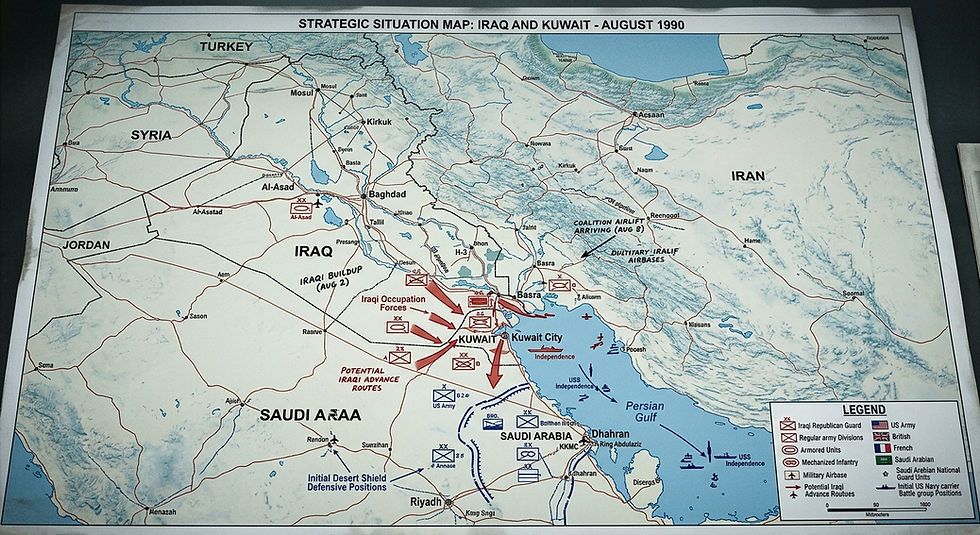
Comments