top of page

Socialist Calculation Debate Explained: Menger, Mises, Hayek and "I, Pencil" in 2026
Adam Smith wrote in 1776 that no human wisdom or knowledge could ever be sufficient to direct the industry of a nation. A century and a half later, other men turned that sentence into a formal argument. Carl Menger argued in 1871 that value sits in the person valuing, not in the object. Ludwig von Mises argued in 1920 that without private ownership of producer goods there are no exchange ratios for them, and so no way to weigh one use of a ton of steel against another.
Sep 153 min read
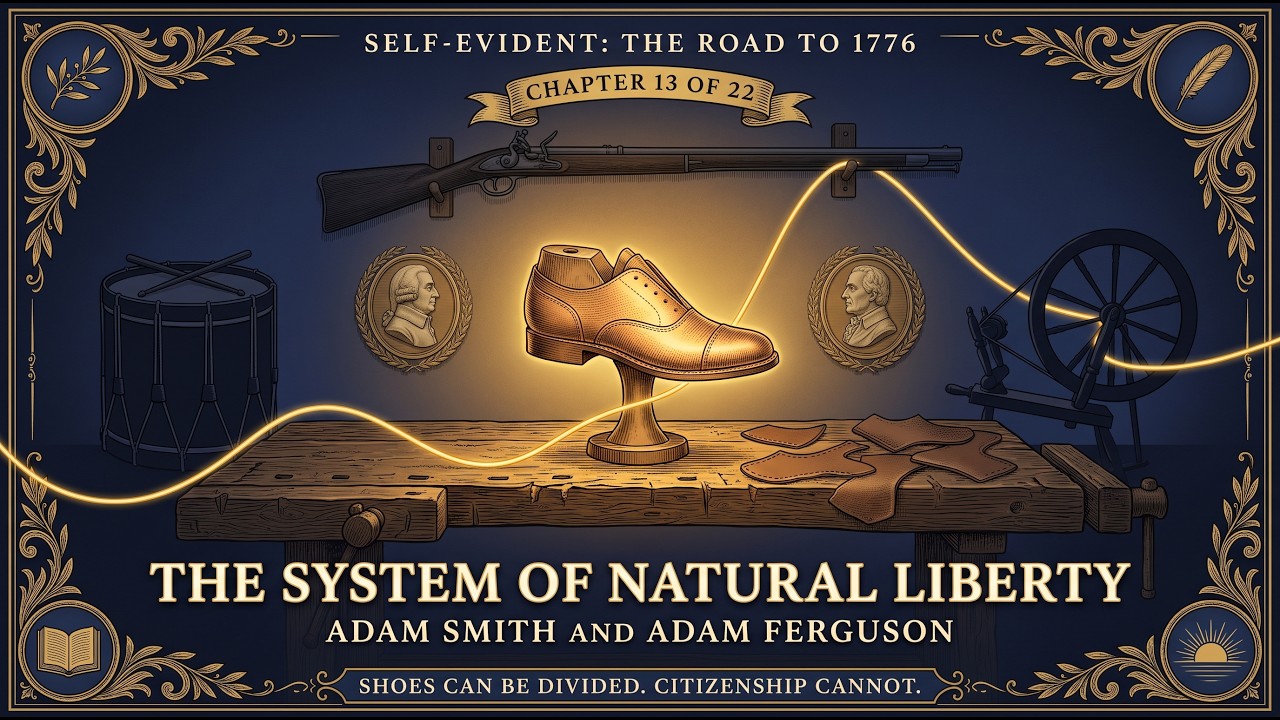
Adam Smith and Adam Ferguson: The Wealth of Nations, An Essay on the History of Civil Society, and the Militia Question
Two men were born in Scotland in 1723, a county apart. They joined the same Edinburgh club, kept the same friends, and worked from the same premise about what commercial life does to a people. They never agreed about the remedy, and the disagreement is more specific and more difficult than it is usually made to sound.
Sep 123 min read


“The System of Natural Liberty” — The Scottish Enlightenment, Part II: Smith and Ferguson
Adam Smith came home to Kirkcaldy in the spring of 1767, at forty-three, having resigned a professorship at Glasgow to travel through France as tutor to a young duke. He had met Voltaire at Ferney and Quesnay and Turgot in Paris. He came back to a small port town with a life pension and a manuscript, and stayed roughly six years.⁴ The letters from those years are the letters of a man in difficulty.
Sep 644 min read
bottom of page