top of page
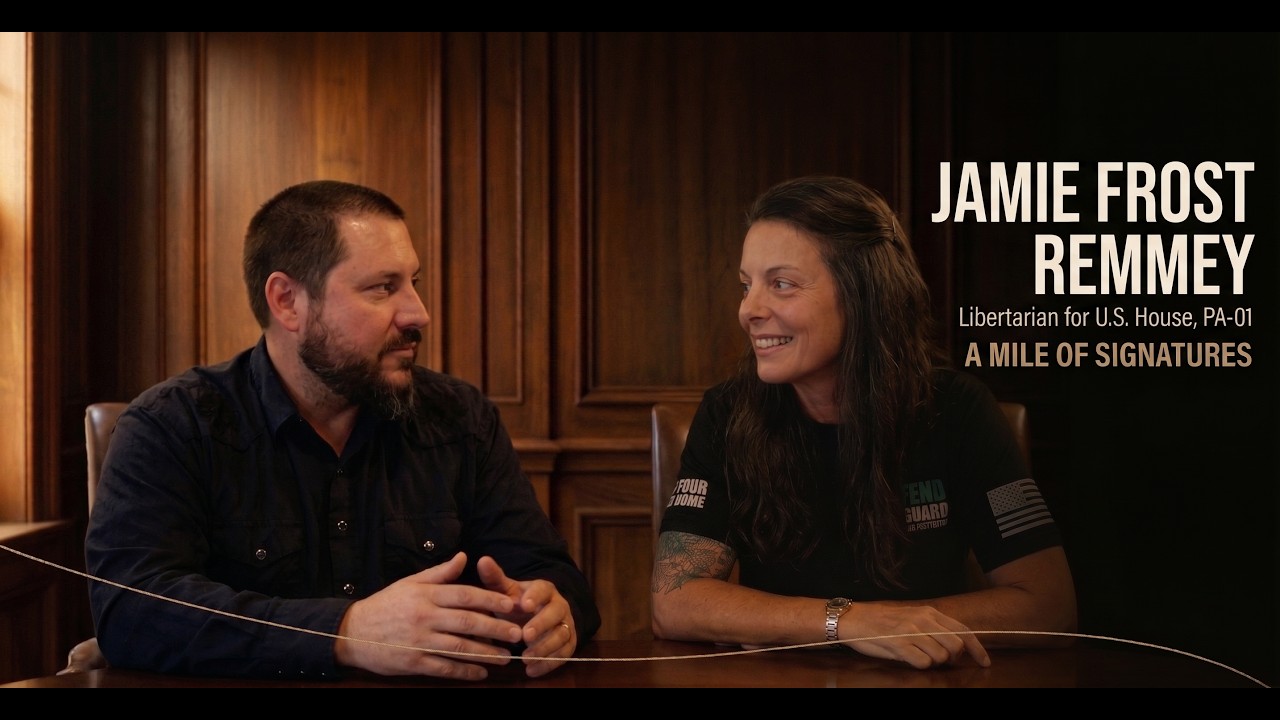
Jamie Frost Remmey — Libertarian for U.S. House, PA-01 — On Ballot Access, Defend the Guard & War
This is the Thursday interview closing Week 7 of Self-Evident: The Road to 1776 — the week we traced the Dutch Republic, the first modern commercial republic, which grew prosperous not by concentrating power but by refusing to. All week the argument was that liberty and prosperity travel together, and that power held far from the people tends to be power misused. This conversation puts a living face on it: a candidate standing in the middle of the machinery, who can tell you
Jul 302 min read

The Dutch Republic Explained: William the Silent, Toleration, the VOC & Grotius
This is the story of how a revolt became a republic almost by accident, how toleration and commerce fed each other until a small waterlogged country surpassed a vast empire, and how the men who built it also built, on the far side of the world, a machinery of conquest and slavery that cannot be edited out of the account of it.
Jul 253 min read
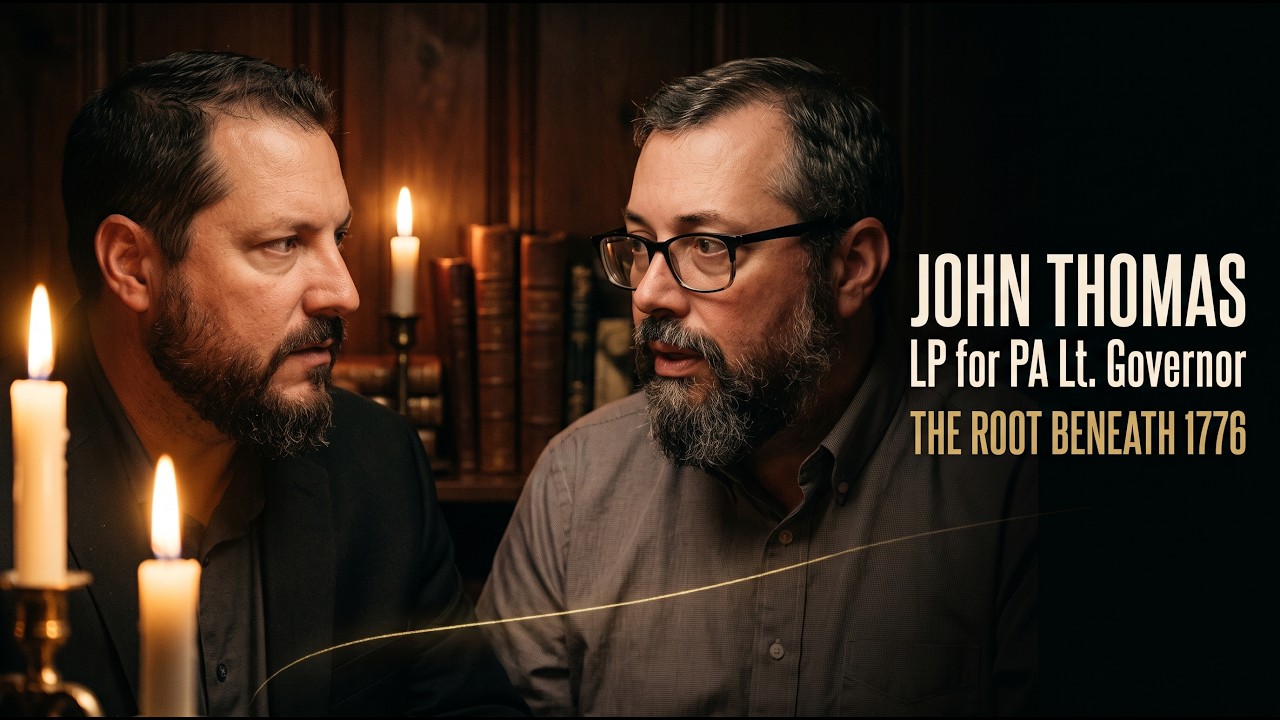
John Thomas, LP Candidate for PA Lieutenant Governor — On Resistance, Romans 13 & School Choice
John Thomas is an educator, a church elder, and the Libertarian candidate for Lieutenant Governor of Pennsylvania, running alongside gubernatorial candidate Ken Krawchuk. A man who has spent his life inside both the church and the liberty movement, he is exactly the voice this week's history called for.
Jul 232 min read
Frédéric Bastiat Explained: The Top 5 Lessons
Five lessons from Bastiat, building from his most famous idea to his most profound: why the state produces nothing of its own, the satirical petition that destroyed protectionism with a joke about the sun, what happens when plunder writes itself into law, the seen and the unseen, and finally The Law — the 1850 essay that is the foundation this entire channel stands on.
Jul 222 min read

The #1 Big Government President Will Shock You
We ranked the five presidents who expanded the federal government further, faster, and more permanently than anyone else.
Jul 152 min read
Top 5 Most Libertarian Presidents in U.S. History
We measure every president two ways — economic freedom and civil liberty — and a president has to move the country toward freedom on both to make the list. That single rule reshapes everything, and it is why the most famous "small government" names are not always where you expect.
The question underneath all of it: did this leave Americans more free, or more governed?
Jul 81 min read
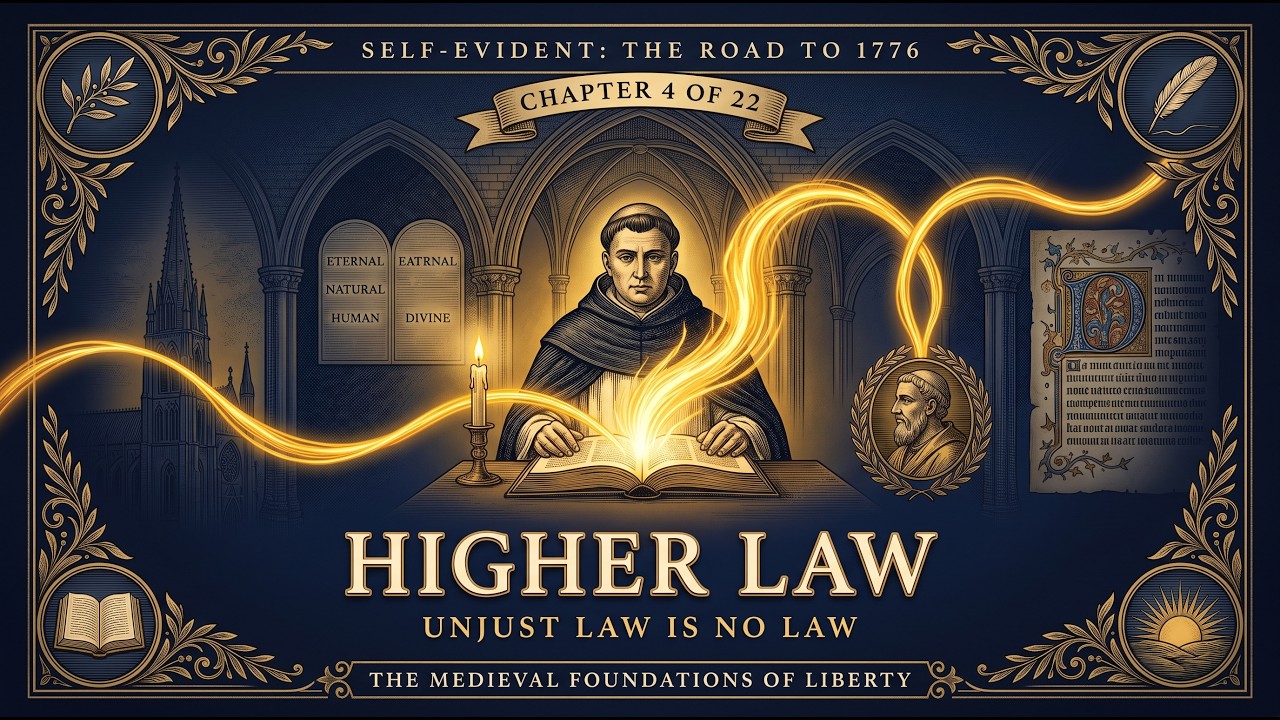
Magna Carta & Aquinas: The Medieval Roots of "The King Is Under the Law"
This is the closing episode of the series' first arc, and it does two things. It forges the medieval inheritance — Magna Carta, Bracton's "the law makes the king," Aquinas's fourfold law and his lex iniusta non est lex, the line that ran straight to Martin Luther King's Birmingham jail cell — and then it stands on the summit and looks back across the whole road: Athens, Jerusalem, Rome, and the House of Wisdom, four civilizations braided into one cord and handed to the men wh
Jul 32 min read

Ellsberg, Snowden, Assange & the Espionage Act of 1917
Who tells us what we were not supposed to know? On Saturday we met that figure in his oldest form — the Hebrew prophet who walks up to the king with no army and says "thou art the man." This episode meets him in ours: Daniel Ellsberg, Edward Snowden, Julian Assange — and the single 1917 law turned against all three, not for selling secrets to enemies, but for telling Americans what their own government was doing. Underneath runs the deeper argument of the series: the Constitu
Jun 302 min read

How Baghdad Saved Aristotle for the West | House of Wisdom
The golden thread does not begin and end in Greece and Rome. This episode widens it in two directions the schoolbooks usually omit. First, to Jerusalem: the Hebrew tradition that gave the West its most radical political idea — that even the king stands under the law — expressed through the covenant at Sinai, the prophets who confronted kings to their faces, and above all Samuel’s warning in the eighth chapter of First Samuel, a catalog of royal takings that states the Liberty
Jun 262 min read

What the Classics Teach About Democracy
Saturday’s episode drew from Aristotle, Polybius, and the Founders the idea of the mixed constitution — the one, the few, and the many in balance — and insisted that the democratic element had to be genuinely popular for the whole structure to hold. This contemporary application episode asks whether our own “people’s house” still carries the voice of the people, and argues that it has been narrowed by two mechanisms: the cap of 435 members frozen in 1929, which has stretched
Jun 232 min read

The Law Above the Law: Cicero, Natural Rights & 1776
The Founders did not invent their politics; they read it. This episode traces the classical inheritance at the root of American constitutional design through three ancient figures and one cautionary contrast. Aristotle gave the Founders the empirical study of constitutions and the doctrine of the mixed regime anchored in a broad middle class. Polybius gave them anacyclosis — the wheel by which governments decay — and the recognition that a mixed constitution could slow the tu
Jun 202 min read

Why This History Matters Now
What is the difference between a right and an entitlement? This contemporary application episode takes the concept of natural rights inherited by the American Founders — introduced on Saturday in “The Golden Thread” — and applies it to the most consequential category confusion in modern politics: the belief that a government benefit funded by other people’s labor is a right. Using the 2026 Social Security solvency debate as its spine, the episode walks the hardest case honest
Jun 162 min read

The Golden Thread
The series opener makes a single, startling claim: the truths the Declaration of Independence calls self-evident were not invented in Philadelphia. They were inherited — refined across more than two thousand years, in more than one civilization, by men who rarely knew one another. Jefferson himself said as much, naming Aristotle, Cicero, Locke, and Sidney as the “elementary books” behind the Declaration. This episode establishes that the Founders were readers before they were
Jun 132 min read
bottom of page