top of page
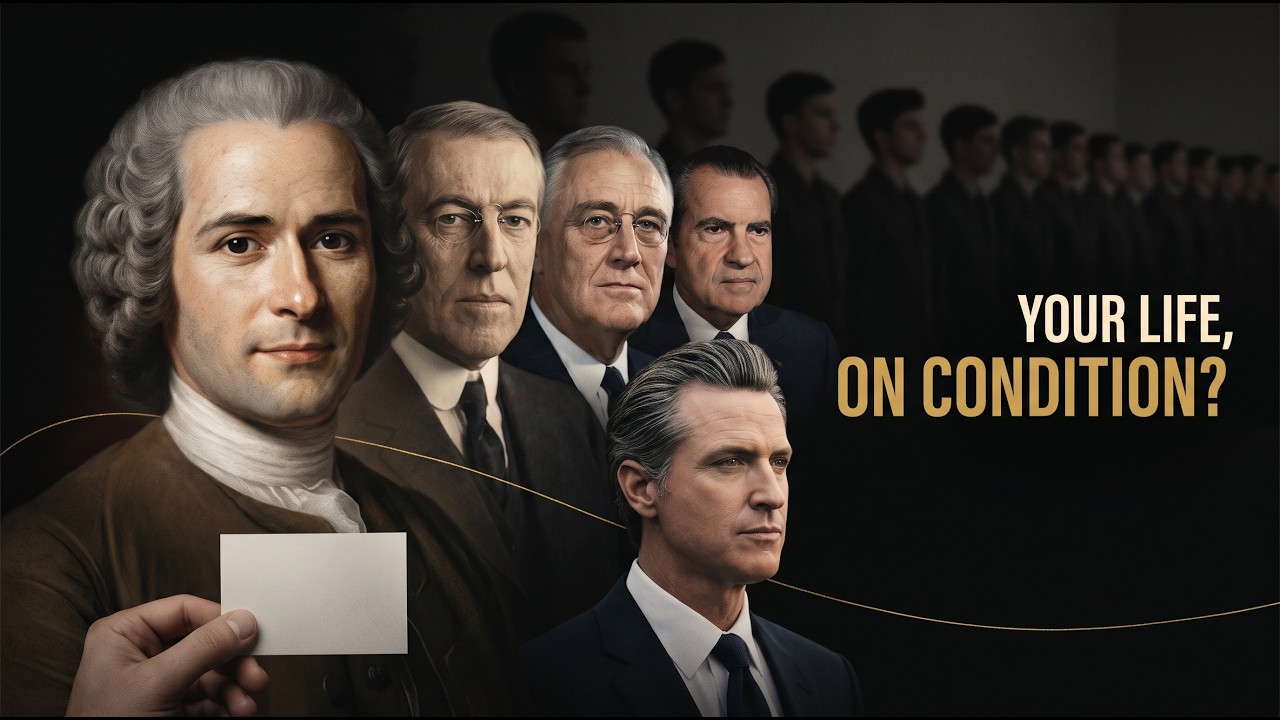
The Draft Was Never Repealed. Here Is What Changes in December
This December, Selective Service registration becomes automatic. The duty to sign up moves from the man to the government, and the agency that has to run it withdrew its implementing rules in July without ever publishing them.
6 days ago3 min read
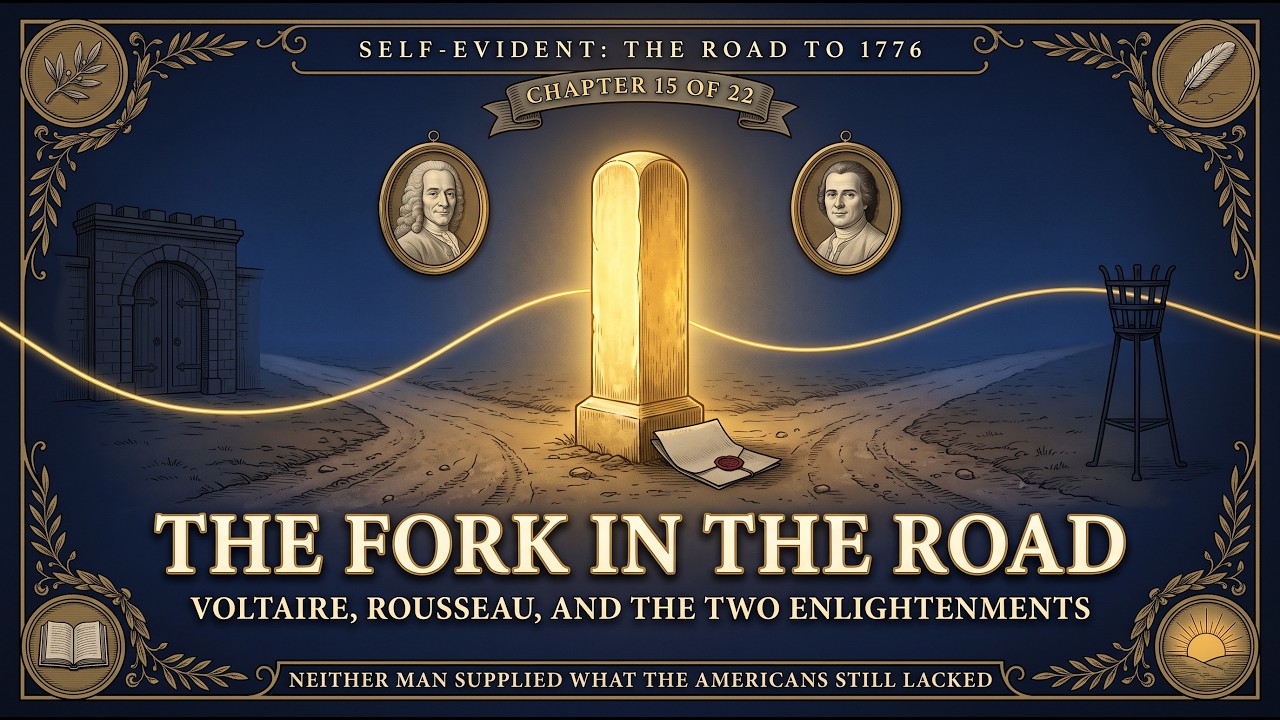
Does Majority Consent Make You Free? Voltaire, Rousseau & the General Will
What is covered: the Calas affair and the four arguments of the Treatise on Tolerance; the general will versus the will of all; the real limits Rousseau set on his sovereign, and the question he did not clearly answer, which is who applies them; the "noble savage" phrase that is not his, and the famous Voltaire line that Voltaire never wrote; what Americans actually read of each man; how Robespierre invoked Rousseau, and why invocation is not derivation; how Edmund Burke and
Oct 33 min read

Massie, Hegseth & the Epstein Petition: Why Congress Stopped Checking
This contemporary-application episode takes the question Episode 14 ended on — what happens to a constitutional design when the parts stop resisting each other — and puts it to the House of Representatives this month. In Federalist 51, Madison connected the interest of the man to the constitutional rights of the place. In his chapter on England, Montesquieu gave the legislature the means of examining how its laws are executed, and warned against a legislature a considerable t
Sep 223 min read
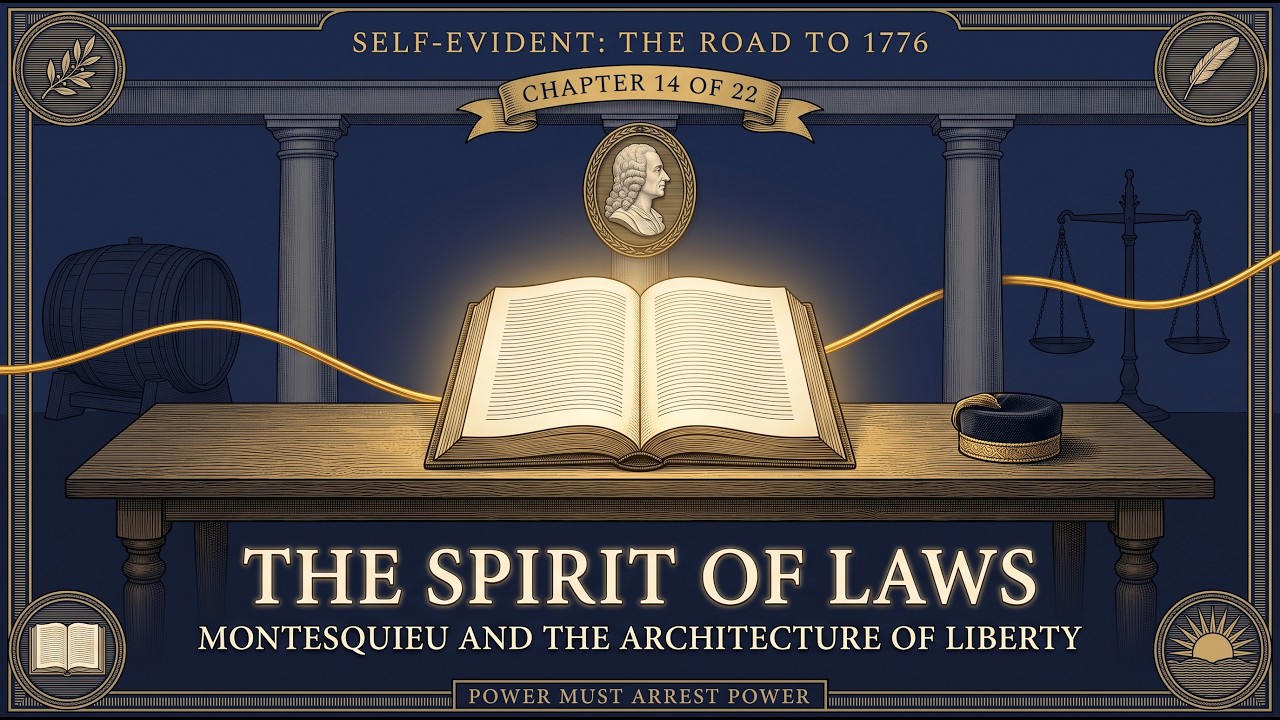
Everyone Quotes Montesquieu Almost Nobody Reads Past the First Page
This episode goes into the sixth chapter of the eleventh book — the most quoted passage of political writing produced in the eighteenth century, and among the least accurately remembered. Read to the halfway mark it says what everyone thinks it says: three powers, three sets of hands, keep them apart. Read past that point and Montesquieu dismantles both prohibitions. He does not want a permanent judiciary at all. He wants occasional tribunals of ordinary men, assembled for th
Sep 193 min read

Fauci Contempt Vote Explained: The Fifth Amendment, the Pardon, and the Lois Lerner Precedent
This hour costs something. It defends a man I hold responsible for real harm, it criticizes Senator Rand Paul, who is on most days the best friend the Bill of Rights has in the Senate, and it turns on the movement and on me before it turns anywhere else. That is the point. The test this series always comes back to: did this leave us more free, or more governed?
Aug 113 min read

Grotius, the Free Sea & the War Powers Debate: Hormuz, Bab al-Mandab & Article I
This is the contemporary-application episode for Week 7 of Self-Evident: The Road to 1776, and it takes Grotius off the page and holds him against our own moment — then follows the free-sea question to a harder one, closer to home. When the sea is contested and America turns to military force over it, who decides that we fight? The Constitution begins with a plain answer: Article I, Section 8 gives the power to declare war to Congress, not the President. This hour measures ou
Jul 283 min read
Who Actually Writes the Laws You Live Under? (It Isn't Congress)
Congress passed a statute, years or decades ago, that said something broad and pleasant, and then handed the real lawmaking to an agency the voter cannot reach. This is not a scandal in the ordinary sense. No one broke into the Capitol and stole the power to legislate. The strange and important truth at the center of this hour is that the power was given away.
Jul 213 min read
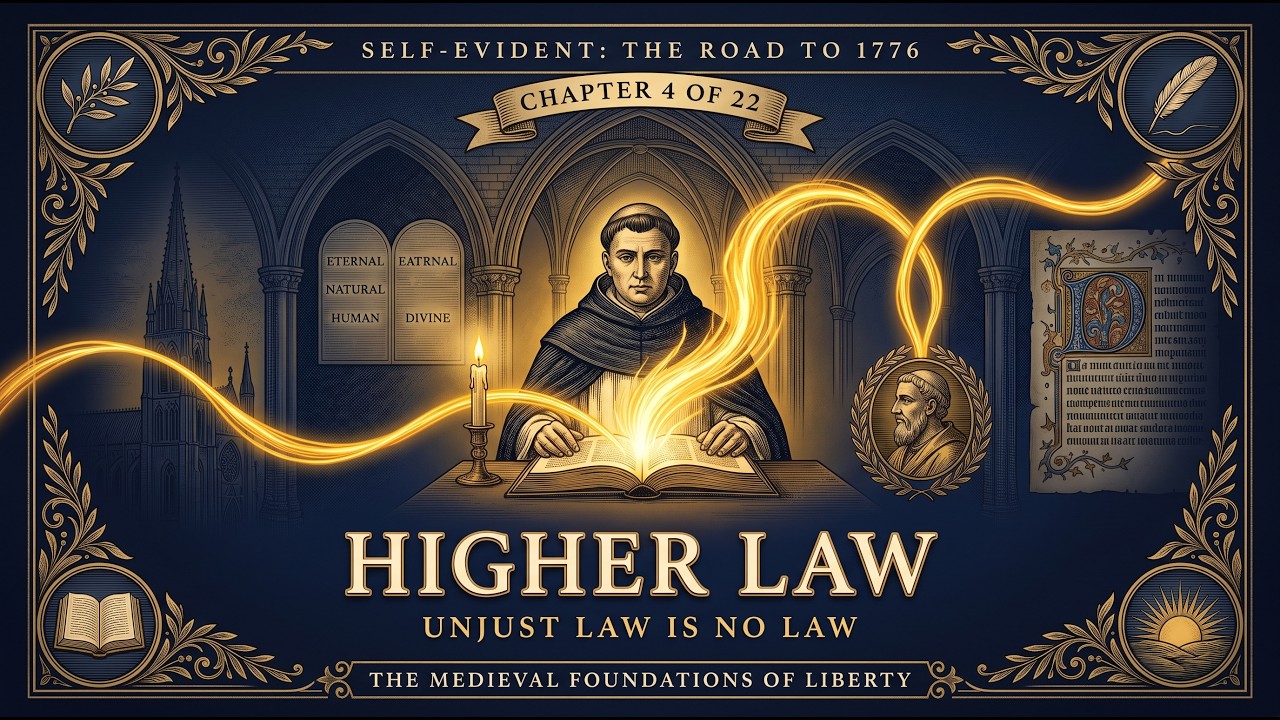
Magna Carta & Aquinas: The Medieval Roots of "The King Is Under the Law"
This is the closing episode of the series' first arc, and it does two things. It forges the medieval inheritance — Magna Carta, Bracton's "the law makes the king," Aquinas's fourfold law and his lex iniusta non est lex, the line that ran straight to Martin Luther King's Birmingham jail cell — and then it stands on the summit and looks back across the whole road: Athens, Jerusalem, Rome, and the House of Wisdom, four civilizations braided into one cord and handed to the men wh
Jul 32 min read

What the Classics Teach About Democracy
Saturday’s episode drew from Aristotle, Polybius, and the Founders the idea of the mixed constitution — the one, the few, and the many in balance — and insisted that the democratic element had to be genuinely popular for the whole structure to hold. This contemporary application episode asks whether our own “people’s house” still carries the voice of the people, and argues that it has been narrowed by two mechanisms: the cap of 435 members frozen in 1929, which has stretched
Jun 232 min read

The Law Above the Law: Cicero, Natural Rights & 1776
The Founders did not invent their politics; they read it. This episode traces the classical inheritance at the root of American constitutional design through three ancient figures and one cautionary contrast. Aristotle gave the Founders the empirical study of constitutions and the doctrine of the mixed regime anchored in a broad middle class. Polybius gave them anacyclosis — the wheel by which governments decay — and the recognition that a mixed constitution could slow the tu
Jun 202 min read

The Golden Thread
The series opener makes a single, startling claim: the truths the Declaration of Independence calls self-evident were not invented in Philadelphia. They were inherited — refined across more than two thousand years, in more than one civilization, by men who rarely knew one another. Jefferson himself said as much, naming Aristotle, Cicero, Locke, and Sidney as the “elementary books” behind the Declaration. This episode establishes that the Founders were readers before they were
Jun 132 min read
bottom of page