top of page
Adam Smith and Adam Ferguson: The Wealth of Nations, An Essay on the History of Civil Society, and the Militia Question
Two men were born in Scotland in 1723, a county apart. They joined the same Edinburgh club, kept the same friends, and worked from the same premise about what commercial life does to a people. They never agreed about the remedy, and the disagreement is more specific and more difficult than it is usually made to sound.
Sep 123 min read

David Evans of Sentiero Ventures on Artificial Intelligence, Lyapunov Time, and the Knowledge Problem | Self-Evident Week 12
David Evans is the founder and managing partner of Sentiero Ventures, an early-stage venture fund outside Dallas that invests in business software where artificial intelligence is the core of the product rather than a feature bolted onto it. Before the fund he was an operator. He has been writing software since the early 1990s, built and sold a national digital signage network, and founded EasySeat, an online ticket resale business that reached the Inc. 500 and sold in 2015.
Sep 103 min read

NYC Municipal Grocery Stores, the Rent Freeze, and Federal Equity Stakes: Hume's Knowledge Problem in 2026
Three cases, in ascending order of how hard they are to correct. The Rent Guidelines Board voted seven to one on June 25 under Order 58 to set adjustments at zero percent for both one-year and two-year renewal leases beginning October 1, covering roughly a million rent-stabilized apartments. The board is not a mob; it is a technical body that publishes seven separate research documents, one of which produced commensurate adjustment figures running from 3.4 to 8.5 percent. It
Sep 94 min read
Hutcheson, Hume, and the Scottish Enlightenment: Undesigned Order Before It Had a Name
Episode 12 of Self-Evident opens Arc Four and the Scottish arc. It begins with the conditions: a kingdom that lost Darien and then argued itself into a union it did not agree about, a Kirk that put a schoolmaster in nearly every lowland parish because Presbyterian doctrine required ordinary people to read Scripture themselves, and that in the same generation urged the vigorous execution of the law against a twenty-year-old student named Thomas Aikenhead, hanged for blasphemy
Sep 53 min read


A Tax Expired at Midnight. Another Took Its Place in the Same Minute.
Covers the fourth declaratory clause in full, the 1689 revenue settlement and the four-year customs grant, the first Mutiny Act and its seven-month life, Learning Resources v. Trump and the three-justice major questions plurality, Section 122 and Section 307, and the two bills now sitting in the Senate Finance Committee.
Sep 13 min read
The Glorious Revolution of 1688 and the English Bill of Rights
On the afternoon of 5 November 1688, the people of a Devon fishing village looked out at Tor Bay and could not see the water for ships. Something like four hundred and sixty of them, carrying fifteen thousand professional soldiers, their horses, their siege guns, and a printing press. It was the largest fleet to reach English shores since 1066, it had sailed the length of the Channel unopposed, and it belonged to a foreign head of state. Fourteen months later that same kingdo
Aug 224 min read
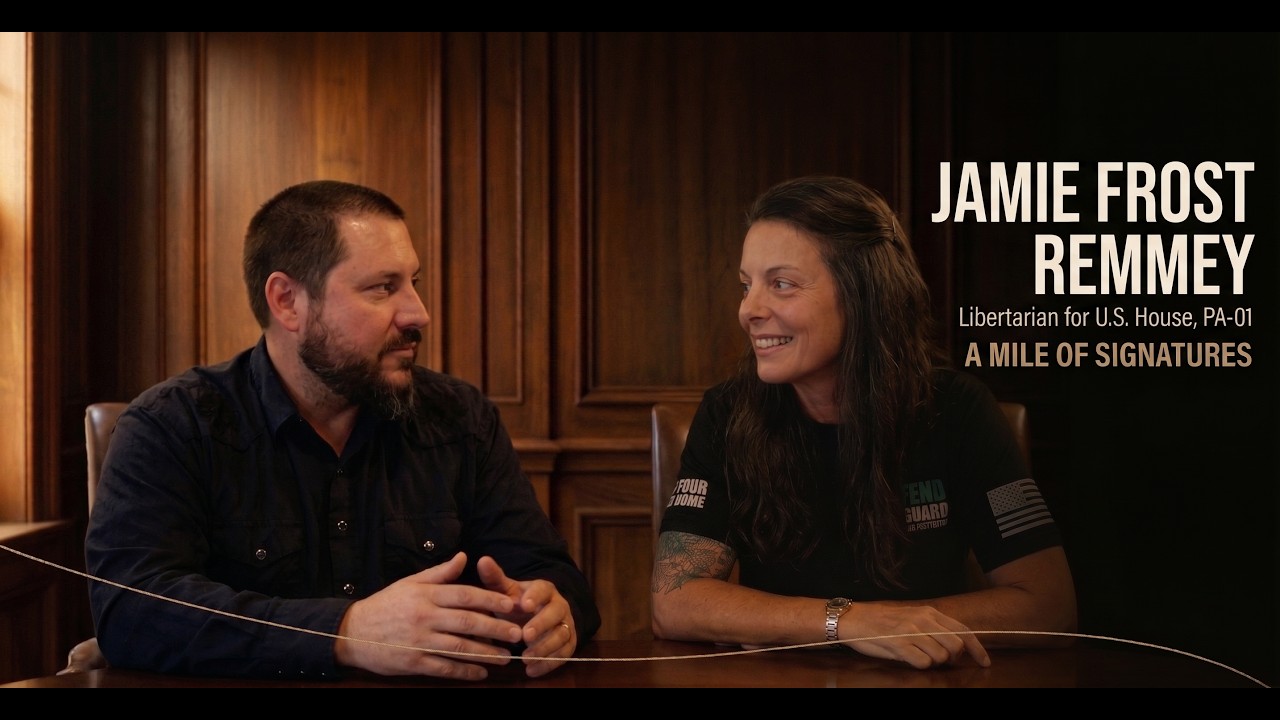
Jamie Frost Remmey — Libertarian for U.S. House, PA-01 — On Ballot Access, Defend the Guard & War
This is the Thursday interview closing Week 7 of Self-Evident: The Road to 1776 — the week we traced the Dutch Republic, the first modern commercial republic, which grew prosperous not by concentrating power but by refusing to. All week the argument was that liberty and prosperity travel together, and that power held far from the people tends to be power misused. This conversation puts a living face on it: a candidate standing in the middle of the machinery, who can tell you
Jul 302 min read
Grotius, the Free Sea & the War Powers Debate: Hormuz, Bab al-Mandab & Article I
This is the contemporary-application episode for Week 7 of Self-Evident: The Road to 1776, and it takes Grotius off the page and holds him against our own moment — then follows the free-sea question to a harder one, closer to home. When the sea is contested and America turns to military force over it, who decides that we fight? The Constitution begins with a plain answer: Article I, Section 8 gives the power to declare war to Congress, not the President. This hour measures ou
Jul 283 min read

The Dutch Republic Explained: William the Silent, Toleration, the VOC & Grotius
This is the story of how a revolt became a republic almost by accident, how toleration and commerce fed each other until a small waterlogged country surpassed a vast empire, and how the men who built it also built, on the far side of the world, a machinery of conquest and slavery that cannot be edited out of the account of it.
Jul 253 min read
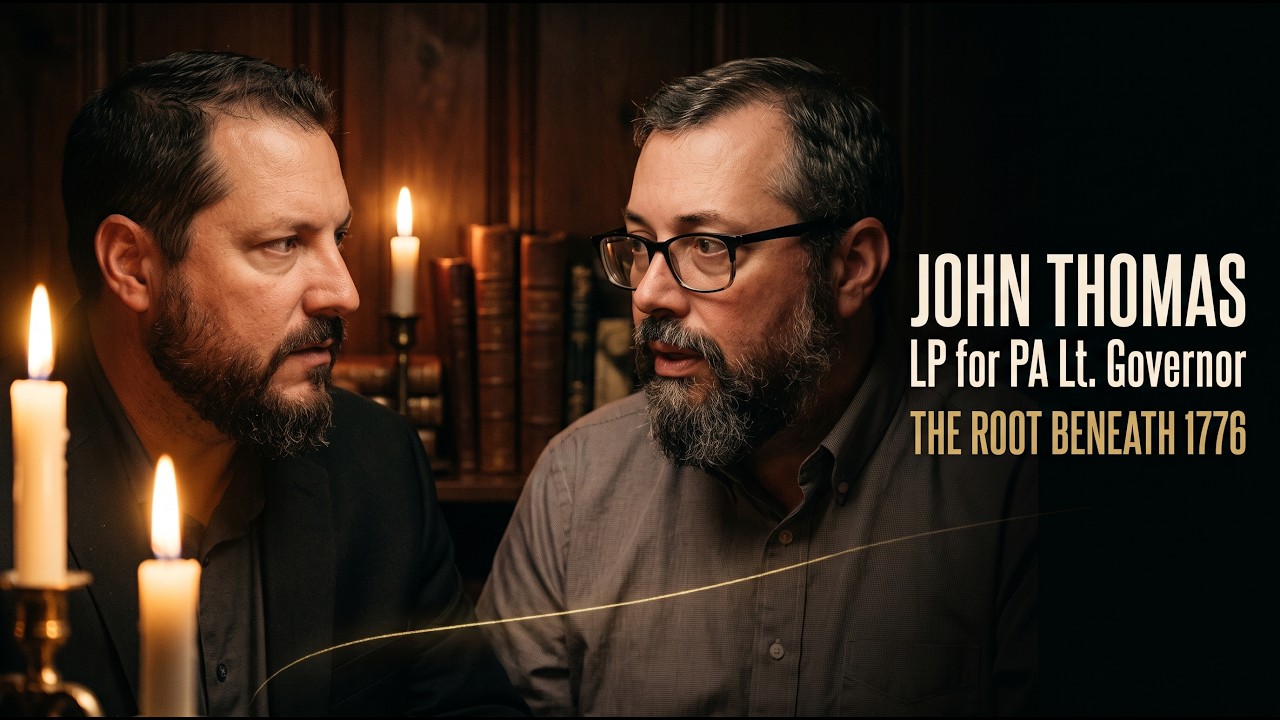
John Thomas, LP Candidate for PA Lieutenant Governor — On Resistance, Romans 13 & School Choice
John Thomas is an educator, a church elder, and the Libertarian candidate for Lieutenant Governor of Pennsylvania, running alongside gubernatorial candidate Ken Krawchuk. A man who has spent his life inside both the church and the liberty movement, he is exactly the voice this week's history called for.
Jul 232 min read
Top 5 Most Libertarian Presidents in U.S. History
We measure every president two ways — economic freedom and civil liberty — and a president has to move the country toward freedom on both to make the list. That single rule reshapes everything, and it is why the most famous "small government" names are not always where you expect.
The question underneath all of it: did this leave Americans more free, or more governed?
Jul 81 min read
bottom of page